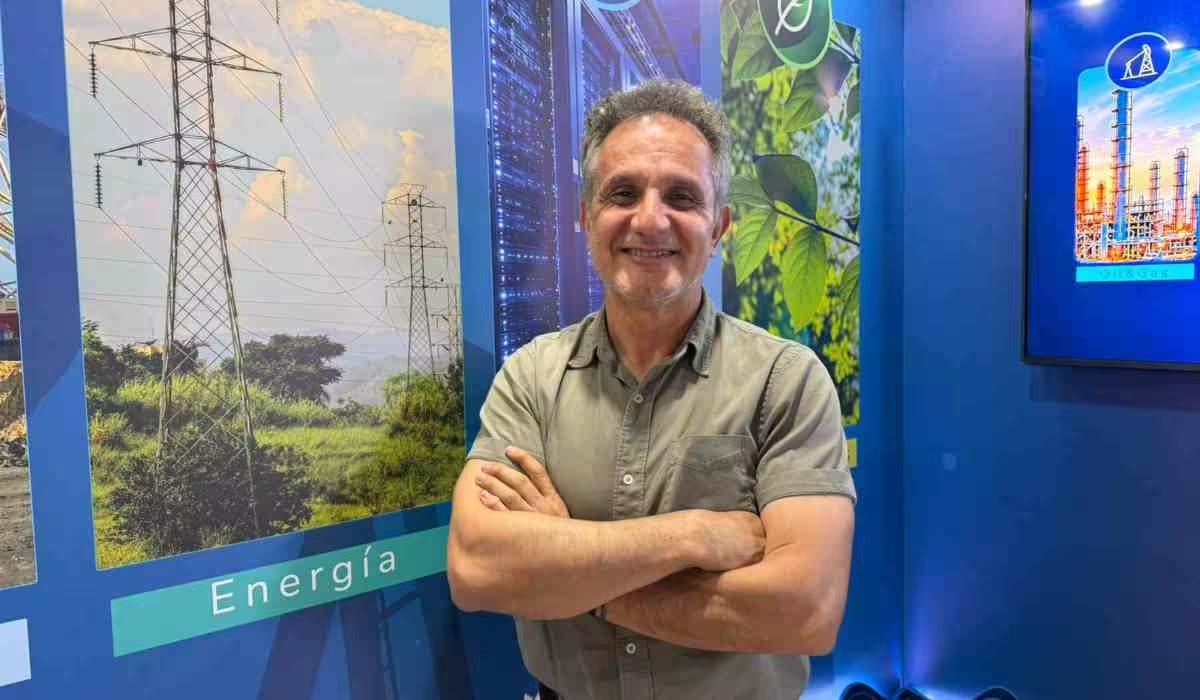

The Colombian company Magnex is advancing a regional expansion strategy that seeks to strengthen its participation in the energy, oil, gas, mining and infrastructure. With more than 40 years of experience, the company has evolved from providing industrial operation and maintenance services to a model that incorporates technological innovation, artificial intelligence, data management and solutions for critical assets.
In an interview with Valora Analitik, Jorge Estrada, CEO of Magnex, explained the changes that the organization has experienced, the business opportunities it identifies in Colombia and other markets in the region, as well as its plans to enter Venezuela and projections for 2027.
The manager pointed out that the company operates as an independent Colombian company, with aspirations of becoming a multi-Latin player.. This vision involves expanding its service offering and developing technological capabilities that allow it to accompany its clients beyond the execution of projects.
Receive our newsletter in your email
Ready, you’re in
You will receive the next newsletter in your email.
“We are innovating not only in the types of services, but also in artificial intelligence, to go from being a company that executes projects to one that helps companies anticipate and make better decisions,” Estrada explained.
Magnex’s activity has its origins in the oil and gas sector, where it has developed services related to the operation of fields, the maintenance of pipelines and the care of industrial facilities.
Among its clients are Ecopetrol, Cenit and other companies linked to the hydrocarbon chain. It also participates in maintenance and operation activities in the refining segment, specifically in the Barrancabermeja and Cartagena refineries.
In these facilities, the company works through a consortium that is in charge of plant shutdowns and daily maintenance tasks. These interventions are essential to maintain equipment availability and avoid interruptions that could affect production levels.
Estrada explained that one of the main challenges of companies dedicated to the maintenance of critical assets It consists of having the necessary personnel at the right time and guaranteeing that activities are carried out under safe conditions.
“The main challenge is being able to hire the people you need at the right speed and keep them safe,” he said.
In this sense, Magnex establishes as one of its principles that workers must start and end their day in the same physical conditions in which they arrived, in addition to feeling proud of the work done.
The CEO maintained that this commitment also involves the communities where the projects are carried out.. An important part of the industrial operations takes place in areas far from the main cities, so the company seeks to integrate local suppliers and workers into its activities.
The organization considers that its participation in these territories should generate opportunities for economic growth and professional for communities, while strengthening the supply chains necessary to develop projects.
Another of the central components of Magnex’s business is the planning of industrial interventions.. In sectors such as oil, gas and energy, an equipment failure can cause the suspension of operations and generate economic losses for companies.
For this reason, the company is allocating resources to digitization and data analysiswith the purpose of incorporating artificial intelligence tools in the programming of activities, identifying risks and anticipating possible failures.
Estrada explained that the work is not limited to having workers and carrying out maintenance tasks.. It also includes the preparation of operational scenarios that allow establishing how much time an intervention will require and what measures are necessary to comply with the schedules.
The objective is for companies to be able to schedule their plant shutdowns with greater precision. and reduce the time during which your facilities remain out of service.
“If a plant is going to be stopped for a week, it should be a week and not an hour more. Everything we can anticipate in that stop represents a productivity gain for our customers,” he stated.
In this model, Magnex seeks to become a permanent ally of companies, by providing them with technical support and operational to keep your assets available and operating safely.
The manager compared this relationship to taking out insurance: companies seek to have support that allows them to face unforeseen situations and reduce the risks associated with their operations.
Entry into Venezuela also represents a challenge in terms of operational standards and risk management.. Estrada explained that Magnex has capabilities that can facilitate its participation in industrial asset recovery projects.
Among them are the maintenance processes that it has developed during its career. and the technical knowledge acquired in different sectors.
Added to this is experience in occupational health and safety, an aspect that is considered essential. to intervene in facilities that require recovering their operating conditions.
The manager also highlighted the importance of corporate compliance procedures. and risk management. As he explained, these capabilities are part of the experience accumulated by the company during its history and its historical relationship with international organizations.
The intention is to offer guarantees to foreign companies that develop activities in Venezuelathrough operational procedures, controls and standards that allow projects to be executed under verifiable conditions.
Although oil and gas constitute the origin of Magnexthe company has progressively expanded its participation in other activities.
Mining was one of the first sectors he entered after consolidating his experience in hydrocarbons. In this market it maintains commercial relations for more than 20 years with Drummond and Cerrejón, two relevant companies for the Colombian mining industry.
In addition, it develops activities in Peru and participates in projects related to energy transmission. Estrada explained that the company entered this last segment approximately four years ago, in a context marked by the needs to strengthen energy systems.
The organization is also exploring opportunities related to decarbonization and reforestation. On this last front, it works with clients in Peru and Colombia to develop activities aimed at recovering forests and offsetting carbon dioxide emissions.
The CEO explained that Magnex considers forests and trees as part of the infrastructure criticism of humanity, due to its contribution to environmental conservation, biodiversity and carbon capture.
Their participation consists of providing personnel and operational capabilities under the same security procedures. and control that it applies to its other lines of business.
Another segment that the company identifies as strategic is data centers, due to the growth of artificial intelligence and the demand for technological infrastructure.
Estrada pointed out that these facilities require operation, maintenance activities and adaptation of equipment, processes that have similarities with those carried out in industrial facilities such as refineries.
For this reason, Magnex considers that its experience in the management of critical assets can be transferred to this market, which becomes more important for countries and companies as the use of digital technologies increases.
Magnex’s strategy for the coming years aims to consolidate its presence in Latin Americataking advantage of the natural resources, human talent and infrastructure needs of the region.
Colombia, Peru and Venezuela constitute the initial markets of this expansionalthough the company also analyzes other opportunities in Latin American countries.
Estrada considers that the region has the necessary energy and mineral resources for economic development, as well as professionals and workers with the capabilities to participate in projects of international scope.
In this scenario, Magnex seeks to combine its technical experience with innovation processes that allow it to meet the needs of its clients and contribute to the development of the industries in which it participates.
The company intends to expand its operation without abandoning the principles that have guided its trajectory: worker safety, technical knowledge, community integration, compliance and operational efficiency.
Looking ahead to 2027, its priorities will be related to the consolidation of new businessesespecially in Venezuela, the strengthening of its technological capabilities and diversification towards activities such as energy transmission, reforestation and data centers.

Source: www.valoraanalitik.com