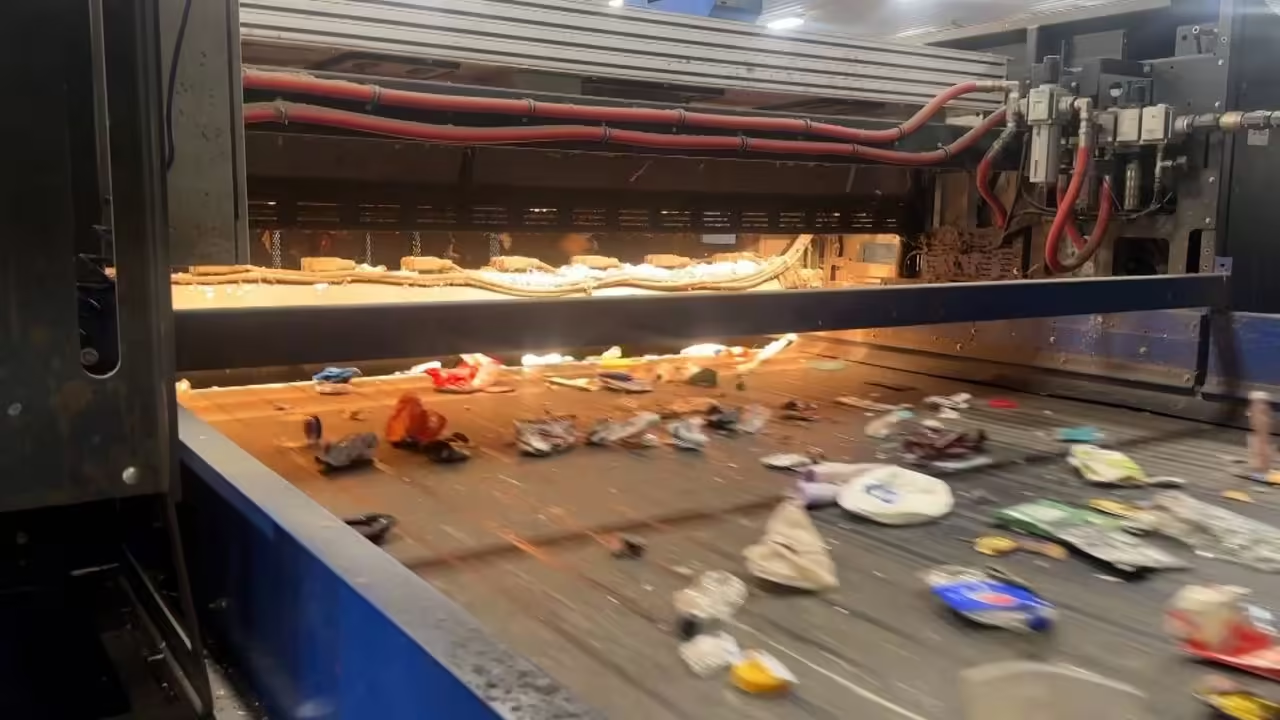

COLUMBUS, Ohio — Artificial intelligence is helping sort recyclables at Rumpke’s Columbus recycling facility. But how much of a difference is the technology actually making?
On America Recycles Day on Sunday, Nov. 15, Spectrum News 1 returned to the facility to see how AI is being used and where challenges remain.
Inside the facility, optical sorting machines separate different types of recyclable materials. Some use AI to help identify what should be collected.
“And it will shoot out a burst of air if it’s something that we want to capture,” said Leah Dietle, communications coordinator for Rumpke.
The company says its new Columbus facility processed 204,000 tons of material in 2025, compared to 160,551 tons processed at its old facility in 2023. That’s an increase of approximately 27%.
But those numbers don’t show how much of that improvement came from AI.
The new facility is significantly larger and includes other upgraded equipment.
Still, Dietle says AI has helped automate parts of the sorting process, including separating certain plastics that workers previously sorted by hand.
“It has improved the quality, of the acceptable items that we’re able to capture and then sell to end users,” Dietle said.
While AI is helping Rumpke sort materials, the technology isn’t perfect.
Dietle recalled an unexpected problem when diapers began showing up in the facility’s recycling stream.
“We had an influx of diapers, of all things, coming into the facility,” she said.
The plastic in the diapers confused the sorting technology, causing them to end up with recyclable paper.
“So it was contaminating our paper stream, which was not good,” Dietle said.
Workers had to retrain the AI systems to recognize the diapers and prevent them from being sorted with paper.
Lokendra Pal, the E.J. Woody Rice Professor at North Carolina State University, researches how AI can be used in recycling.
He says cameras can help identify materials, but contamination can make that process more difficult. For example, a piece of paper with food residue may not be recognized correctly.
And some recycling challenges begin long before materials reach a sorting facility.
According to the Ohio Environmental Protection Agency, nearly 30% of the material going into Ohio landfills could actually be recycled.
Pal says everyday decisions about what belongs in the trash versus the recycling bin play a role.
“Sometimes, we have a split-second decision, right?” he said, describing the choice people make when discarding items such as bottles.
Even with improved technology, recycling facilities can only sort materials that people put into the recycling system.
Rumpke says its new Columbus facility can process up to 250,000 tons of material annually. The company projects it will process approximately 240,000 tons in 2026.
Source: spectrumnews1.com