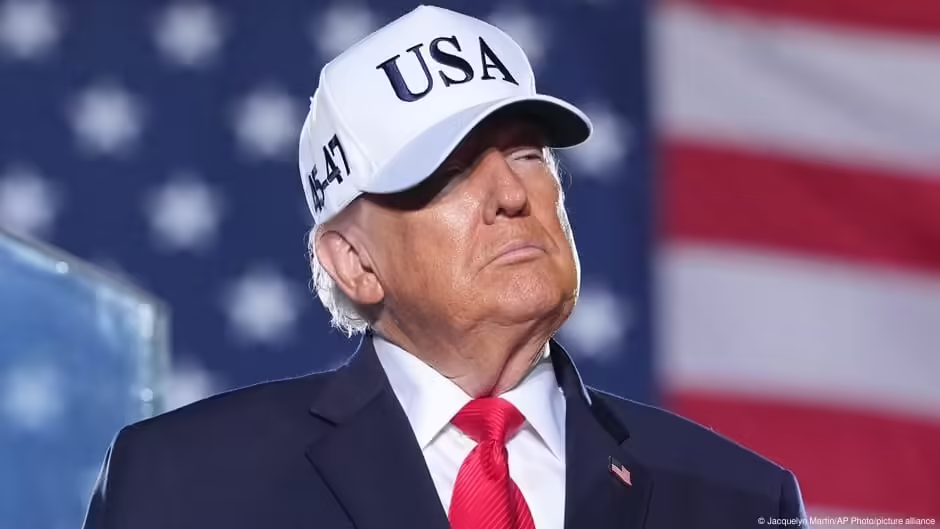

The US-Israel war with Iranaccording to US President Donald Trump“is effectively over” in a military sense. Trump’s secretary of state, Marco Rubio, backed up the president, saying there is “no need for major combat operations” in Iran because economic pressure and negotiations between the warring parties are proving effective.
However, Iran’s Supreme National Security Council secretary, Mohsen Rezaei, has denied negotiations are even taking place. “All American claims about the continuation of negotiations with Iran are aimed at easing economic pressures and reducing oil prices,” he told Lebanese channel Al Mayadeen.
Is the Iran war actually over?
While neither side has claimed the conflict is concluded in every sense, Ian Kelly, a former US ambassador who now works at Northwestern University in the US, considers the current situation is something like a “virtual ceasefire.” He added that there is currently a significant deescalation but that the central issues are unresolved.
“I wouldn’t say the war is over. I would say there’s no shooting going on, nothing really significant,” Kelly told DW. “But the real issue is opening up the Strait of Hormuz. What Iran wants, of course, is for the United States to withdraw its massive strike forces from the Gulf. But that won’t happen until Iran agrees to open the Strait of Hormuz.”
A critical shipping lane between the Persian Gulf and the Gulf of Oman, the Strait of Hormuz has been a focal point in the US-Iran conflict. Iran’s attacks on commercial ships in the strait have led to higher oil prices and have had other economic impacts that have affected living costs in the US and around the world.
Kelly, who also held several high-level roles at the US State Department, thinks the US midterm election resultswhich will see the Democrats take control of the House and Senate next year after catastrophic losses for Trump’s Republicans, means Iran is sitting tight.
“I think that Iran is in a wait-and-see moment to see if the war will wind down because Congress acts to either cut off the funding or severely limit the funding,” he said. But with Iran’s resources also dwindling, it’s a game of cat and mouse.
What has this conflict meant for Donald Trump and what’s next for the US?
Trump and his party need the war to end, according to Kelly, for political reasons, as well as strategic.
“As long as the war is not resolved, it’s going to be a real sticking point for the Republicans as they look at [the election in] 2028. They have to wrap it up before then,” he said.
“A major contributing factor to the Republican defeat was how Trump has not followed through on some of his promises made in 2024. One of the big ones was no more forever wars, and he just went off and started another war that doesn’t seem to have an exit strategy. It has weakened the Republican Party.”
The imminent change in US politics will naturally have military consequences long before the 2028 election.
”There is little likelihood that Congress will continue to fund this war at the kind of levels that they have been,” said Kelly. “That’s another reason that Iran is sitting back and just waiting to see where this all comes out.”
What needs to happen for a compromise to be reached?
While the US administration claims it is happy with a status quo of containment through land and sea blockades, Kelly believes the authority of Trump and his party will be further diminished if the US can’t achieve concrete progress on its stated main goals: gaining full control of the Strait of Hormuz and forcing Iran to give up its enriched uranium.
“Both of those are quite possible,” Kelly said, adding that even attempting to achieve them threatens the current relative calm.
“The White House has really painted itself in a corner here by stressing that the main goal is to deny Iran a nuclear weapon. I don’t see that as something that Iran is going to negotiate away, which means that they [the US] will probably have to use military force again. The White House is in a real pickle.”
But there is also the question of how long Iran can bear the economic burden of the war without reaching a deal.
“Iran’s limitation in the Strait of Hormuz is economic rather than military, because continuing the war has a significant impact on its economy,” Ali Mohammadi, an expert in Iranian affairs based in France, told DW earlier this week.
Nevertheless, the strait remains a key source of leverage for Iran in any future negotiations.
What would the end of the Iran War mean for the world economy?
Kelly doesn’t see the economic strain of the war subsiding anytime soon, especially in oil markets.
“The real issue for the markets is that as long as it remains a phony war, it’s very difficult to see oil prices lowering. The prices that are being charged now factor in the possible return to instability, so it has to be some kind of agreement where all sides and the oil markets are confident that we see a return to status quo. It’s going to be difficult to restore the markets’ confidence that these tankers won’t be shot at again,” Kelly said.
Given the global consequences of the conflict, Kelly expects it to be a hot topic at this month’s APEC (Asia-Pacific Economic Cooperation) summit in Shenzhen, where Trump and his counterparts in Russia and China, Vladimir Putin and Xi Jinping, will reportedly meet.
“I think Russia is interested in keeping the United States tied down like this. China, though, is interested in resolving it because they are a big customer,” he said. A G20 summit in Miami follows the APEC meeting in December.
While the impasse between Iran and the US shows little sign of being broken, the fighting has calmed, for now at least. What happens in the coming weeks in the meeting rooms of Shenzhen and Miami currently looks more critical to finding a solution than what happens on Iranian territory or waterways.
Source: www.dw.com