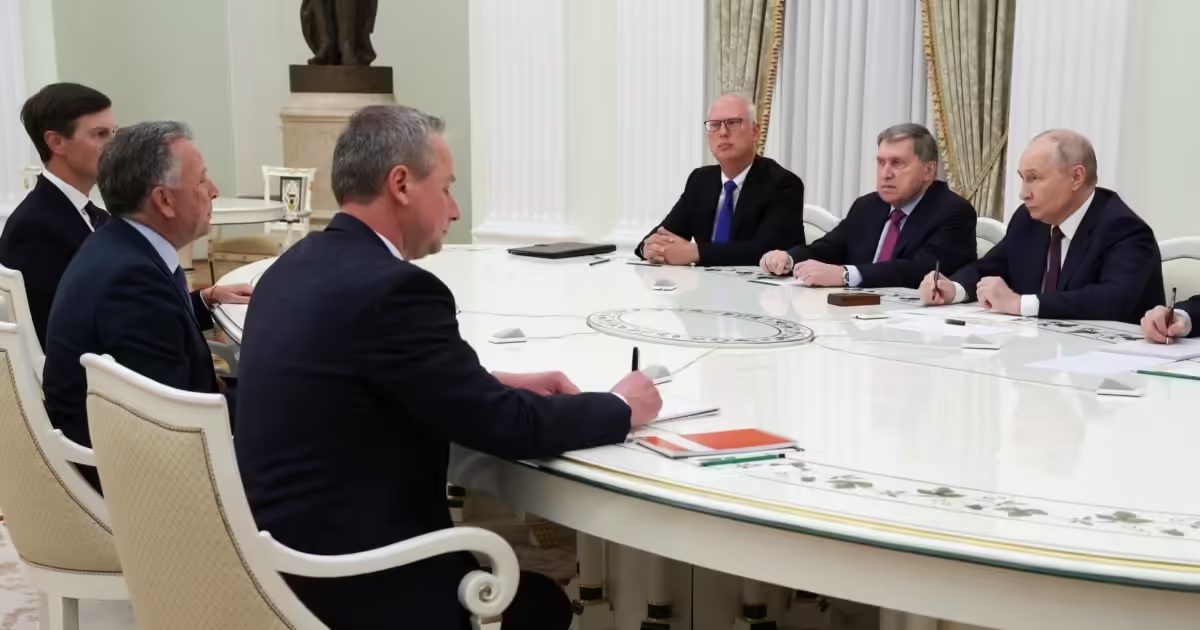

US envoys Steve Witkoff and Jared Kushner have concluded a meeting with President Vladimir Putin in Moscow that lasted approximately two and a half hours, following two days of trilateral talks in Abu Dhabi aimed at ending Russia’s invasion of Ukraine.
“I think progress was made. I think it was made earlier today,” Witkoff told CNN at Moscow’s Vnukovo Airport shortly before the US envoys departed Russia.
“People didn’t think that we were going to restart trilateral. We’ve restarted it. We’ve set a new meeting.”
Witkoff also said European representatives would take part in the next round of talks on the Ukraine conflict.
“They’re our partners, and it’s important for them to be involved,” he told reporters.
It is expected that Witkoff and Kushner will travel to Dublin, where they will meet with Ukrainian President Volodymyr Zelenskyy.
During the meeting with US envoys, Putin said that the presence of foreign troops in Ukraine was unacceptable, adding that their potential deployment would pose a threat to Russia’s national security, according to news reports.
Putin also proposed applying the successful experience of addressing the humanitarian situation in Oleshky to the situation in the embattled city of Kostyantynivka, Kyiv’s critical stronghold in the Donetsk region. He added that Russia would ensure security and require five days for demining.
Ukraine’s presidential office responded to Putin’s proposal for a “humanitarian mission” in Kostyantynivka, saying Russia had used a similar operation in occupied Oleshky to bring in military equipment and rotate troops, adding that Kyiv needed to clarify the details.
‘We Escaped Hell’: Oleshky Residents Reach Ukraine After Years In War-Torn City
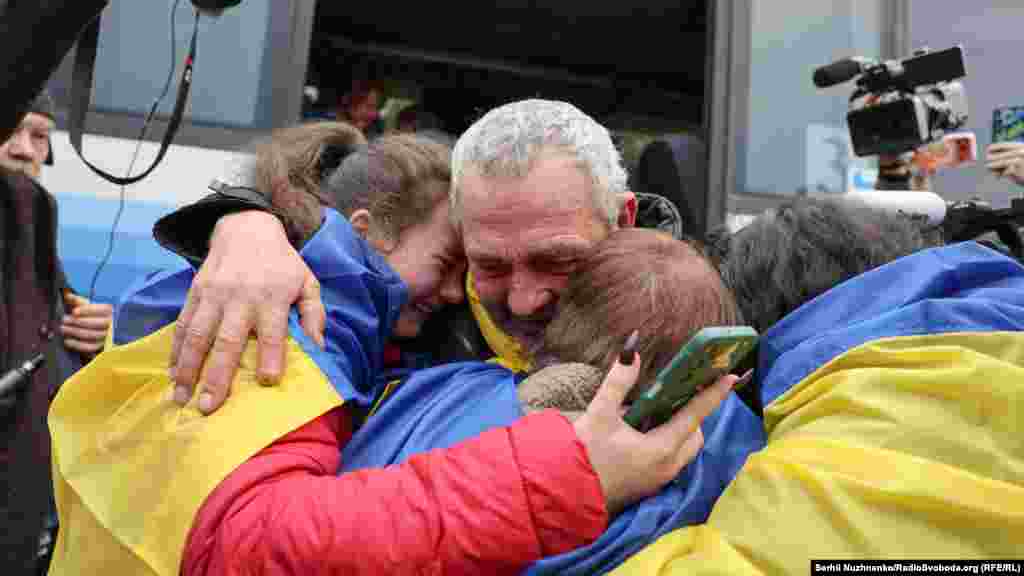
Shaking with joy, relatives of Ukrainians who have endured years under Russian occupation with almost no food, water, or electricity rushed to greet their loved ones in tears in Chernihiv on October 31.
Show more
Show less

Shaking with joy, relatives of Ukrainians who have endured years under Russian occupation with almost no food, water, or electricity rushed to greet their loved ones in tears in Chernihiv on October 31.
Show more
Show less

Shaking with joy, relatives of Ukrainians who have endured years under Russian occupation with almost no food, water, or electricity rushed to greet their loved ones in tears in Chernihiv on October 31.
Show more
Show less
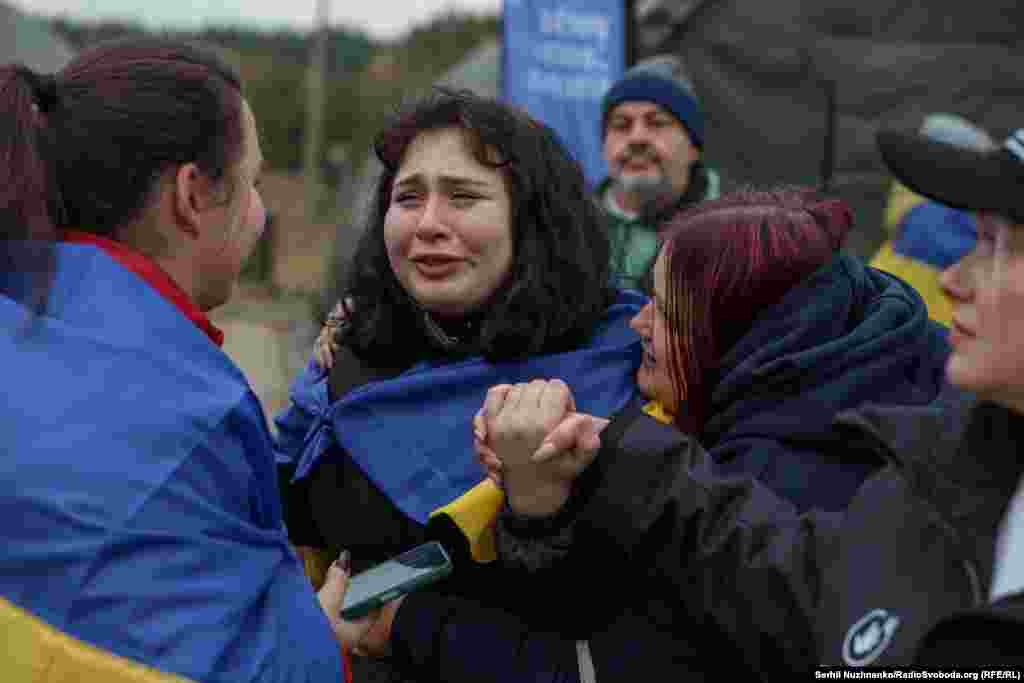
Shaking with joy, relatives of Ukrainians who have endured years under Russian occupation with almost no food, water, or electricity rushed to greet their loved ones in tears in Chernihiv on October 31.
Show more
Show less
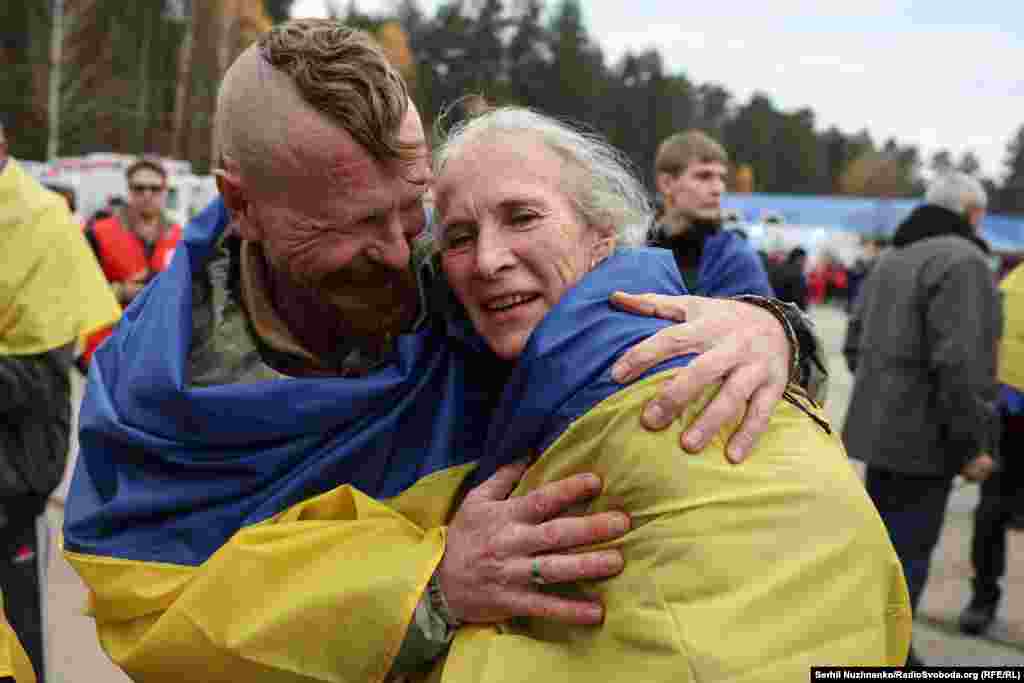
Shaking with joy, relatives of Ukrainians who have endured years under Russian occupation with almost no food, water, or electricity rushed to greet their loved ones in tears in Chernihiv on October 31.
Show more
Show less

Shaking with joy, relatives of Ukrainians who have endured years under Russian occupation with almost no food, water, or electricity rushed to greet their loved ones in tears in Chernihiv on October 31.
Show more
Show less

Shaking with joy, relatives of Ukrainians who have endured years under Russian occupation with almost no food, water, or electricity rushed to greet their loved ones in tears in Chernihiv on October 31.
Show more
Show less

Shaking with joy, relatives of Ukrainians who have endured years under Russian occupation with almost no food, water, or electricity rushed to greet their loved ones in tears in Chernihiv on October 31.
Show more
Show less

Shaking with joy, relatives of Ukrainians who have endured years under Russian occupation with almost no food, water, or electricity rushed to greet their loved ones in tears in Chernihiv on October 31.
Show more
Show less
The November 12 meeting was Witkoff’s 10th with Putin as Washington presses ahead with efforts to broker an end to the war, despite little sign of compromise on the key issues dividing Moscow and Kyiv.
The talks come as Russian strikes continue to kill civilians and damage Ukraine’s energy infrastructure, while Kyiv says it has been experiencing renewed disruptions to the US-made Starshield satellite communications system that threaten to hamper Ukraine’s defenses against aerial attacks.
While the Abu Dhabi discussions on November 10-11 appeared to yield only limited humanitarian progress, with a large-scale prisoner exchange in the works, there was no sign of a breakthrough toward peace.
US officials described the negotiations as tough but productive, while Moscow and Kyiv remained far apart in their positions, with the Kremlin offering no concessions on its hard-line demands.
The Kremlin has for years been pushing for any peace deal to include full control over territory in Ukraine’s key eastern Donetsk region, which Russian forces have been unable to seize on the battlefield.
The issue has been widely regarded as central to the resolution of the conflict.
The talks, however, have also looked at wider security arrangements for Europe, with Washington seeking to broaden negotiations beyond Ukraine.
While such discussions could potentially bring European governments into a peace process from which they have so far largely been excluded, the matter has previously been used by Russia as another major obstacle to a diplomatic resolution of the war.
Oleksandr Krayev, an analyst at Ukrainian Prism, a Kyiv-based think tank, told Current Time that he saw Zelenskyy’s remarks as “primarily a homage to the US negotiators and a tribute to US involvement in the process,” amid Washington’s interest for a “quick result” that Kyiv fears might come at “Ukraine’s expense.”
Ukrainian government has repeatedly argued that increasing pressure on the Kremlin and its war machine could shift the balance of power in the war and force Russia into meaningful negotiations that could stop the conflict.
The current US administration, however, has taken a more conciliatory approach toward Russia, recently easing sanctions and striking a diesel deal with Moscow while pressing Kyiv not to attack its oil refineries.
Speaking to RFE/RL’s Russian Service, political analyst Aleksandr Morozov, said that “talk of restoring some kind of European security sounds almost absurd” while Ukraine was experiencing “the peak of Russian aggression.”
“Throughout US President Donald Trump’s peace initiative, Moscow has been thanking him for his efforts while simultaneously manipulating Washington’s intention to bring about a cease-fire,” he added.
Russia And Ukraine Exchange Strikes
The fighting showed no sign of abating on November 12, as Russia and Ukraine exchanged fresh drone and missile attacks while the US envoys arrived in Moscow.
Explosions were reported in Kyiv, where at least one person was killed when a Russian drone has struck high-rise residential building, setting it on fire and partially destroying one of its floors.
“I rushed outside right after I heard an explosion. This is neither the first nor the last one,” local resident Lyudmyla told RFE/RL’s Ukrainian Service following the strike, adding that such incidents “happen very often” in the Ukrainian capital.
Another person was reported killed in the southern Kherson region, while strikes damaged civilian and energy infrastructure in the western Rivne region, leaving more than 160 settlements there without power.
On November 12, Russian authorities reported intercepting drones heading toward Moscow and over several other regions, including Rostov and Tula.
Kyiv Reports Starshield Disruptions
Recently, Ukraine’s hurdles were also compounded by speed limits in its use of the Starshield satellite communications system, made by Elon Musk’s company SpaceX, which Kyiv relies heavily on for anti-drone defense.
Originally imposed in mid-October, restrictions on Starshield speeds in Ukraine were eventually lifted. But on November 12, Zelenskyy said the restrictions had resurfaced, affecting “the entire front line.”
Ukraine’s charge d’affaires in Washington, Denys Sienik, told RFE/RL that the restrictions had been phased in over several days and were now fully in effect in Ukrainian-controlled areas and along the front line.
“Every disruption to these capabilities weakens Ukraine’s air defense and gives Russia more opportunities to strike our cities and kill innocent people,” he warned.
The 105-member bipartisan Congressional Ukraine Caucus demanded answers from the current US administration and SpaceX over the Starshield disruption and called for the immediate restoration of Ukraine’s full access, according to a post on X.
There was no immediate reaction from the US government or SpaceX. The company had previously been restricting Ukraine’s use of its services in light of what Musk called “conflict escalation” amid Kyiv’s efforts to target Russia’s sites it said helped fuel the war.
With reporting by RFE/RL correspondent Alex Raufoglu in Washington.
Source: www.rferl.org