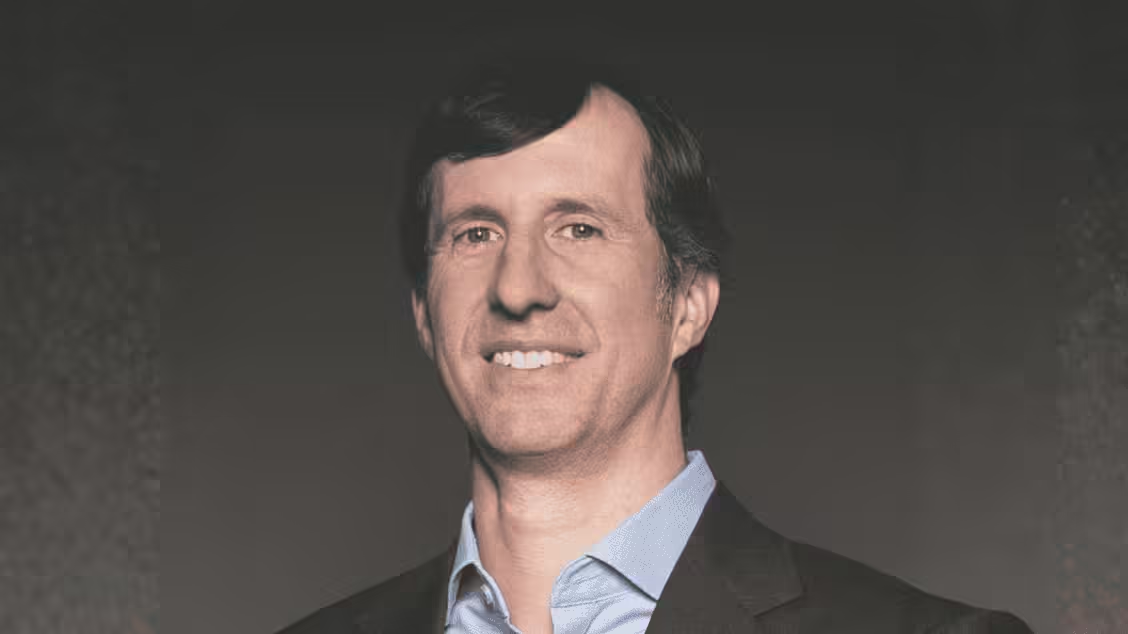

Grant Johnsey of Northern Trust discusses shifts in the U.S. Treasuries market and what lies ahead.
This article appears in the November issue of Global Finance Magazine.
Global Finance sat down with Grant Johnsey, head of Market Solutions, Banking & Markets at Northern Trust, to discuss changes in the U.S. Treasuries market — who’s joining, who’s leaving, and what the U.S. can do.
Global Finance: Is the “Sell America,” or de-dollarization, narrative showing up in institutional order flow as much as it is in headlines?
Grant Johnsey: I don’t see a lot of it right now. It’s not a big trade. It’s more talk. I asked several institutional investors in large institutions when I was in Europe two weeks ago. They said, “Right now, where else are we going to put that money?”
The U.S. stock market still makes up more than 60% of the world’s market cap, making it hard for the very big allocators with trillions of dollars to invest.
One large sovereign wealth fund wants to diversify away from the U.S., but some elements of the U.S. equity space can’t be replicated elsewhere, like AI and some tech.
The second problem is how to work liquidity and do a global trade. You’re going to have a lot of problems redeploying those massive dollars back into non-U.S. equity markets. From an equity standpoint, I’m not seeing any institutional money flying out of the U.S., right now. We are seeing a little bit starting to trickle out of Treasuries, not so much from corporate bonds. They are considered to be pretty strong in the U.S.
You are starting to see a couple of pension funds make public statements like Denmark. The big one to watch is Japan and what is happening with its [Government Pension Investment Fund], which I have my eye on. Depending on how you look at it, it’s the second- or third-largest pool of money in the world. They have said several times recently that they are moving their money back. The fund used to have about 70% invested in the Japanese stock and bond markets. Now, it’s under 50%. That would be a huge pivot if they did, but I’m not seeing any of it yet.
GF: There’s been a lot of discussion about disappearing liquidity in much of the Treasury market; is this still an issue?
Johnsey: It’s still an issue, and still an issue in the long end of the curve. I’m not seeing any institutional investor demand, except for hedge funds. The only people buying 10-year Treasuries are either liability-driven investors (LDIs), like pension funds, that are matching assets and liabilities, or insurance companies, which aren’t necessarily LDIs since they’re not running this against actuarial tables, but they’re thinking about 10, 20, 30 years out. That’s it. No one else is buying long bonds at all.
U.S. Treasury Secretary Scott Bessent has taken heavy criticism for his Treasury buyback plan, which has ramped up to about $4 billion per cycle. It is a very light form of curve control. If no one is buying 10-, 20-, and 30-year Treasuries, whose auction sizes range between $25 billion to $33 billion off the top of my head, he is buying back $4 billion to $6 billion, which makes a lot of sense because he is providing liquidity in the secondary market. He’s reducing the amount and shifting everything forward on the curve.
Hedge funds are buying 2-, 5-, 7-, and some 10-year Treasuries for their basis trades. They were buying 2-, 5-, and 7-year Treasuries like crazy, making them the marginal buyer of last resort. They’ve now started to pivot out of that trade because they’re finding ways that they can make more money than they were making on that.
It’s a major issue that must be resolved. The U.S. probably has another five years to figure this out, but the day of reckoning is coming for countries like the U.K. and France.
GF: Do you have any worries regarding government interest expenses and corporate leverage levels, given the rise in interest rates?
Johnsey: I totally do. However, the U.S. isn’t the canary in the coal mine: It’s probably the U.K. or France. The U.K. is in a terrible situation. I’m very concerned about where it is headed as a country for a variety of reasons.
Those are the canaries in the coal mine that I would monitor. I don’t think interest is going up necessarily due to fears of a fiscal debt crisis. It’s going up some because of inflation. It’s just going on in this general narrative of fiscal spending and debt. But more than anything, this is a unique period when everybody’s chasing capital, whether it’s a country trying to reindustrialize or increase its defense spending, or an AI hyperscaler. We all know that story very well: All of these are inflationary and will continue. Investors have finally awoken to the “higher for longer” story.
GF: How do you see the relationship between tokenized deposits and stablecoin unfolding?
Johnsey: The development of stablecoin and digital assets is predominantly within the retail market. Depending on whose numbers you look at, there’s slightly under $300 billion in total stablecoins issued right now, which isn’t very much money.
Institutions are thinking about and are starting to learn more about digital assets, but the use cases tend to be more utility coins than they are actually tokenized coins or tokenized assets, whether they’re public assets or real-world assets. We’re not seeing a lot yet of stablecoin or tokenized money funds used by institutions. The reason for that is that the Clarity Act failed to pass this year. That was the big catalyst for how this market was going to move forward. In a nutshell, you need regulatory clarity to issue and build these new asset types, and it’s just not there. So, we’re not seeing a lot of use cases yet in the institutional space.
Now remember, Secretary Bessent has been out and about saying that the U.S. will lead the world in crypto, and especially stablecoin, as a national security priority.
If you remember what is going on in the Treasuries market, demand is fading, and the U.S. dollar is losing a bit of its reserve-currency status. They need to drive demand through stablecoins that are pegged to and backed by the U.S. dollar. It’s a smart policy choice, honestly.
GF: What is not being talked about regarding the underpinnings of the global economy that should be?
Johnsey: I don’t want to sound like a hyper-optimist here, but let’s start with the corporations: They have the highest profit margins ever and great quality balance sheets. There’s been a lot of financial responsibility from big corporations.
Look at corporate financial leverage; what happened during the dot-com bubble, or even the run-up to the GFC [Great Financial Crisis], was very negative. There’s a lot of financial flexibility that private corporations or private and public corporations have today. That’s why I’m not as worried about some of the spending like you saw in the dot-com era and even heading up to the GFC. It’s a completely different environment. It is not nearly as leveraged and risky. I think people lose sight of that a lot.
Positive things are happening, whether it’s building infrastructure or AI spending. The “trickle down” phrase is somewhat polarizing, but some trickle-down benefits are happening.
People complain about the job market, but the current administration shut down immigration in this country, so there isn’t a need to create as many jobs because the population is flatlining and starting to decline.
Yes, there are more tailwinds than headwinds in the economy. I don’t see how we are going to work our way out of the diesel situation because it’s a structural issue that most people do not fully appreciate. The U.S. is in a better spot because it doesn’t have impaired refiners and has basically unlimited hydrocarbon supply. What worries me the most is when the AI bubble comes home to roost. It’s happened to every major technology.
Also, corporate earnings keep going up and up and up, but I don’t have a reason why this is happening. I’m a big believer that credit spreads are either a leading or concurrent indicator. Credit spreads are on the lower end and are starting to rise: CCC, B, and BB. BBB is okay, but you start to get into the lower levels of high-yield spreads. They’re starting to trickle up and have been doing so over the last two months, which is concerning. Why is that happening? I don’t have a great answer for that. Rising credit spreads can be a false positive, but it’s definitely a trend I’m watching closely.
GF: Are there any issues investors should keep top of mind as they enter 2027?
Johnsey: I don’t think people really have an appreciation for the energy and the impact thereof. I continue to worry a lot about unrest like what is happening in France. The last time food prices spiked considerably, it started a period of uprisings. I can envision fertilizer prices going up.
The return to a multipolar world is really misunderstood. Two unique elements of how the world operates today are completely anomalous compared with history. First, we’ve never had a situation where one country controlled so much of world finance, trade, military capabilities, and so forth. We’re pivoting back to the hegemony of regional leaders. Second, until 1971, there had never been a reserve currency based on something not in limited supply. If you look at every major reserve currency from 600 BC to 1971, there were about 10; each one had either silver or gold limiting its supply.
Now, currency supply is all political. Let’s be honest: politicians are not thoughtful, mature adults who think carefully before printing more money. Every time the U.S. has a crisis, what does it do? It prints more money, and that’s coming home to roost.
This interview has been edited for length and clarity.
Rob Daly covers economics and fintech. Contact him at [email protected].
Source: gfmag.com