
The upcoming meeting takes place against the backdrop of an ongoing conflict in Iran that continues to disrupt international trade and global energy supplies.
As these world powers gather, developing nations, particularly across Africa are bearing severe economic burdens from soaring fuel import costs and maritime trade disruptions.
According to IntelliNews, 32 African countries spent an extra $21.9 billion on seaborne fossil fuels between March and August, while Kenya has suffered steep export losses and Angola faces a fuel subsidy bill exceeding $4 billion.
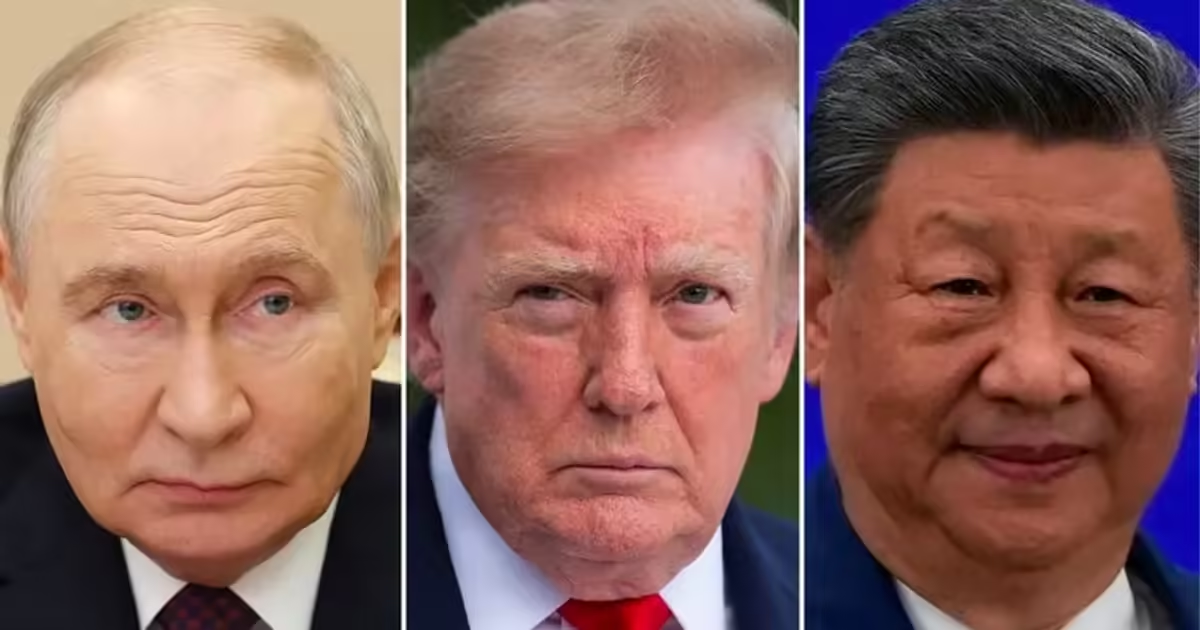
Nuclear leaders from the U.S., China and Russia gather in Shenzhen to discuss global security
The high-stakes meeting will occur on the sidelines of the Asia-Pacific Economic Cooperation (APEC) summit in Shenzhen, marking an unprecedented moment as Washington, Beijing, and Moscow seek to address international friction.
Central to the dialogue is the status of global atomic arsenals, following the expiration of the New Strategic Arms Reduction Treaty (New START) nine months ago.
President Trump indicated that the gathering offers an opportunity for all three nations to reach a new deal on nuclear stockpiles. Aljazera also reported that “Trump plans on discussing the Iran war with Xi and Putin. “
However, expectations remain cautious, with a senior Trump administration official acknowledging to Reuters that “we do not expect to get to any kind of agreement,” framing the encounter instead as the beginning of a diplomatic conversation.
Kremlin spokesman Dmitry Peskov echoed a similar perspective on the meeting’s scope, clarifying to Al Jazeera that “any agreements reached in Shenzhen cannot be imposed on others,” while still describing the gathering as “extremely significant”.
Beyond nuclear arms control, the three leaders plan to discuss the war in Iran, although American officials noted that the meeting will refrain from addressing Russia’s war in Ukraine.
African trade bottlenecks strain economies in Kenya and Angola amid rising energy costs
While global superpowers negotiate security frameworks, shipping interruptions through the Strait of Hormuz are causing widespread financial strain across the African continent.
In East Africa, Kenya has experienced a sharp 26.4% drop in second-quarter exports to Middle Eastern buyers as maritime routes are diverted around the Cape of Good Hope, leading to higher freight rates and war-risk insurance surcharges.
East Africa Tea Trade Association Managing Director George Omuga told the Nation that the tea industry was “losing about $8mn a week” as millions of kilograms of tea remained stranded at Mombasa ports.
Kenya National Bureau of Statistics revealed that “exports to the Middle East fell 26.4% year on year to KES31.09bn ($241mn) in the second quarter from KES42.23bn, a drop of KES11.14bn ($86mn)”
Meanwhile, in Southern Africa, Angola is grappling with the domestic fallout of elevated global petroleum prices.
Although crude oil exports generate over 90% of Angola’s foreign sales, the nation remains heavily reliant on imported refined fuel, driving its annual fuel subsidy bill to an estimated $4.1 to $4.2 billion.
Angolan Finance Minister Vera Daves de Sousa commented on the mounting fiscal pressure, she told Lusa that the spending represents “a cost associated with subsidies, specifically for fuel, which we haven’t fully removed yet,” as government outlays on fuel subsidies threaten to rise to 2.48% of gross domestic product.
Source: africa.businessinsider.com