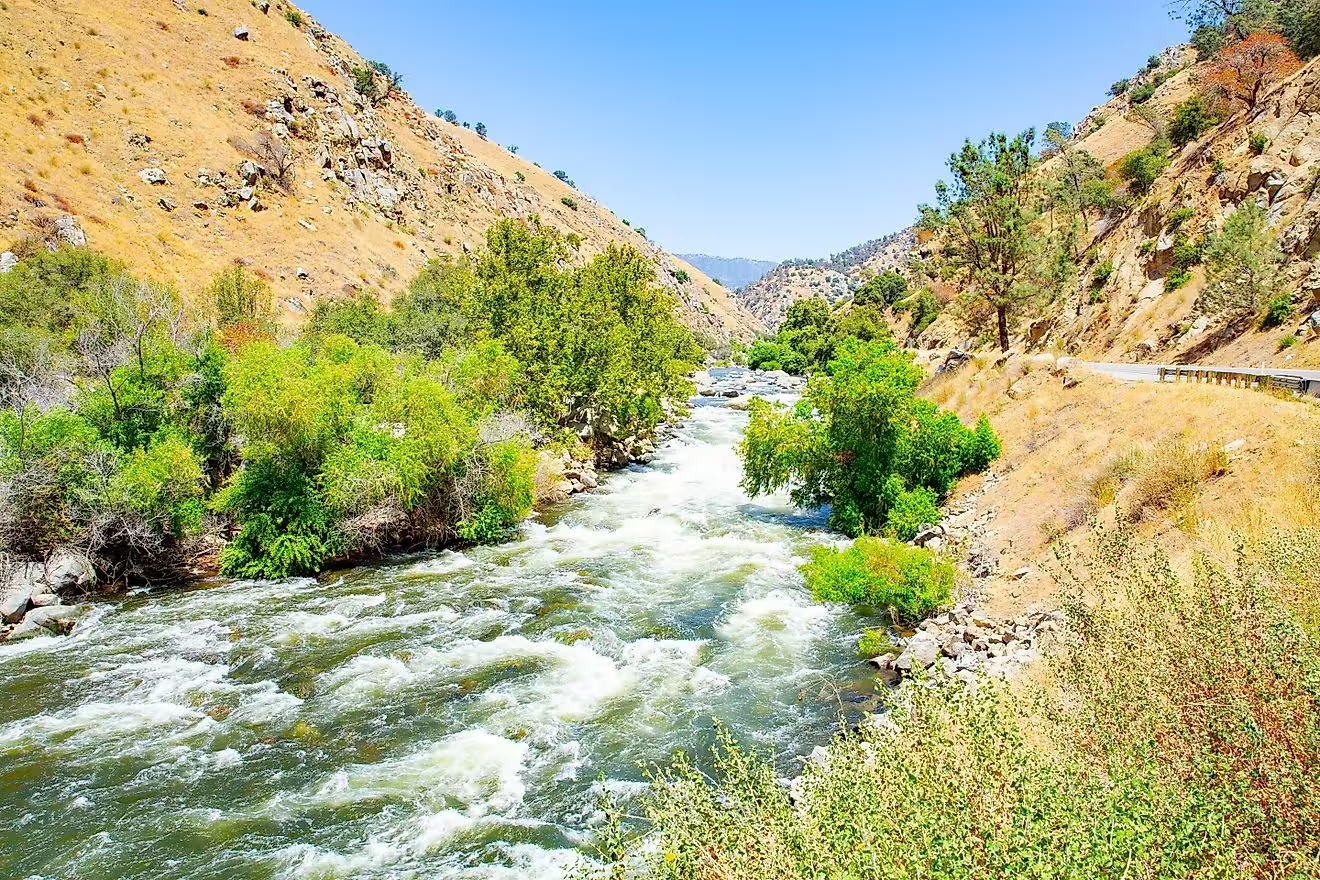

The most dangerous river in the United States is the Kern River in California, and the county it runs through keeps count by the roadside. At the mouth of Kern River Canyon, east of Bakersfieldwarning signs in English and Spanish tally the lives lost in the river since 1968. In May 2026, ahead of Memorial Day weekend, county officials raised the number to 348. Locals call the river the Killer Kern.
That toll builds a few lives at a time, about seven a year lately. Most of what kills people there can’t be seen from the bank. The Kern’s surface often looks slower and gentler than the water underneath, and the same mismatch shows up on other American rivers with long records of drownings. Four of them stand out, and on each one the danger comes from a different physical cause, sometimes miles from where people actually die.
Kern River, California
Each spring, snow melting near Mount Whitney fills the Kern, and the river carries it down through Sequoia National Park toward Lake Isabella and Bakersfield. In the park, where the river begins, the National Park Service warns that the melt makes the water swift and icy cold, and that the currents stay strong even when the water is low.
Below the surface, that cold, fast water runs through branches, rocks, and debris a swimmer can’t see. Kern County officials warn that the debris can snag a person and pull them under. Eight people died in the river in 2024, and the worst year on record, 2017, took 16. The signs at the canyon mouth leave out deaths on the upper river in Tulare County and anyone still missing, so the true count runs higher. Brian Baskin of Kern Valley Search and Rescue explained the trap ahead of Memorial Day weekend in 2026: “It seems like it’s not that dangerous, but in reality, it’s very, very dangerous.”
Colorado River, Arizona
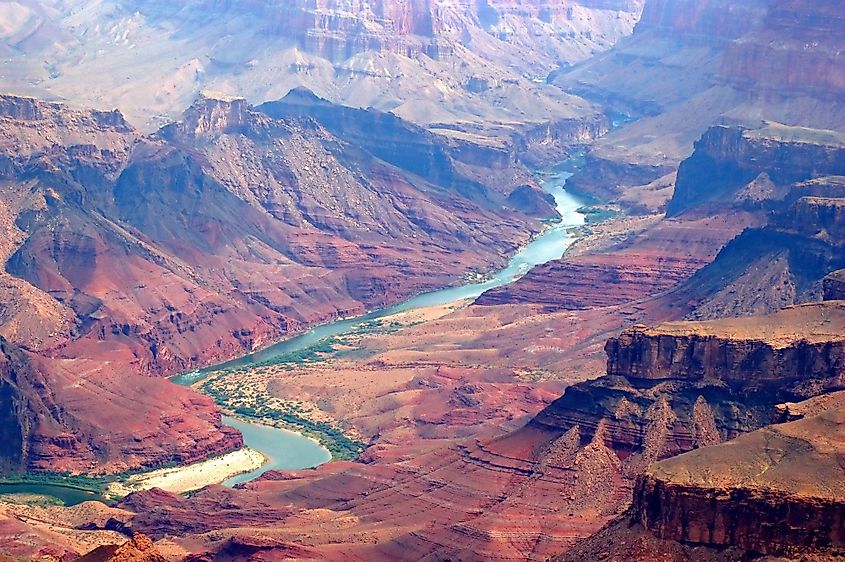
Water leaving Glen Canyon Dam for the Grand Canyon comes from deep in Lake Powell, drawn through the dam’s hydropower intakes below the reservoir’s warm surface layer. The National Park Service says that release keeps the river through the canyon within a few degrees of 46°F year-round, in July as much as in January. The reservoir’s level can shift it. In August 2022, with Lake Powell low, warmer water reached the intakes and the river at Lees Ferry hit 67 degrees. After cooler releases began in July 2024, it was back to 53 degrees that August.
Drowning in the Colorado accounts for about 100 of the roughly 900 deaths recorded in the Grand Canyon through 2017, according to the book Over the Edge: Death in Grand Canyon. Water that cold works fast on a body. The National Weather Service says sudden immersion triggers involuntary gasping and rapid breathing for the first two to three minutes, and that cold shock is as severe in water of 50 to 60°F as it is near freezing. As muscles lose control, staying afloat without help becomes nearly impossible.
Potomac River, Maryland and Virginia

Visitors at Great Falls Park, upriver from Washington, D.C., are not allowed to put even their feet in the Potomac River. Swimming and wading are illegal, and breaking the rule can mean a fine of $200 or more, an appearance in federal court, or arrest. The rule comes from the shape of the riverbed. Water pouring over the falls and ledges circles back on itself, and the river floor below is broken by deep potholes and gaps in the rock. In the Potomac River Gorge, the Park Service says, those currents move downward and can pull a person or a dog to the bottom.
About half the people injured in the river there die of their injuries; the Park Service puts the share at 51 percent. Not all of them were swimming. Montgomery County, on the Maryland side, has typically counted three to five drownings a year in the Potomac, and some victims had only been wading in waist-deep water when they stepped into a deep hole and were swept off. Victims have been found pinned under submerged rock ledges 15 to 30 feet below the surface.
Chattooga River, Georgia and South Carolina

On the Chattooga River, which forms part of the border between Georgia and South Carolina, the deadliest stretch of rock lies in the Five Falls, five Class III to V rapids packed into roughly a quarter mile. Paddlers reach them on Section IV, below Bull Sluice, the rapid that ends Section III. The 1972 film Deliverance was shot partly on the river, and within four years of its release, the Chattooga had 24 recorded deaths. The Forest Service, which has kept records since 1970, says most of the dead have been paddlers, some of them experts, and that swimmers have died as well.
The danger in the Five Falls sits below the waterline. American Whitewater’s river guide warns that all the midstream rocks there are undercut, especially at Crack-in-the-Rock, Jawbone, and Sock-em-Dog. Current flows into the open space beneath each rock, and a swimmer carried against one can be pinned below the surface. Numerous swimmers have died in the left channel of Crack-in-the-Rock. Elsewhere on the river, some people caught in strainers and hydraulics were never recovered.
Guadalupe River, Texas

On the other rivers, the people who died were in the water or at its edge. On the Guadalupe River in Texas Hill Country, the flood reached people on shore. Overnight on July 4, 2025, storms fed by moisture from the remnants of Tropical Storm Barry dropped heavy rain on the hills of the upper Guadalupe. At the river gauge in Hunt, about five miles downstream of Camp Mystic, a summer camp on the river, the water rose more than 25 feet in two hours and passed the level of a 500-year flood in less than an hour and a half.
Camp Mystic lost 27 campers and counselors. Kerr County officials identified 117 victims in the county, and the floods killed more than 130 people across Central Texas.
The ground explains the speed. Hill Country is known as Flash Flood Alley, and its thin, rocky soil soaks up little rain. “It’s like the region’s been paved over with concrete,” said Avantika Gori, a Rice University researcher. Rain that hits the steep hills runs off quickly, collects in the river valleys, and moves downstream in fast-moving waves.
The Kern and the Guadalupe show the two ways a river’s toll builds. On the Kern, it grows a few lives at a time. The signs at the canyon mouth read 342 before Memorial Day weekend in 2025 and 348 a year later, and a Kern County official described the pattern behind them back in 2017: people get into the water and catch on trees, branches, and debris they could not see from the bank. On the Guadalupe, one night of rain on thin soil produced a toll in Kerr County alone equal to more than a third of everything the Kern’s signs have counted since 1968. On the Kern, the danger starts at the waterline, with the decision to wade in. On the upper Guadalupe, it started miles upstream, on hills where the rain had nowhere to soak in.
Source: www.worldatlas.com