
Get your daily dose of health and medicine every weekday with STAT’s free newsletter Morning Rounds. Sign up here.
Happy Thursday. We’ve got a great lineup for you today, including an inside look at shuffles within the Senate’s health committee, and what it might mean for “Medicare for All.”
Experts update prostate cancer risk in adult men
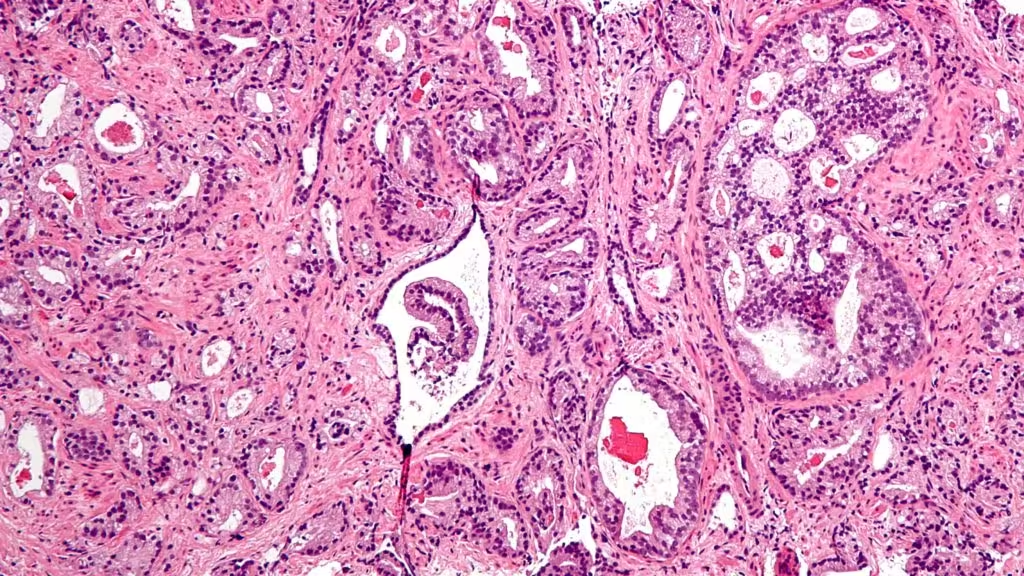
The American Cancer Society released a major update to its guidelines today, recommending testing for prostate-specific antigen blood levels every two years starting at age 50 for men with an average risk of prostate cancer. Men in high-risk groups, like Black men and men with a significant history of prostate cancer in the family, are urged to get tested annually starting at 45. The guideline’s authors hope that increased surveillance will reduce the number of Black patients presenting with cancers at advanced stages, as this demographic is disproportionately represented in prostate cancer mortality.
The changes reflect recent findings that screening through PSA levels reduced disease-specific mortality for certain men. It had fallen out of favor for its lack of specificity before recent findings returned it to specialists’ good graces. Read more from STAT’s Annalisa Merelli.
Sen. Rand Paul goes for HELP
The Senate health committee is in the spotlight once again.
Health, Education, Labor and Pensions Committee members announced they will vote next week on whether to nominate Heidi Overton as commissioner of the Food and Drug Administration. Republicans are still in power in this lame duck session, but Overton’s approval is not a given, STAT’s Margaret Manto explains, since a key Republican hasn’t said whether he backs her.
And colleague John Wilkerson noted Tuesday that Sen. Bernie Sanders (I-Vt.) plans to move the party towards supporting “Medicare for All” once he becomes chair of the committee in January. But he’ll have a new Republican colleague to spar with.
Sen. Rand Paul (R-Ky.) announced yesterday that he will forgo his leadership of the Senate homeland security committee to join HELP as the top Republican next year. Why is this bureaucratic shuffling noteworthy? The senator used the homeland security committee’s unusually powerful subpoena authority to accuse Anthony Fauci, without evidence, of conspiring to cover up the origins of the Covid-19 pandemic. Committee members voted along party lines to hold the former National Institute of Allergy and Infectious Diseases director in contempt of Congress.
Moving to the health committee will allow Rand to fight with Sanders over Medicare for All and all manner of other health issues.
(Most of the information about Paul came from John Wilkerson and our D.C. Diagnosis newsletter. If you want puns and great updates about which senators STAT reporters are chasing down in the bowels of Congress, you can sign up here.)
The cost of replacing BMI as an obesity metric
Body mass index is a flawed measure for obesity, but it remains deeply entrenched in global medical systems. If the world replaced it, obesity rates would increase and millions of people’s obesity diagnoses could flip, according to a new study.
Experts took a framework developed last year that offers a new understanding of how weight can impact a person’s health outcomes and applied it to obesity rates in the United States, the United Kingdom, China, and Spain. After analyzing 844,000 participants, the researchers calculated that BMI-based obesity missed 6.2% of adults compared to the new metric.
The measure ditches BMI’s focus on a person’s height and weight to include where fat is stored in a person’s body, most notably abdominal fat. It could have major implications for accurately assessing the mortality risk from obesity. Read more about the study from STAT’s Andrew Joseph.
What MAHA learned from Black activists
Two new First Opinion pieces explore how the movement’s history informs its present. In one, professor Jerel Ezell argues that MAHA has coopted strategies from Black environmentalists fighting systemic health and food system fissures for decades. “Even as Kennedy and MAHA have cribbed from the Black activist playbook, they’ve actively undermined” Black Americans, he writes.
In another, professor Gavin Yamey argues that it’s not surprising key leaders are standing by convicted rapist Russell Brand, given the movement’s history of cozying up to violent men. “There is a rot of toxic masculinity and violence at MAHA’s core,” Yamey writes. Read more.
Diverse NIH dataset fuels new findings on prescription drugs
If you’ve ever spent months cycling through different doses of the same drug to find one that works, it could be your pharmacogenes at work. This set of genes affect how your body responds to prescription drugs, impacting what dose works for you and potential side effects.
Scientists have just identified thousands of new variants in these genes, thanks to a study using data from nearly 100,000 Americans through the National Institute of Health’s All of Us program. The advances are partly due to the program’s collection of genetic data from diverse backgrounds.
The study found that every participant carried at least one variant in the 16 pharmacogenes they studied, and that one in four participants had taken a medication that could be affected by these variants — everything from selective serotonin reuptake inhibitors to chemotherapy. Anil Oza has the write up.
What we’re reading
- Exclusive: The ‘Pathogen Hunters’ track microbes around the world. But are their data real?, Science
- Most transgender people have no regrets years after hormone therapy, study says, Washington Post
- Newly elected doctors and scientists hope to restore trust in science. It won’t be easy, STAT
- Donor who bankrolled RFK Jr.’s flights also hosted him on his yacht, Wall Street Journal
Source: www.statnews.com