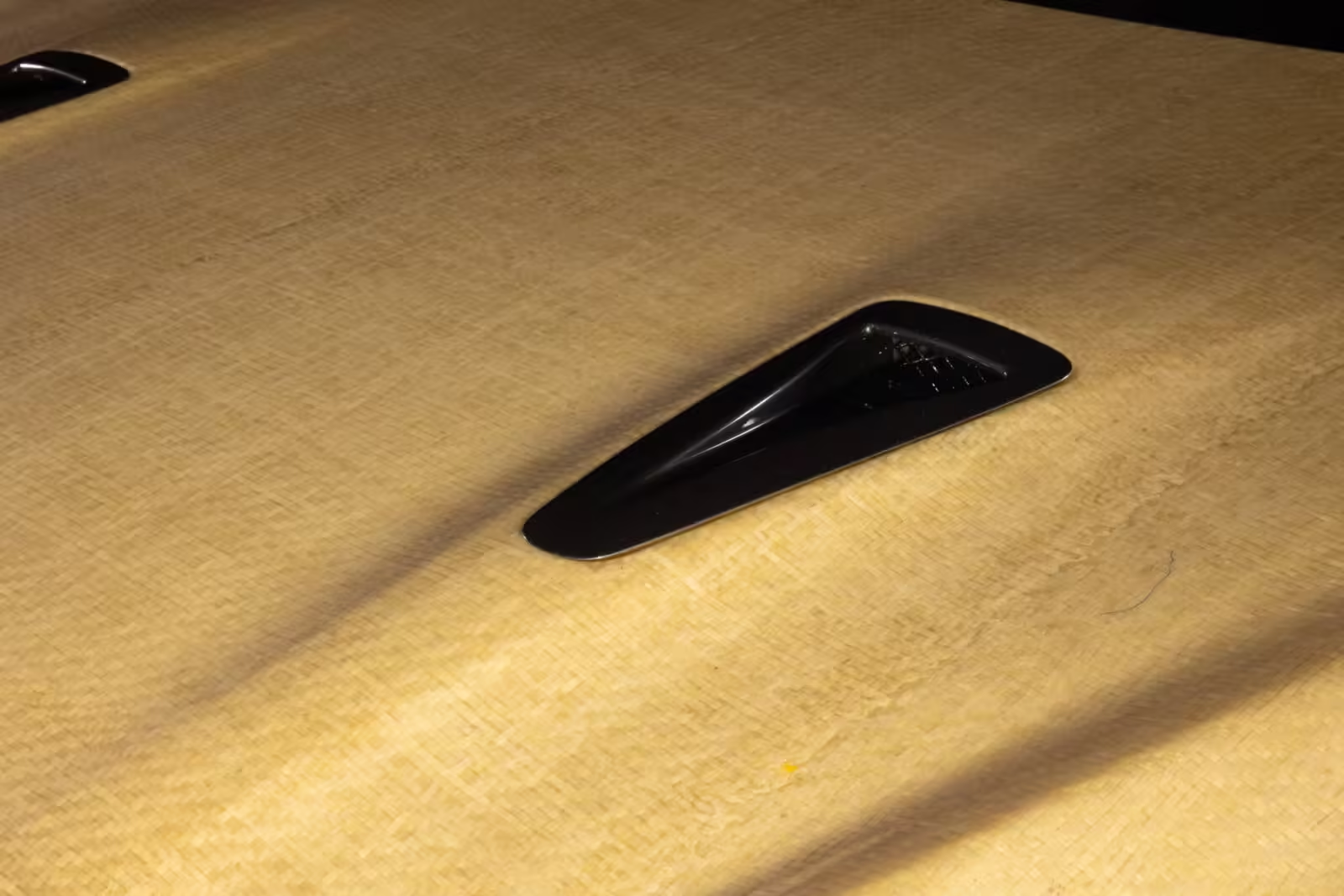

Nissan and Food Reborn have created exterior body panels from natural fibre-reinforced plastic made with pineapple leaf fibres
Nissan and Okinawa-based Food Reborn have developed what they describe as the world’s first automotive exterior body panels made from natural fibre-reinforced plastic (NFRP) using pineapple leaf fibres. Nissan is also licensing its manufacturing know-how to Food Reborn, which will produce the yarn, woven fabric and prepreg needed to make the composite.
The partners have developed a process that turns fibres extracted from pineapple leaves into flat yarn, which is woven into fabric and used to reinforce a composite. Nissan’s internal testing shows the material has higher tensile strength than conventional flax-based natural fibre composites, and the companies estimate that more than 50 million tonnes of pineapple leaves are discarded worldwide each year.
Motorsport is the first target. Racing categories based on production cars require natural fibre-reinforced plastics for modified exterior panels, but a shortage of specialist suppliers has pushed up costs and made supply unreliable. “This sustainable and composite material also delivers the high level of performance required for demanding environments such as motorsports,” said Tatsuzo Tomita, the corporate executive responsible for Technology Development at Nissan.
The companies will exhibit the panel at the SAMPE Japan Advanced Materials Technology Exhibition at Tokyo Big Sight from 18 to 20 November. Licensing the process rather than keeping it in-house fits Nissan’s push to earn more from its intellectual property, while motorsport’s existing mandate for natural fibre panels gives the material a ready market in which to prove itself before any move into production vehicles.
Why this matters:
- Motorsport remains the realistic market. The initial use case is racing series whose rules require natural fibre panels, and with no production plan disclosed, road-car use would first require proof of long-term resistance to moisture, UV exposure and repair, areas where natural fibre composites have historically struggled.
- Licensing hints at limited in-house ambition. Licensing the manufacturing process to Food Reborn fits Nissan’s broader push to monetise intellectual property during its restructuring, but raises questions over whether the material will ever reach Nissan’s own vehicles.
- Feedstock economics remain unproven. Abundant discarded leaves do not guarantee cost competitiveness, since collection from dispersed plantations and conversion into woven prepreg must still compete with established flax-based supply chains.
Source: www.automotiveworld.com