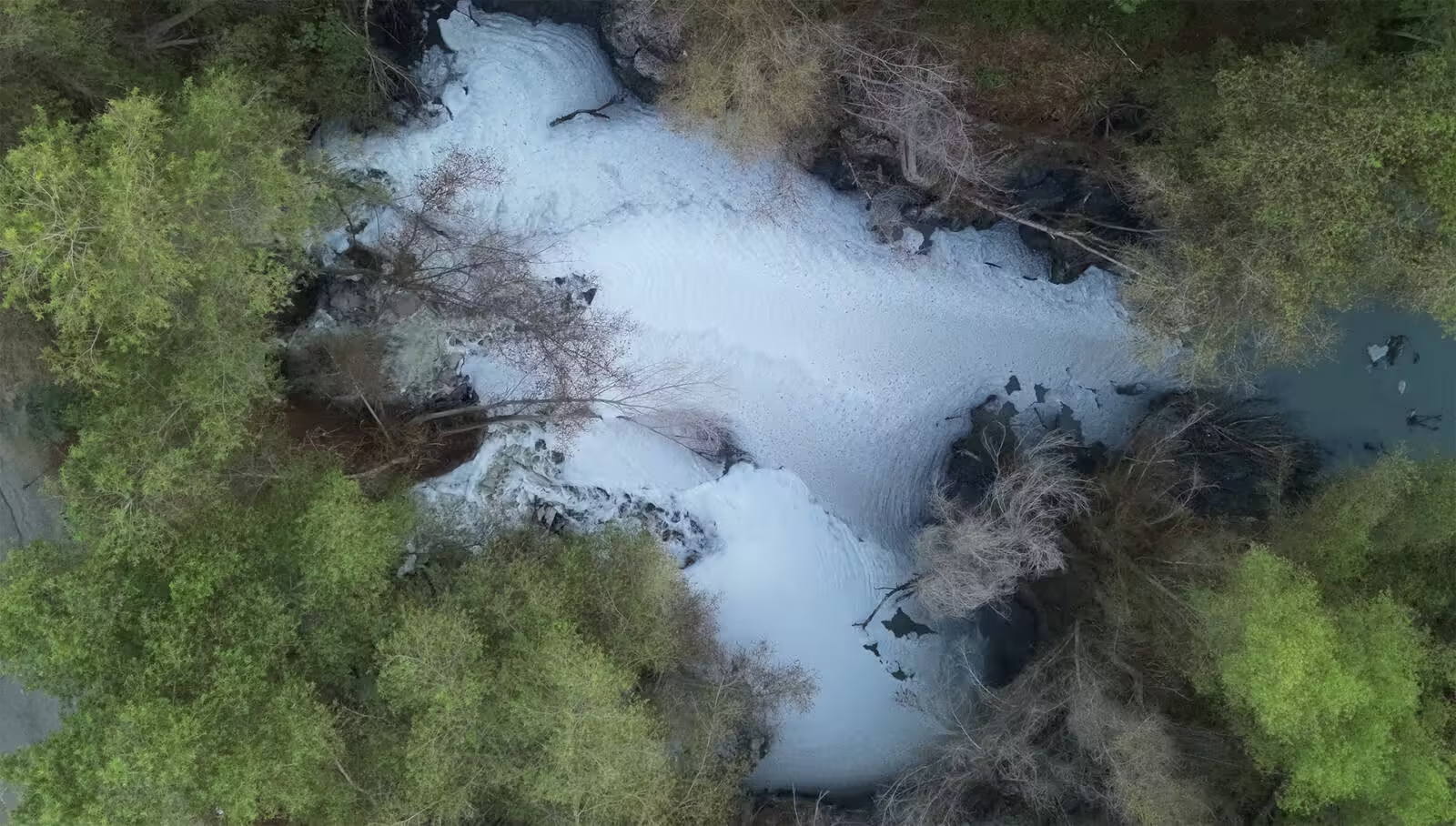

For thousands of people living near the Tijuana River, raw sewage, industrial waste and urban runoff are not abstract environmental concerns. They shape daily decisions about whether to open a window, spend time outside, exercise or invite people into their homes.
New findings from San Diego State University’s Healthy Water Healthy Air Study, recently published in BMC Public Health, document the health symptoms, environmental concerns and changes to everyday routines reported by people living through the ongoing Tijuana River pollution crisis.
“From the very beginning of our study, we got together with community members who were being impacted by this pollution, as well as local doctors and political leaders and nonprofit groups, to sit down and talk about what are the questions that need to be asked, what are the topics that need to be covered,” said Paula Stigler Granados, associate professor in the Environmental Health and Global Health Division at the SDSU School of Public Health (SPH). “And that is really the core of how we started to develop our Healthy Air, Healthy Water survey.”
Among 409 adults who completed the study’s baseline survey through Oct. 31, 2025, 74% reported at least one upper respiratory symptom during the previous two weeks. Half reported nausea, 52% reported bloating and 77% reported headaches. Sleep disturbances, difficulty concentrating and other symptoms of psychological distress were also commonly reported.
Nearly 85% of participants reported encountering strong malodors at least weekly, and most rated the air quality in their communities as unhealthy or worse. The findings provide community members, health care providers and decision makers with health data that can help inform public health responses while creating a foundation for continued evaluation of the crisis and its effects on people who live and work in affected communities.
The Tijuana River carries untreated sewage, industrial waste and urban runoff north from Mexico through the Tijuana River Valley and into the Pacific Ocean. The longstanding transboundary pollution crisis intensified significantly in summer 2024 following sewage infrastructure failures and a major wastewater overflow. Community members reported pervasive odors, breathing problems, gastrointestinal symptoms, difficulty sleeping and other concerns.
SDSU launched the Healthy Water Healthy Air Study in September 2024 in direct response to those concerns. The broader initiative combines a longitudinal community health survey with environmental assessments of air, water and sediment. The newly published analysis includes baseline survey data collected from September 2024 through October 2025. Additional data collected through May 2026 from a total of 489 unique participants confirm the present study findings.
The bilingual English and Spanish survey was developed with input from community partners and the County of San Diego Health and Human Services Agency and pilot tested with community members connected to local clinics and organizations focused on water quality. The goal was not simply to examine environmental conditions, but to document what living through the crisis looks and feels like for the people experiencing it.
“This is a daily impact. I mean, this is something that people are having to work around. They’re having to plan their lives around these pollution events, and honestly, that shouldn’t happen in any community,” said Granados. “So why is it happening here? And why is it being continued to allow to be happening here? And I think that that’s what we keep hearing over and over and over again: When will it stop? How do we fix it? Why aren’t people listening?”
Those experiences extended into participants’ daily routines. Nearly two-thirds, 65%, said they closed their windows more often than usual. Fifty-nine percent reduced time outdoors, and 47% installed home air filtration systems. Participants also reported exercising indoors, limiting social invitations to their homes and reducing strenuous physical activity.
Those adaptations raise important health equity considerations because the ability to avoid potential exposures is not equally available to everyone. Air filtration systems and other protective measures cost money. Staying indoors may not be feasible for people whose jobs require outdoor work, while housing conditions can affect a household’s ability to keep outdoor air from entering the home.
The analysis also identified consistent associations between participants’ perceptions of environmental conditions and reported symptoms. Compared with participants who rated local air quality as good or moderate, those who rated it more poorly reported a 35% to 80% higher prevalence of upper respiratory symptoms, depending on the air quality category. Poorer air quality perceptions were also associated with higher gastrointestinal symptom scores and more symptoms of psychological distress. More frequent malodor exposure showed similar patterns.
The baseline analysis is cross-sectional, meaning environmental conditions and many symptoms were reported during the same period and the findings cannot establish cause and effect. Participants were also not selected through a population-representative sampling method. Participants were disproportionately women, White and of relatively high socioeconomic status, while Hispanic and Latino residents and lower-income households were underrepresented.
A more representative, longer-term cohort will be important for understanding whether some populations experience different or greater health burdens.
Community engagement has been central to the work. Rather than waiting until the study is complete to communicate findings, the team has created opportunities for residents to engage with emerging health and environmental data and ask questions about what the information means for their communities.
“This is as much their data as it is anyone else’s,” Stigler Granados said. “And so I think it’s just as important to provide the data to the community members as much as it is to publish it in peer reviewed journals.”
During a July 7 community update, for example, the team presented early findings and environmental health data, shared resources for reporting concerns and dedicated time to community questions, including how the data will be shared and used.
Those conversations also allow the team to listen to residents, better understand the questions and concerns most important to them and strengthen partnerships on the ground. The team is continuing to expand those relationships and environmental health literacy efforts.
The findings may also provide important context for health care providers. People experiencing headaches, nausea, respiratory problems, difficulty concentrating, sleep disturbances and other symptoms may seek care for conditions that can have multiple possible causes. The Healthy Water Healthy Air Study provides additional information about symptoms being reported in affected communities and supports greater attention to patients’ environmental histories and concerns.
“There is an actual necessity that we must be documenting these exposures, that we must be asking our patients and our community members what their exposures are, and believe them,” Granados said. “Believe that these are actually happening.”
The baseline findings are one step in a longer effort. Participants were invited to complete monthly follow-up surveys for one year, allowing investigators to examine changes over time. The team is also pursuing support for a more representative community cohort with extended follow-up and future work that could incorporate validated health assessments, medical records and clinical study visits.
Combining community health data with environmental monitoring could help researchers better understand how changes in air and water conditions correspond with changes in health over time and evaluate whether infrastructure improvements and public health interventions are improving conditions for people who live and work in affected communities.
“We already know it’s a problem. We already know people are getting sick,” Granados said. “This is just documentation of how much, how often, where and who, so that we can make better decisions about how to address the issue.”
For community members who have spent years describing how the pollution crisis affects their homes, health and daily lives, the findings add those experiences to a growing scientific record. They also provide decision makers with data that can help identify needs, direct resources and evaluate interventions. The science will continue to evolve, but the fundamental public health standard remains clear: No community should be expected to live with raw wastewater pollution.
“This isn’t just an issue that’s happening nearby, but this is an issue that’s happening to us, with us, around us. This is one of the largest environmental justice issues in the country, and it’s here. It’s not in our backyard. It’s in our front yard,” said Granados.
The research team includes Yu Ni of the department of epidemiology and biostatistics in SDSUs School of Public Health; Elizabeth A. Mikita of SDSU’s department of epidemiology and biostatistics and UC San Diego’s Herbert Wertheim School of Public Health and Human Longevity Science; Christine T. Loftus of the University of Washington’s Department of Environmental and Occupational Health Sciences; Eyal Oren of SDSU’s department of epidemiology and biostatistics; Jamie Moody, Savannah Shifflett and Eva Azevedo of SDSU’s department of environmental health; Isabel Roji of SDSU’s Department of Anthropology; Jade Roccoforte and Eunha Hoh of SDSU’s Division of Environmental Health; community co-authors Tom Csanadi and Marvel Harrison of Imperial Beach; community co-authors Kimberly S. Dickson and Matthew Dickson of South Bay Urgent Care; Vi T. Nguyen of Kaiser Permanente; Miguel Angel Zavala Perez of SDSU’s School of Public Health at SDSU Imperial Valleys; and Penelope J. E. Quintana and Paula Stigler Granados of SDSU’s department of Environmental Health.
The Healthy Water Healthy Air Study was approved by the San Diego State University Institutional Review Board. The study is supported by the Prebys Foundation, with Research Electronic Data Capture support provided by the SDSU HealthLINK Center, which is funded in part by the National Institute on Minority Health and Health Disparities of the National Institutes of Health.
Source: www.sdsu.edu