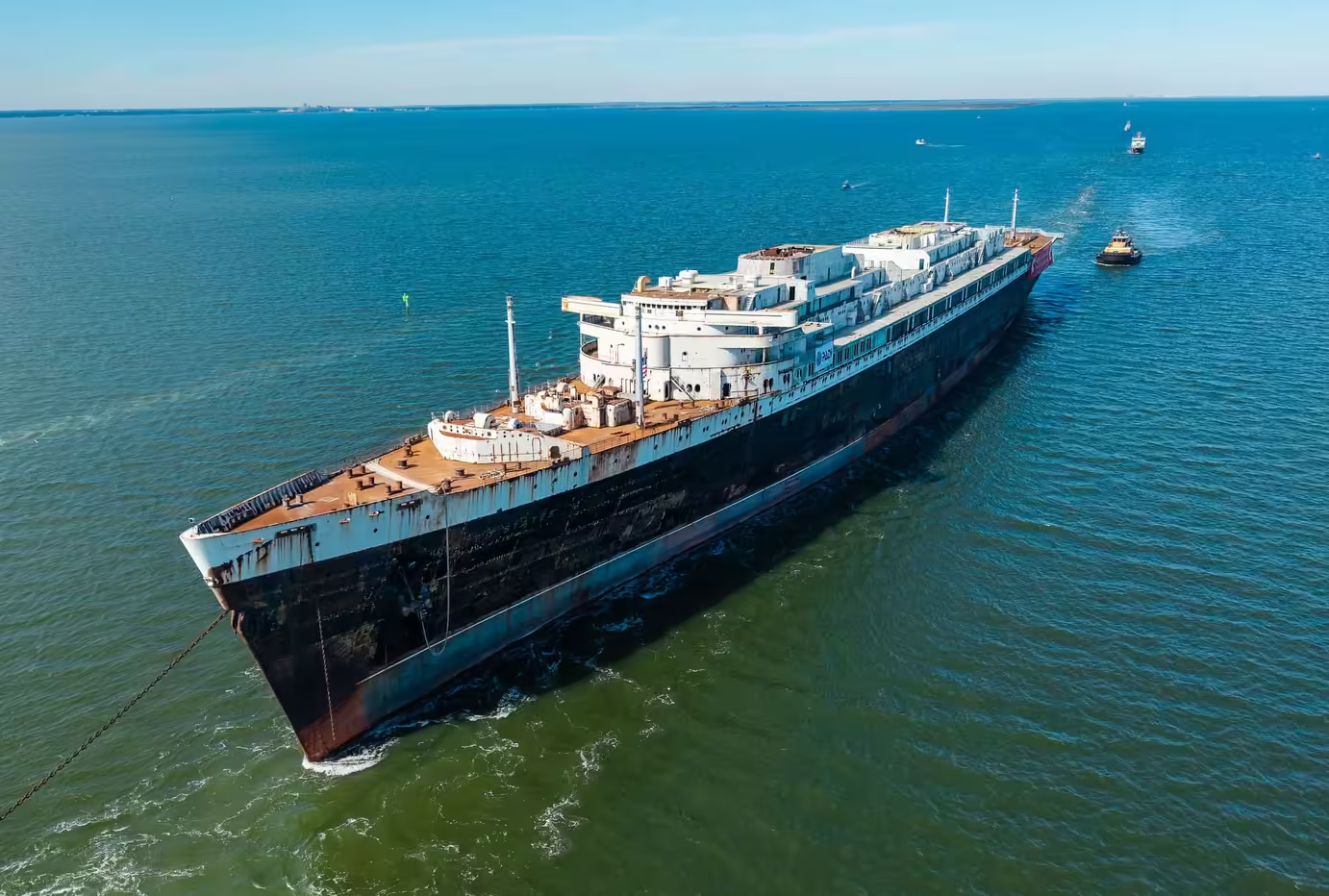

Bigger than the RMS Titanic and faster than the RMS Queen Mary, the SS United States was a nautical wonder during the mid-20th century – the nation’s premier luxury ocean liner that once ferried presidents and Hollywood elite across the Atlantic in opulence.
Brought into service in 1952, it could carry 19,000 passengers in a crossing that took just three days and 10 hours – a remarkable speed for its era. Built during the Cold War, it was also secretly designed to carry 14,000 troops, according to the U.S. Maritime Administration.
It was decommissioned in 1969, and spent its years haunting old shipyards while failed plans to restore it came and went. Now, the once mighty ship is bound for one last voyage – to the bottom of the sea.
If all goes as planned, it will be sunk on Wednesday, Veterans Day, and become the world’s biggest artificial reef made from an intentionally sunken ship, according to the SS United States Conservancythe group that is partnering with Okaloosa County, Florida in the $13 million project.
“This saves the ship from being scrapped for metal or meeting some other demise,” Trey Goodwin, the chairman of the Okaloosa County Commission, said in a statement to Northeastern Global News. “No, it won’t be sailing the sea, but it will still be at sea. This honors it. It lives on.”
The vessel measures 990 feet in length and stands 17 stories high.
Noah Haag, a researcher with Northeastern University’s Marine and Environmental Sciences Department, said ideally a marine study of the underwater biomass – life in the area – would have been done prior to the sinking of the ship. That way scientists can get a before and after picture of the sea life to define if the reef is really propagating more fish.
But, in the big picture, “The shipwreck will be a good place for fish species,” said Haag, “They’ll have places to hide, forage and propagate.”
Haag, along with David Kimbroa Northeastern associate professor and head of the Kimbro Lab in the university’s marine center, have been studying artificial reefs for years and together with other co-writers recently published a paper on artificial reefs in the peer-reviewed Journal of Marine Science.
The paper entitled “Global synthesis reveals that artificial reef units consistently augment fish assemblages, is not connected to the SS United States project, but it reviewed studies of 82 artificial reefs across the Atlantic, Pacific and Indian oceans with the aim of defining what types of reefs are best for sea life.
The researchers conducted the study because natural coral reefs are increasingly in danger, Kimbro said. Nearly half of the natural reef building corals in the world face an elevated risk of extinction, according to a paper published in October in the Journal Nature. It assessed 774 species of coral and found 44 percent were at least threatened and 33 species were critically endangered.
Kimbro said that the usefulness of artificial reefs vary, with the types typically used ranging from poured concrete replicas of coral structures and decommissioned oil rigs to piles of broken concrete, stacks of old telephone poles, and rubber car and truck tires chained together.
The state of Virginia even sank 40 decommissioned armoured military personnel carriers about six miles off Assateague Beach, near Ocean City, Maryland, in 1998 to create an artificial reef, according to the Marine Resources Commission.
The structures with lots of holes, including poured concrete spheres that look like big fat pots are among those that work best, said Haag.
“But sunken ships get the media’s attention,” Haag said.
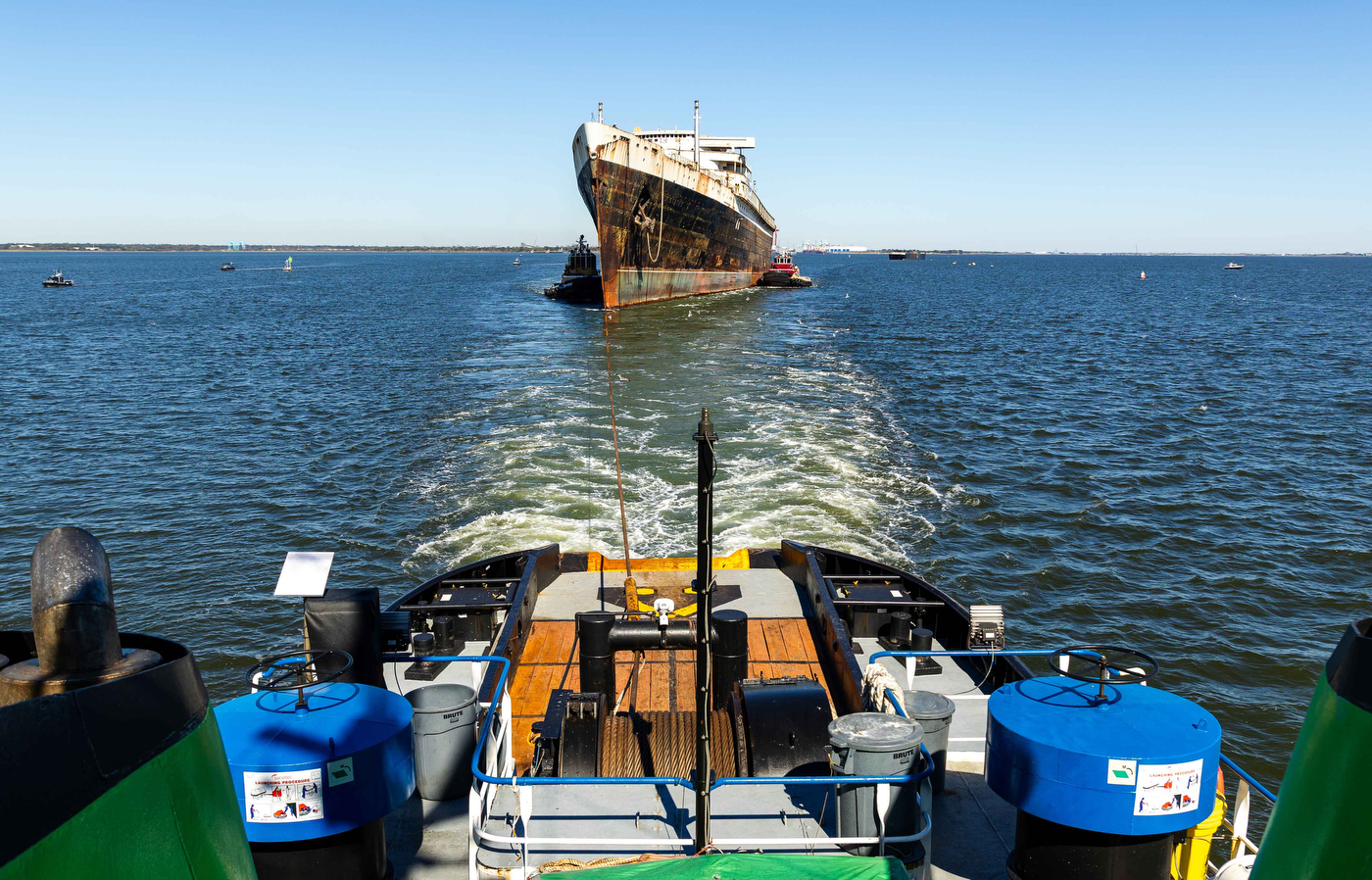
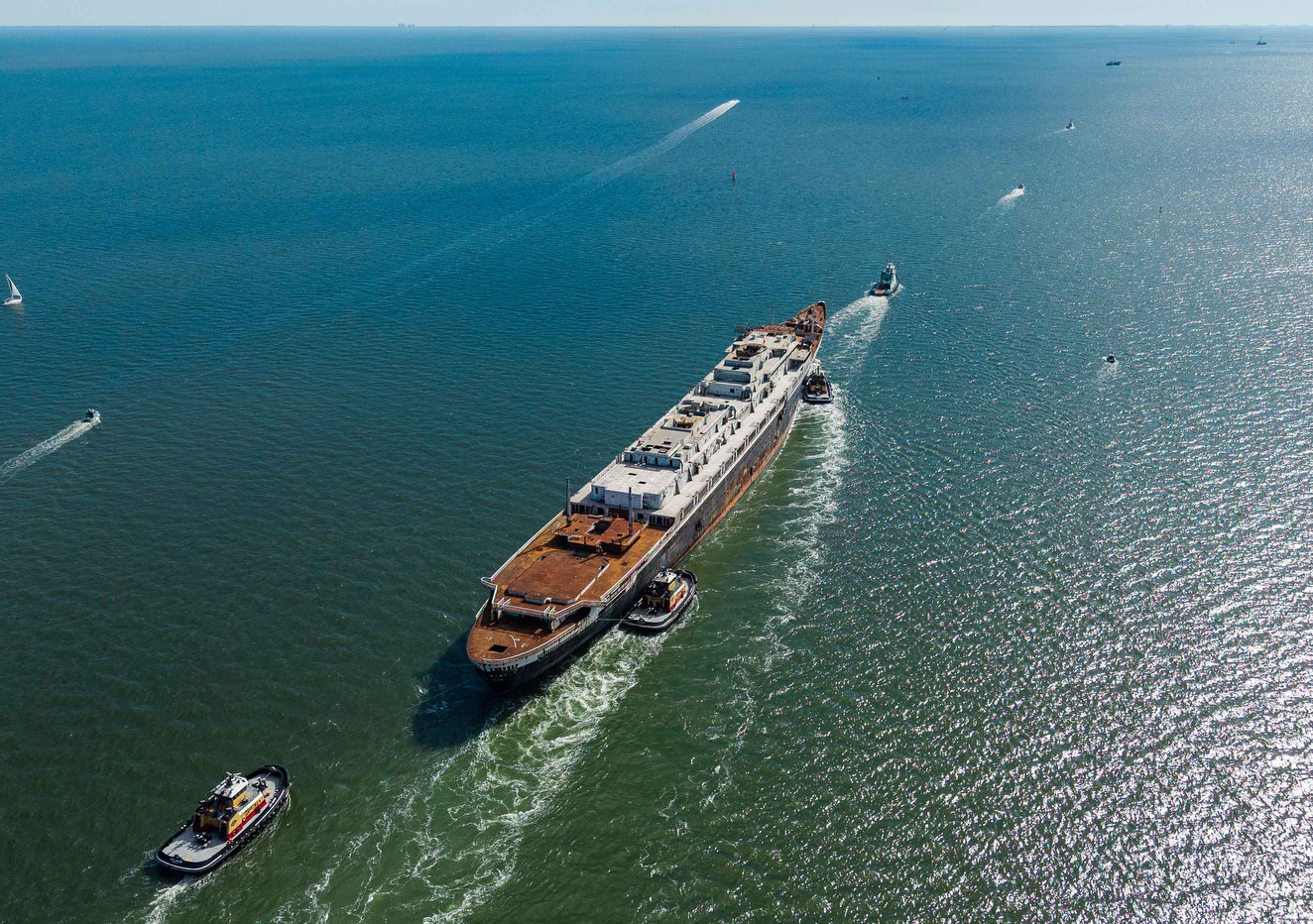
Tug boats are expected to tow the SS United States about 25 miles off Destin-Fort Walton Beach on Florida’s panhandle. Once at a prearranged spot, the ship will take its final plunge when its ballast valves are opened to flood its tanks, causing it to slowly sink, Okaloosa county officials said. No explosives will be used.
It is hoped that the ocean liner will settle upright onto the seafloor almost 200-feet below the water’s surface where its eight boilers and four turbine steam engines once moved it at record speeds of 44 mph, besting the Queen Mary’s record speed of 38 mph, according to the Maritime Administration.
If all goes well, its top funnels will be accessible to divers just 55 feet below the surface while its keel will rest 180-feet down, officials said.
But divers will have to confirm the position that the ship lands.
The shipwreck reef will be slightly bigger than the current record-holder, the 910-foot long USS Oriskany, a U.S. warship that was intentionally sunk off Florida’s Gulf Coast in 2006, according to the Florida Fish and Wildlife Conservation Commission.
The SS United States, which measures around 110 feet longer than the doomed Titanic, has a hull made of 2-inch thick, battle-grade steel, according to the Maritime Administration.
Haag said that metal hulled wrecks give algae, corals and other sea life a hard surface to settle on in an otherwise sandy seabed, and they then attract fish.
Okaloosa County officials predict that the ocean liner will draw species such as red snapper and grouper. And because of the ship’s size, it could attract open-water fish such as amberjack, mackerel and tuna, they said.
“In the big picture, this (shipwreck) is a good thing,” Kimbro said. “We’re losing coral reefs globally, we need more habitats.”
Source: news.northeastern.edu