


By Ed Zurndorfer
11/15/2026

Health Savings Accounts (HSAs) have been around since 2003. In recent years, HSAs have become more popular because of the triple tax benefits. Federal employees have access to HSAs. With the federal “open season” recently starting and continuing through December 14, 2026, this is a good time to explain how HSAs work and how they can benefit both employees and retirees.
What is an HSA? An HSA is a tax-favored savings account that is paired with a high-deductible health plan (HDHP). Each year, the IRS sets the limits for insurance coverage including minimum deductibles, maximum contributions and maximum out-of-pocket limits. The following table shows the 2026 and 2027 limits.
HSA Contribution, Minimum Deductible and Maximum Out-of-Pocket Limits
|
Limit
|
2026
|
2027
|
Change
|
|
Self-only contribution limit
|
$4,400
|
$4,500
|
+$100
|
|
Family contribution limit
|
$8,750
|
$9,000
|
+$250
|
|
Catch-up (age 55+)*
|
$1,000
|
$1,000
|
None
|
|
HDHP minimum deductible, self-only
|
$1,700
|
$1,750
|
+$50
|
|
HDHP minimum deductible, family
|
$3,400
|
$3,500
|
+$100
|
|
HDHP out-of-pocket maximum, self-only
|
$8,500
|
$8,700
|
+$200
|
|
HDHP out-of-pocket maximum, family
|
$17,000
|
$17,400
|
+$400
|
*The catch-up amount sits in the tax code itself. Congress fixed it at $1,000; therefore, inflation never moves it. The other numbers adjust each year.
Either the HSA owner or the employer, or both, can make tax deductible contributions to the HSA. There is also a “catch-up” contribution of up to $1,000 annually if the HSA owner is age 55 or older.
Contributions are made to an HSA using before-taxed dollars. Once inside the HSA, the contributions grow tax-free. The distributions are tax-free if any of the before-taxed dollars and accrued earnings are used in order to reimburse qualified medical expenses. That is what is commonly called a tax trifecta or triple tax benefit; namely, tax deductible contributions, tax-free investment growth, and tax-free distributions used to pay qualified medical expenses.
For those federal employees and retirees enrolled in the Federal Employee Health Benefits (FEHB) program and considering enrolling in a FEHB program HDHP associated with an HSA during the current “open season,” the following key details are presented.
Opening an HSA
An individual is eligible to open an HSA only if they are covered by an HDHP that satisfies the specific requirements of Internal Revenue Code (IRC) Section 223. Under IRS Section 223, an HDHP is a health plan that has a minimum annual deductible and a maximum out-of-pocket limit (both of which are increased annually by the IRS for cost-of-living adjustments). Family coverage (which includes “self plus one” and self plus family”) refers to any tier of coverage other than self only coverage.
Reimbursement for qualified medical expenses
In order to receive tax-free reimbursements from an HSA, the HSA owner must have proof of qualified medical expenses. However, the HSA owner does not have to submit proof of qualified medical expenses incurred to the HSA sponsor for approval. Reimbursements can be subject to IRS audit.
An HSA owner can delay reimbursement in order to allow HSA assets to grow and then claim paybacks later. But the HSA owner must have records supporting the claim.
HSA reimbursements for qualified medical expenses cover a wide range of health care expenses. These expenses include Medicare Part B and Medicare D premium monthly reimbursements, a wig after chemotherapy, nursing home expenses, a guide dog, and contact lens solution. IRS Publication 502 (Medical and Dental Expenses) has a complete list.
Changes when an HSA owner becomes age 65
Two changes occur when the HSA owner becomes age 65. The first change is that the HSA owner is able to make HSA withdrawals for any reason. That is, the HSA owner can make HSA withdrawals to pay for non-medical expenses such as mortgage payments or groceries. However, these payments are taxable as ordinary income but there is no 20% penalty tax imposed which applies to HSA owners under age 65 who make HSA withdrawals to be reimbursed for non-qualified medical expenses.
The other change that will occur when the HSA owner becomes age 65 and enrolls in Medicare, at least Medicare Part A (Hospital Insurance). Enrolling in any part of Medicare will result in the HSA owner no longer being eligible to contribute to their HSA. This is the case, even if the HSA owner is still working and enrolled in HSA-compatible HDHP health insurance.
However, HSA owners who enroll in Medicare can still make tax-free withdrawals from their HSA accounts to pay or to be reimbursed qualified medical expenses. These qualified withdrawals include reimbursements for Medicare Part B (Medical Insurance) and Medicare Part D (Prescription Drug coverage) monthly premiums (including Income-Related Monthly Adjustment Amounts (IRMAA). Note that a federal retiree enrolled in Medicare and a Federal Employee Health Benefits (FEHB) program HDHP (used as a Medicare supplemental plan) cannot use HSA withdrawals to reimburse FEHB program HDHP premiums.
What happens when the HSA owner dies?
A spouse is the only individual who can inherit an HSA income tax free and use the HSA to make tax-free withdrawals in to pay or be reimbursed for qualified medical expenses. The HSA owner must name their spouse as beneficiary. A charity can also be named as a beneficiary. If neither a spouse or a charity is named as beneficiary, then if there is money left in the HSA owner’s account at death, the account terminates and income taxes are due.
Nonspouse heirs have one year to claim tax-free reimbursements for eligible out-of-pocket expenses of the deceased HSA owner incurred up to the date of the HSA owner’s death.
HSA investments
HSA owners can invest their accounts prior to withdrawing funds from their HSAs. HSA investing is similar to IRA investing in which IRA owners choose IRA custodians to invest their IRA accounts Many financial firms act as HSA providers.
Employers, including the federal government, who are offering HDHPs associated with HSAs typically choose HSA providers. Federal employees who own HSAs through the FEHB program and who are unsatisfied with their HSA provider should be able to switch providers. Several independent groups rate HSA sponsors, among them is Morningstar.
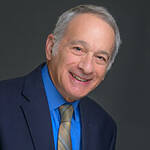
Ed Zurndorfer, EA, ATA, CFP®, CLU®, ChFC®, CEBS®, ChFEBC℠: Federal Employee Benefits Expert
A former career Federal employee, Ed has published more than 1,200 articles on Federal Benefits and Retirement! His writings have appeared on numerous websites and publications. Drawn to its mission to reach, teach, and serve Feds, Serving Those Who Serve is the only financial planning practice with which Ed has chosen to affiliate in over 20 years of teaching. In addition to conducting Federal Benefits seminars for Serving Those Who Serve, you can find Ed’s writings here on our blog in the FedZone, and on Fed-Soup, MyFederalRetirement, FederalNews Radio, and NITP.
He is a member of the Maryland Society of Accountants, the National Association of Enrolled Agents, the International Society of Certified Employee Benefits Specialists, the Financial Planning Association, the National Association of Health Underwriters, and the Society of Financial Service Professionals. Since 1999, Ed has taught many thousands of Federal employees about their benefits, in person and at Federal agencies all over the country. Ed is widely recognized for his expertise in Federal employee benefits.
Edward A. Zurndorfer is a CERTIFIED FINANCIAL PLANNER™ professional, Chartered Life Underwriter, Chartered Financial Consultant, Chartered Federal Employee Benefits Consultant, Certified Employees Benefits Specialist and IRS Enrolled Agent in Silver Spring, MD. Tax planning, Federal employee benefits, retirement and insurance consulting services offered through EZ Accounting and Financial Services, and EZ Federal Benefits Seminars, located at 833 Bromley Street – Suite A, Silver Spring, MD 20902-3019 and telephone number 301-681-1652. Raymond James is not affiliated with and does not endorse the opinions or services of Edward A. Zurndorfer or EZ Accounting and Financial Services. The information has been obtained from sources considered to be reliable, but we do not guarantee that the foregoing material is accurate or complete. While we are familiar with the tax provisions of the issues presented herein, as Financial Advisors of RJFS, we are not qualified to render advice on tax or legal matters. You should discuss tax or legal matters with the appropriate professional.
Source: www.stwserve.com