
“Could a future Supreme Court overturn the ruling that a president is immune for crimes committed while in office, and if they did, could Trump be prosecuted?” — Garret Swayne
Hi Garret,
The Supreme Court can overturn any ruling it wants to. That necessarily includes the 2024 presidential immunity decision in Trump v. United States.
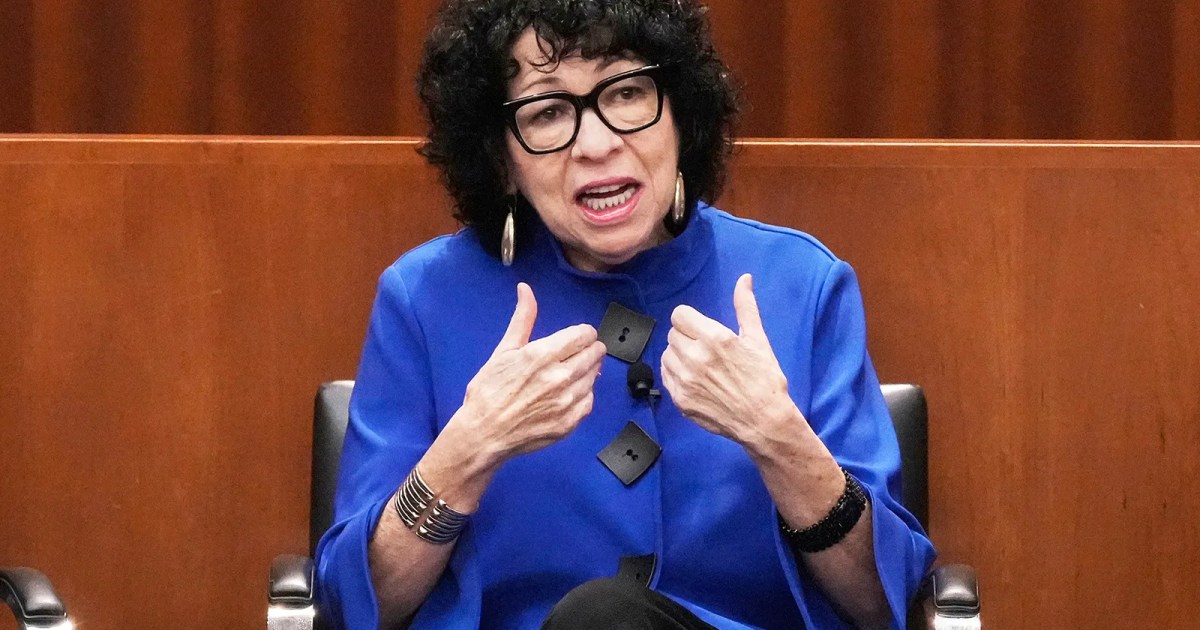
Justice Sonia Sotomayor, who led the court’s three Democratic appointees in dissent in that case, said recently that she hopes it will be overturned in her lifetime.
At 72, the Obama appointee is the third-oldest justice behind GOP appointees Clarence Thomas, 78, and Samuel Alito, 76. Both Thomas and Alito are reportedly not retiring this year, which effectively would deny President Donald Trump and the outgoing Republican-led Senate a chance to confirm their successors.
After the Senate’s new Democratic majority is seated in January, it’s unclear when the GOP will next have simultaneous control of the White House and the Senate. That creates the possibility of a future Democratic-appointed Supreme Court majority. If a Democrat wins the presidency in 2028 and appoints Thomas’ and Alito’s replacements, that would swing the court from a 6-3 GOP-appointed majority to a 5-4 Democratic-appointed majority (assuming all other positions on the court hold).
This hypothetical future court could overturn any precedents it desires. But it couldn’t just start publishing random opinions. The justices issue decisions in the appeals that come to the court, so, if they want to overturn a precedent, they need to use a new case as a vehicle to do so. For example, the court was able to overturn Roe v. Wade in the 2022 Dobbs case because Mississippi officials pressed an appeal seeking Roe’s reversal.
But presidential immunity is much different than something like abortion, because the latter arises daily nationwide and therefore consistently generates all sorts of legal disputes. When it came to reversing Roe, it was only a matter of when the court wanted to do it and which case it wanted to use.
Yet when it comes to presidential immunity, it’s unclear how that issue would make it to this hypothetical Democratic-appointed majority. There are not former presidents being prosecuted all over the place — and the immunity ruling itself could make it less likely for prosecutors to try.
While it’s true that Trump is appealing his New York hush money conviction, partly on immunity grounds, that dispute involves a discrete aspect of the immunity ruling, namely whether state prosecutors improperly used evidence of his official presidential acts to convict him of unofficial conduct (that unofficial conduct being covering up a hush money scheme in connection with the 2016 presidential election).
That appeal could reach the justices, where the president has a chance of reversing his conviction. But the litigation doesn’t directly call for the high court to reconsider the underlying immunity precedent — not that the current court would want to, anyway.
We don’t know when the hush money appeal might reach the justices (it’s awaiting a decision in an intermediate-level state appeals court). But if it arrives at a high court bench with a Democratic-appointed majority, the court could decide both the narrower evidentiary issue and, in the process, make the bigger move of overturning the underlying immunity precedent entirely.
One of the factors cutting against that outcome is the general principle that the court should not decide a case more broadly than it has to. But the court basically ignores that maxim when it wants to make a big move — and Dobbs was an example of that, with Chief Justice John Roberts, who voted to back Mississippi but without overturning Roe, writing in a concurring opinion that the majority’s “dramatic and consequential ruling is unnecessary to decide the case before us.”
Source: www.ms.now