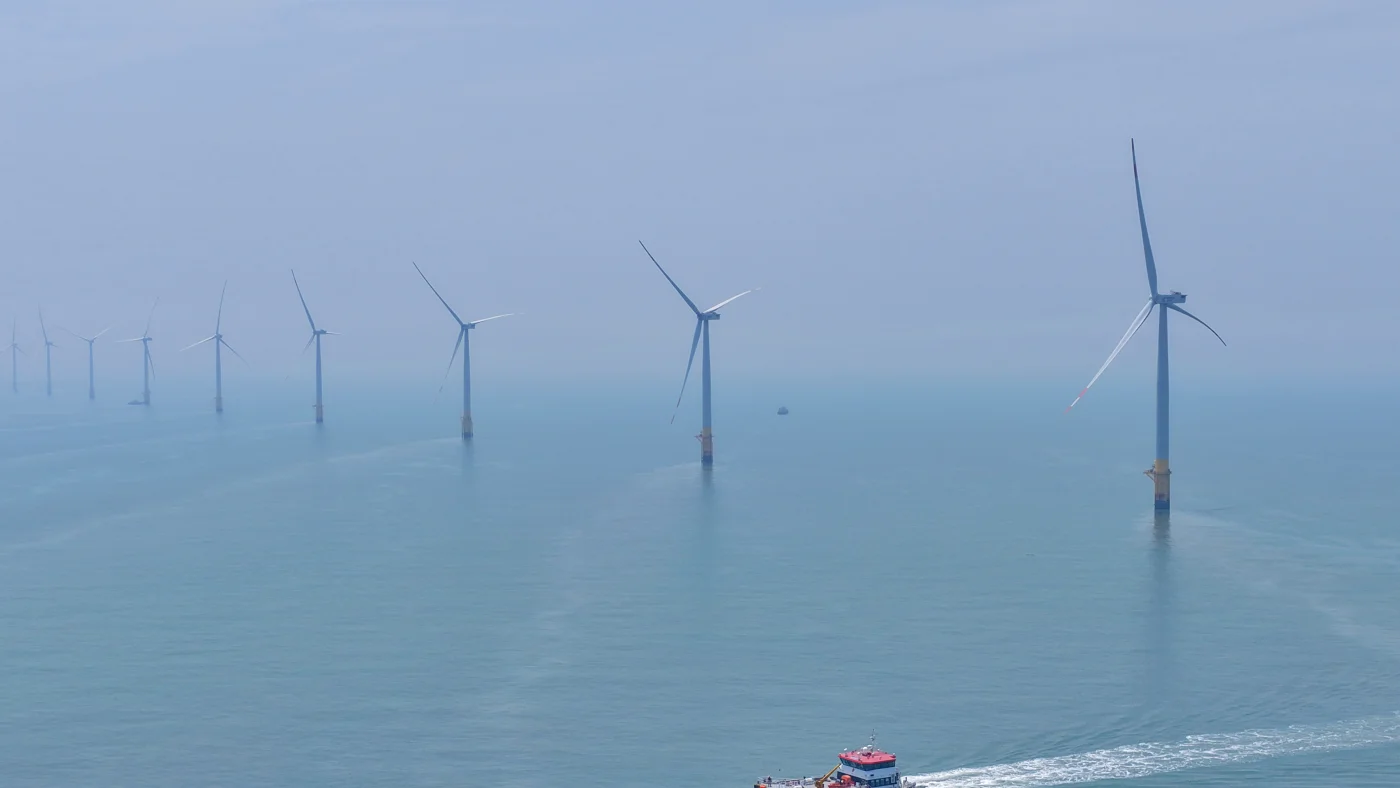

China leads the world in renewable energy. It’s helping drive down the country’s greenhouse gas emissions. Meanwhile, in 2025, U.S. emissions rose.
CN-STR / AFP/AFP via Getty Images
hide caption
CN-STR / AFP/AFP via Getty Images
As more than 200 countries meet in Turkey for the annual United Nations climate talks, COP31, the two largest emitters of greenhouse gases remain China and the United States. Now the countries’ stories are diverging.
For years, China’s climate pollution was growing, driven by increased coal use. But for the past two and a half years, China’s emissions have been flat or falling.
“And that is a remarkable change,” says Lauri Myllyvirta, lead analyst at the Centre for Research on Energy and Clean Air.
China is driving down emissions by increasing renewable energy and batteries, which is displacing coal. The rise of electric vehicles means China is also reducing its oil use.
“Those are bigger reductions than we expected,” Myllyvirta says, “and I think anyone expected.”
But last year, U.S. emissions went in a different direction. U.S. greenhouse gas emissions rose in 2025, as the country burned more coal for power and oil and gas for heating. A recent report from United Nations scientists notes that the U.S. sticks out as the only major economy where planet-warming pollution increased significantly last year.

This year, emissions in the U.S. are projected to fall slightly. The country will likely burn less coal than last year. But the U.S. could reduce its emissions more if it were deploying large-scale renewable energy and batteries like China, says Alex Wanga professor at UCLA Law and an expert on Chinese climate policy.
The problem, Wang says, is the U.S. hasn’t had long-term policy support for these climate technologies. The Biden administration increased funding for solar, wind, batteries and electric vehicles. The Trump administration reduced that funding and created regulatory hurdles for those industries.
“ What we’re suffering through these days is the policy whiplash that comes with the political divisions in the U.S.,” Wang says.
Here are the four things you need to know about U.S. and Chinese emissions.
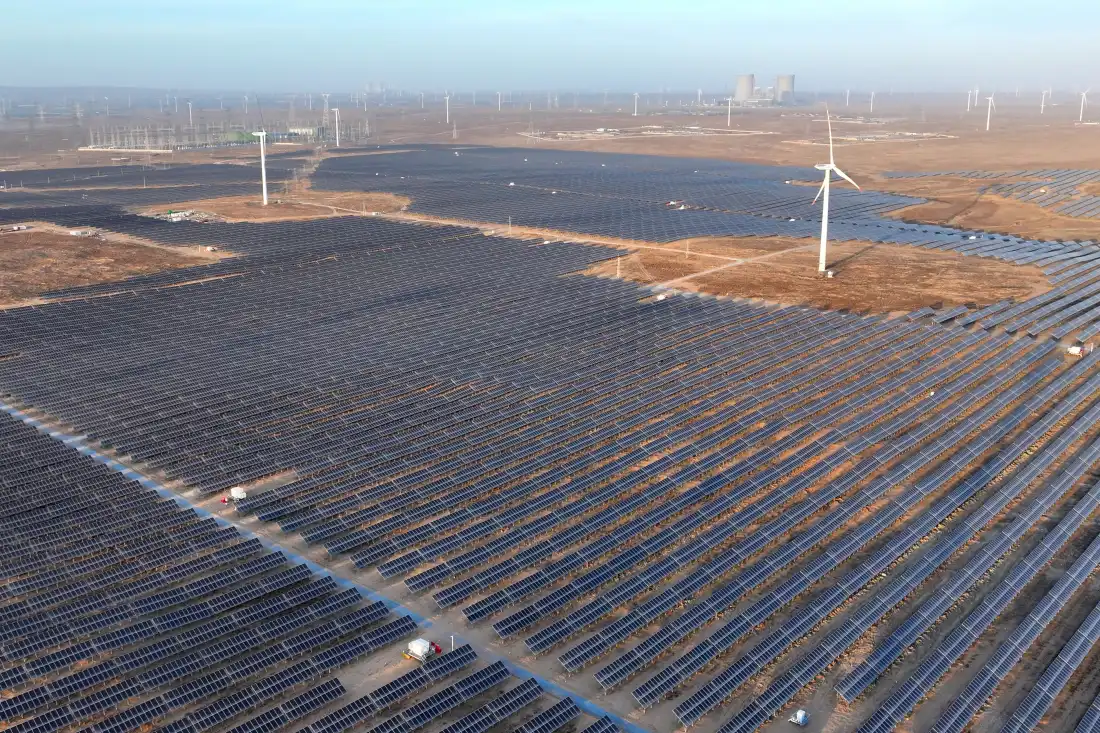
Solar panels and wind turbines in Lingwu in China’s northern Ningxia region.
CN-STR/AFP/AFP via Getty Images
hide caption
CN-STR/AFP/AFP via Getty Images
China had long-term planning
China started building the infrastructure that is allowing it to reduce emissions about twenty years ago. Back then, China was still known as a manufacturer of low-cost items. Air pollution in major Chinese cities was also reaching record levels.
Chinese leadership made policies to tackle both the country’s economic identity and its air quality. Five-year plans from the central government helped provinces pivot into the clean energy sector.
“Because the policy direction was so consistent and clear,” Wang says, “they used that to drive the development of all of these industries that really didn’t exist before.”
The government set up nationwide supply chains for technologies like solar panels, batteries, wind turbines and electric vehicle manufacturing. Today, China is the unparalleled global leader in producing, deploying and exporting these clean energy technologies.
“On the electrification front, they’re going gangbusters,” Wang says.
These technologies are helping China reduce its emissions, Myllyvirta says. His research group found that last quarter China’s emissions dropped 3% – the largest decline since the COVID-19 pandemic.
In the power sector, emissions are falling as coal use decreases and solar, wind, and nuclear energy increase. China has built many new coal plants in recent years, but they often don’t run at full capacity and instead are used for backup generation.
Industries like cement and steel manufacturing are also reducing climate pollution. In the transportation sector, electric vehicles are displacing demand for gasoline and diesel. Two-thirds of passenger vehicle sales in China are now electric vehicles, according to recent data from the China Passenger Car Association.
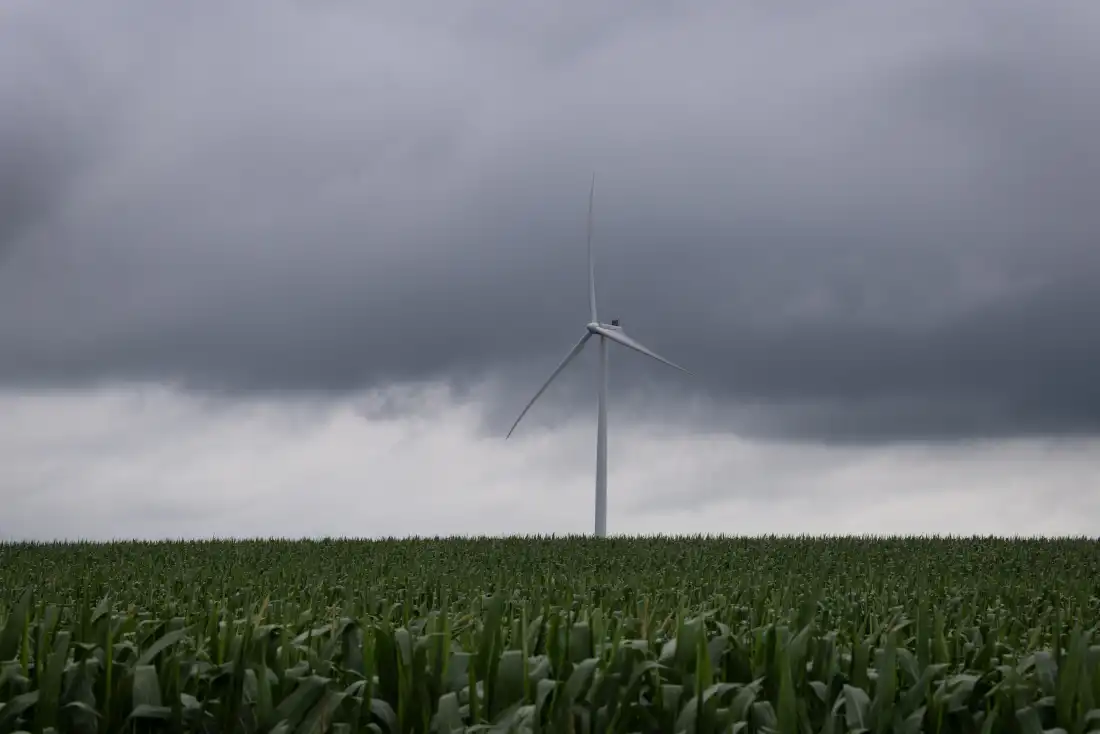
A power-generating wind turbine near Pomeroy, Iowa. The Trump administration has eliminated financial support for wind and solar energy production.
Scott Olson/Getty Images North America
hide caption
Scott Olson/Getty Images North America
The U.S. has flip-flopped, experts say
While China has consistently invested in clean technologies, that hasn’t been the case in the U.S. The U.S. has struggled to scale up climate tech industries that reduce emissions because of flip-flopping by the federal government, Wang says.
Under the Biden administration, Congress passed new financial incentives for renewable energy and electric vehicles, and policies that cut greenhouse gas emissions in sectors like the oil and gas industry. The Trump administration has reversed those policies, putting up roadblocks for solar and wind projects, canceling tax breaks for home solar and electric vehicles, and proposing to cut regulations on methane — a super planet-heating gas.
The Trump administration frequently cites its “energy dominance agenda,” which prioritizes keeping coal plants running.
Asked about increased U.S. greenhouse gas emissions last year, White House spokesperson Taylor Rodgers wrote in an email to NPR, “The United States is in a position of strength thanks to the President’s energy dominance agenda which has unleashed affordable, reliable, secure energy sources. America is the world’s leading producer and exporter of oil and gas, and many nations rely on the United States for their energy supply.”
This is a growing problem as the country builds more energy-hungry data centers, says Ben Haley at consulting firm Evolved Energy Research. Most of those data centers are now being powered by fossil fuels like natural gas and coal.
“The pace and scale at which they come online tends to increase emissions,” Haley says. “You can’t really match that with clean energy deployment at scale, currently.”
A new study finds that carbon dioxide emissions from about 400 large U.S. data centers equal almost as much as an entire country like Denmark.
Chinese exports equal emissions reductions
Wang says it’s great that China’s emissions seem to be plateauing. But he says, “We shouldn’t forget the fact that their emissions really are outsized compared to the rest of the world.”
Still, the country is exporting clean technologies like solar, batteries and electric vehicles to countries including Pakistan, Nepal and the Philippines. That’s helping these countries reduce their dependency on fossil fuels.

Chinese clean tech exports have only increased since the beginning of the U.S. war with Iran, says Kingsmill Bond, an analyst at the energy think tank Ember.
The ongoing U.N. climate talks in Turkey will have a large emphasis on getting countries to commit to increasing electrification. China will be promoting trade of its clean tech technologies at the conference, says Li Shuo, director of the China Climate Hub at the Asia Society Policy Institute.
As China gets a bigger share of the global clean tech trade, it will be harder for the U.S. to compete, he says.
“This dominating position will not go away, and if anything, it will be further consolidated in the coming years,” Li Shuo says. “The U.S., I think, will struggle.”
Source: www.npr.org