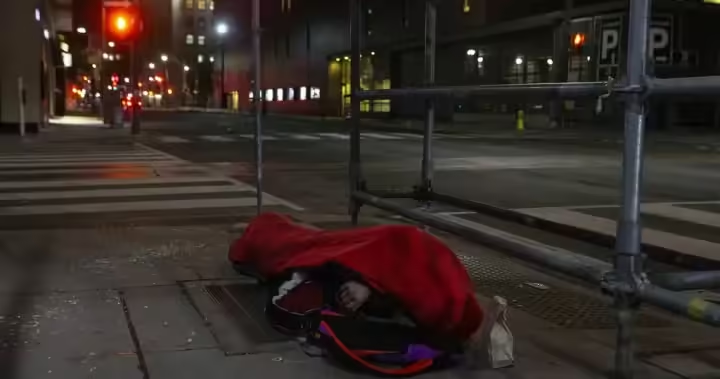

Toronto’s newly elected council includes several prominent tenant and housing rights activists and advocates for the city’s homeless population who say they will bring the kind of first-hand outreach experience to the table that council needs.
While some observers aren’t sure that advocates-turned-councillors can significantly change the direction of Toronto’s housing and homelessness policies, the rookie members say they have the political will to use their advocacy expertise to help address the city’s affordability crisis.
Diana Chan McNally, a longtime outreach worker who is now representing Parkdale-High Park in the city’s west end, said while she has a list of other priorities, such as improving public transit and ensuring the waterfront remains accessible and environmentally sound in her ward, she is committed to do what she did as an advocate in her new municipal decision-making role.
“I worked for 12 years with people on the streets and you learn very quickly that (homelessness) has nothing to do with the individual and it has everything to do with things like affordability, access to health care,” she said.
“So, (I’m) very interested in continuing this work, very interested in making sure that we have a platform and pathway, essentially, for people to have their voice heard and also for policies to actually reflect their needs.”
The current term of the housing rights advisory committee, established by city council in 2023, is ending this month and McNally, who was a member of the committee, said she is hoping to bring it back.
“I think this is a great space in which we can continue to push forward, ensuring that people’s rights, for those who are out on the street who don’t own property, are actually taken care of,” she said.
Chiara Padovani, a tenants’ organizer, is another well-known activist who secured a victory after unseating longtime councillor Frances Nunziata in York South-Weston in last month’s municipal election. She said that she will also continue advocating for tenants.
Cristine de Clercy, a political scientist who teaches at Trent University, said it is easier for activists to criticize lawmakers and offer policy ideas as outsiders. Once they become part of the government, they need to learn to compromise and navigate internal dynamics to successfully work on their priorities, she said.
“The new councillors, it’s inevitably the case that because now they’re inside of machinery of government, they don’t have free rein to simply advocate willy-nilly for whatever policy,” she said.
McNally said she is aware that being a politician and being an advocate are two different roles and she needs to be pragmatic, but she is certain she won’t compromise her core progressive values, including housing rights.

Get daily National news
Get daily Canada news delivered to your inbox so you’ll never miss the day’s top stories.
“My goal is to make sure that, you know, people who used to be my colleagues are holding my feet to the fire, that the public is ensuring that I stay true to my own values,” she said.
Toronto’s homelessness and housing affordability crises have always been pressing issues at city hall in recent decades and they’ve escalated since the onset of the COVID-19 pandemic.
Officials at different levels of government have been discussing the problem, providing funding and taking actions, but critics have often said too little is done to help homeless people and struggling tenants in Canada’s largest city.
Padovani was among the advocates who helped tenants organize several rent strikes against what she called unfair landlords.
She said road safety and flood protection are two major issues in her ward that she will focus on, but she will also always fight for tenants’ rights.
“Tenant voices have been ignored by … so many in the city government,” she said. “And I’m really looking forward to making sure that if you’re a slumlord in my community, I’m going to be taking you to task and I’ll be holding you accountable.”
As a councillor, she said she will make sure the city enforces building standards more vigorously.
“What I want to do is start passing bylaws at the City of Toronto that puts the onus on the city to protect tenant rights and alleviate some of the pressure on tenants,” she said.
Padovani said she understands that residential tenancy rights are primarily governed by the province, but that doesn’t mean the city can’t do anything to protect renters against abusive landlords.
She praised Mayor Olivia Chow for leading the effort to pass the rental renovation licence bylaw, which makes renovictions — a tactic critics say is used by landlords to evade rent control and increase rent prices — more difficult.
Padovani said she will push council to pass a similar bylaw against rent increases above the provincial guideline, known as AGI, which have sparked several rent strikes in Toronto in recent years.
“I have a feeling this is going to be something that a lot of my colleagues are going to be interested in, in order to start to think creatively about how to make life more affordable for the half of the city that rent their home,” she said.
Nearly half of Toronto’s population rents their homes. That number is over 70 per cent in the densely populated Toronto Centre, according to Curran Stikuts, the ward’s new councillor who said the area is also home to many homeless shelters and overnight respite centres.
Stikuts, an advocate with more than 15 years of experience working with renters and marginalized communities in the area, including queer youth who are homeless, campaigned on housing affordability and was elected over incumbent Chris Moise.
Stikuts said fighting against renovictions and ensuring that buildings are kept up to standards and the city provides support for tenants are among the issues he wants to tackle on council. He said working with homeless people has taught him that “four walls and a roof” isn’t enough to solve the problem.
“It’s really, I think, about focusing on the ways in which we’re building not just the units and spaces, but the levels of supports and wraparound care that we need to make people stable and then get back on their feet,” he said.
Pointing to a report from the Financial Accountability Office of Ontario, Toronto said homelessness in Toronto has deceased by over eight per cent, while increasing by nearly 18 per cent provincewide, between 2022 and 2025.
Despite the progress, the city said it is still in a state of “homelessness emergency” caused by unaffordable housing, inadequate income support and unmet health needs.
The recently tabled federal budget includes nearly $30 billion toward the government’s goal to end homelessness across the country over the next decade, and Stikuts said while he was encouraged by the news, he would love to see some of that money flow to Toronto quicker to get “shovels in the ground.”
Greg Cook, an outreach team lead at Sanctuary Ministries of Toronto, said improving living conditions for homeless people hasn’t been a top priority for Chow during her first term.
“The city has said it’s a crisis, but they’re not treating it as such,” he said.
The mayor’s office, however, said she has been working hard to build more shelters and supportive housing, and invest in eviction prevention programs aimed at curbing homelessness.
It said the city has moved 15,000 people from shelters and encampments into permanent housing, including 4,700 people in 2025.
“Over the past two years, homelessness in Toronto declined, despite growing across the province. There is more work to do and the mayor has been committed to addressing it,” Chow’s spokesperson Braman Thillainathan wrote in a statement.
Cook said even though a progressive-leaning council has an opportunity to make some progress, they can’t do it alone.
“It will require a significant kind of community pressure, and I think there might be some councillors who are more willing to kind of stick their neck out and speak on behalf of people who are poor,” he said.
Asked if community advocates who are joining council for the first time could serve as allies for the homeless community in municipal government, Cook said: “I wouldn’t probably go that far. I think politicians are going to do what is going to keep them in power.”
Source: globalnews.ca