Gallup’s annual poll of the public’s perception of crime was released last week and now we’re going to talk about it. It’s always an anticipated release by your intrepid newsletter writer for the insights it give into whether Americans are understanding the trends I talk about day in and day out.
This year’s poll has good news and bad. The good news is that the share of Americans saying crime rose in the US in the last year fell to 46 percent when Gallup asked in November. That’s the lowest share since 2001 and, along with last year, just the second year since 2001 below 50 percent.
To be clear – crime fell in 2025 in the US at a nearly historic clip. Murder was down a lot, so was every type of violent and property crime. Even crime that doesn’t get reported to police fell in 2025 (story for next week!) and there’s every indication that the same trends are continuing into 2026.
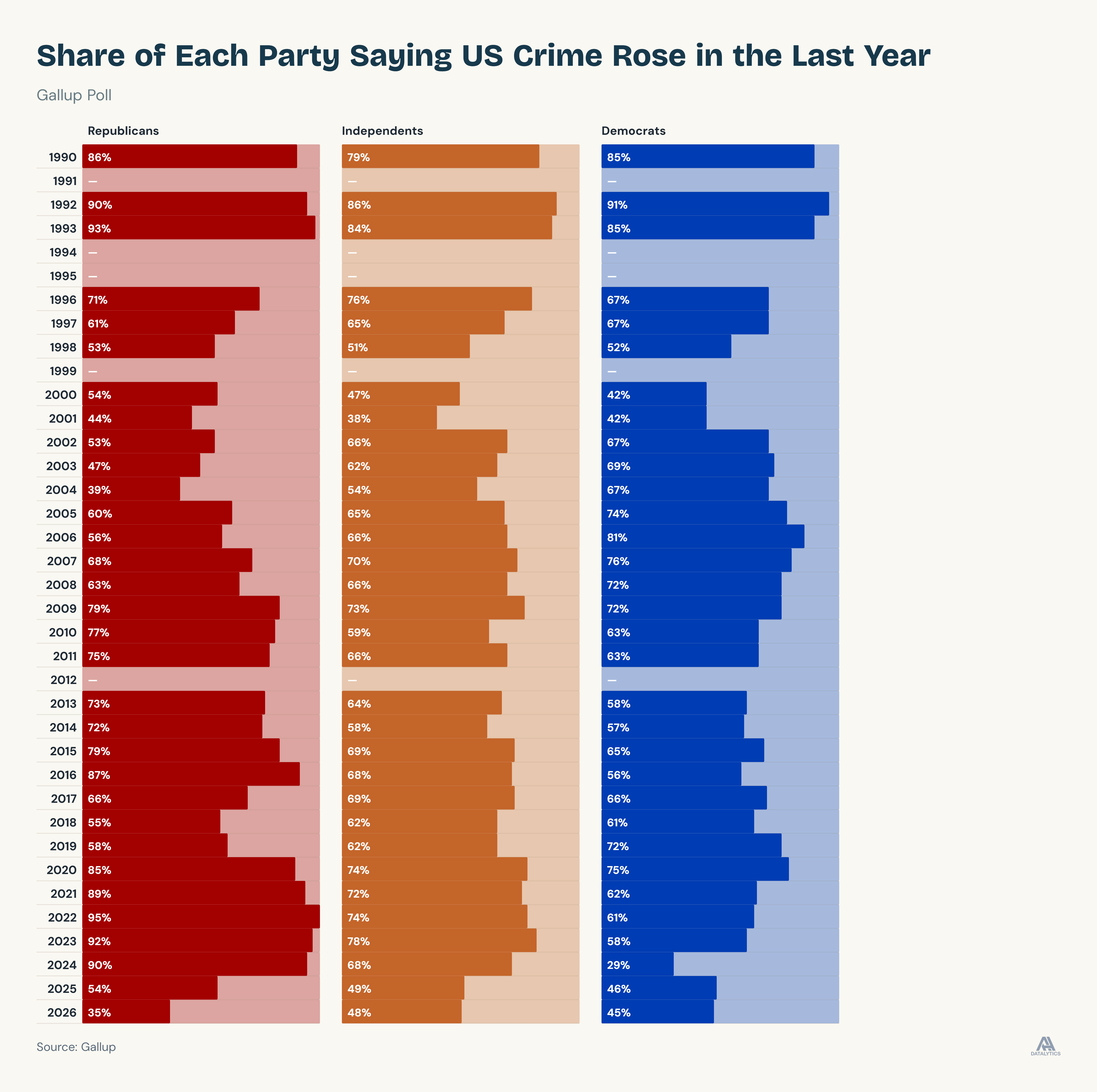
The change in overall perceptions largely comes from Republicans. Breaking down the data by political party shows that the share of Republicans saying crime has risen in the last year fell from an astounding 90 percent in 2024 to 35 percent in the latest survey. Democrats were at 29 percent in 2024 and that share rose to 45 percent in the latest survey.
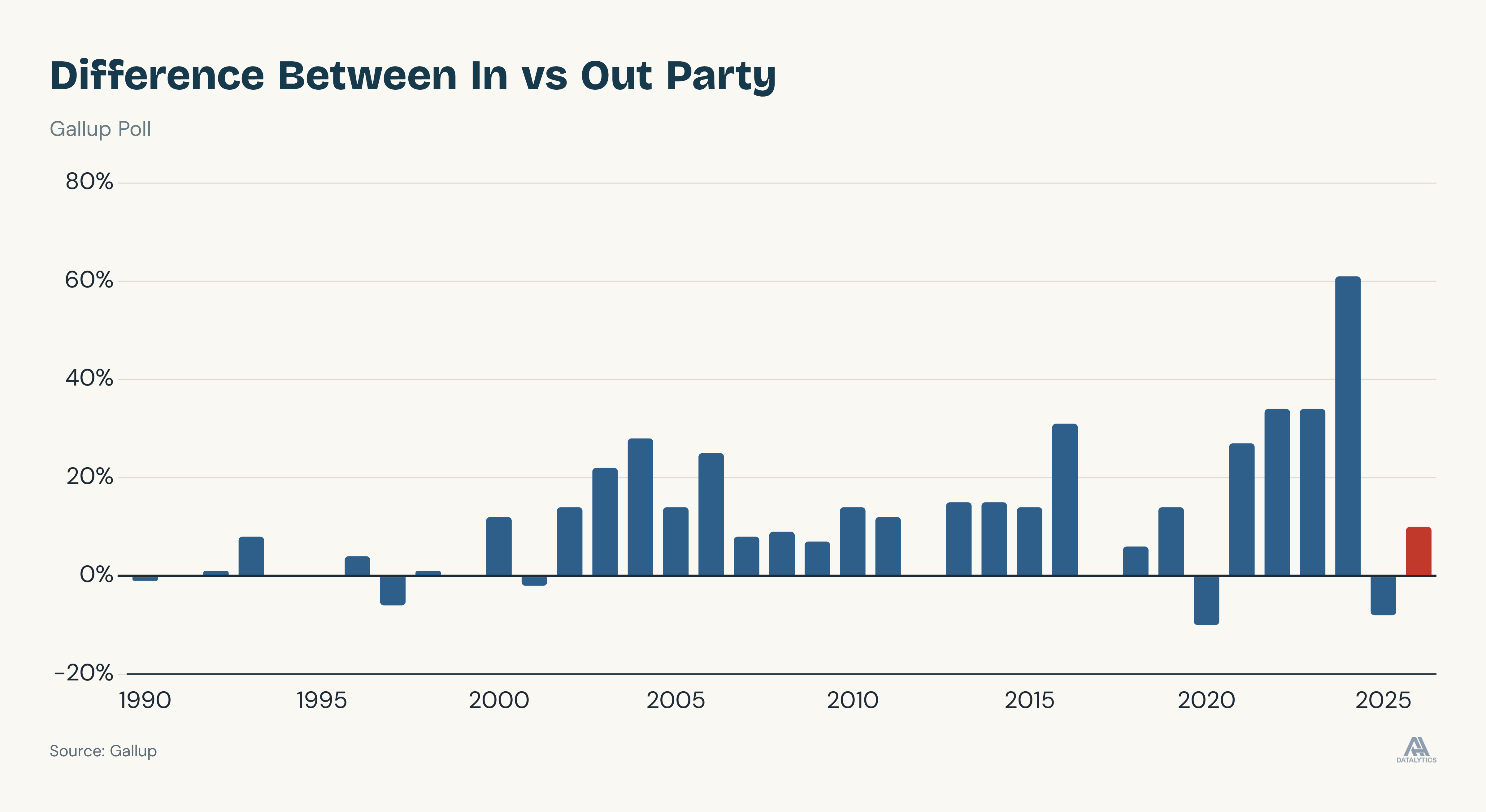
More Democrats than Republicans saying crime rose in the last year fits a pattern of a smaller share of people in the party holding the presidency saying crime rose in the last year than the party out of power. The opposite has been true in only 5 of the last 32 years surveyed by Gallup.
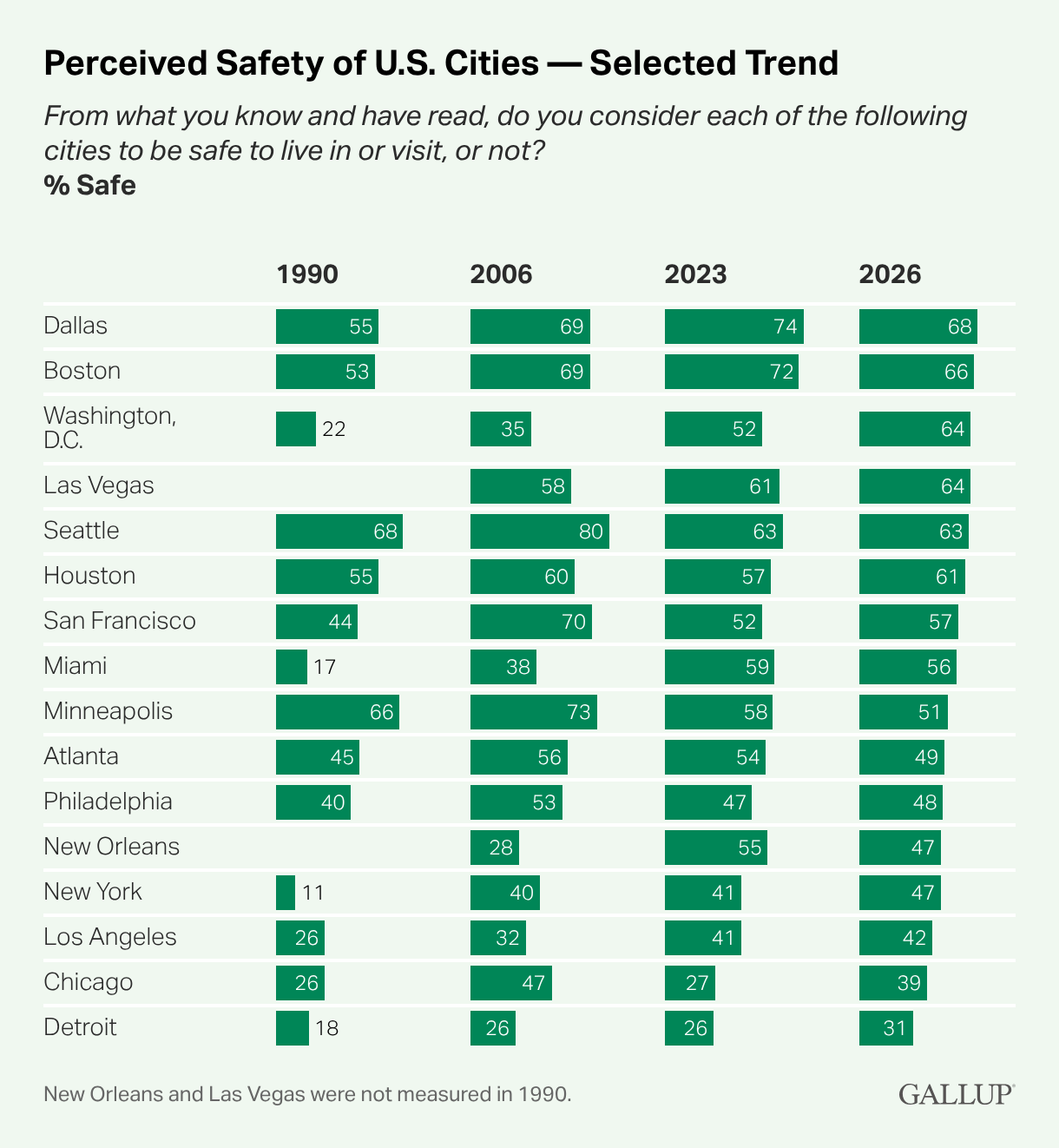
Gallup’s survey has a ton of other interesting nuggets that I may have to dig further into at some point. For example, they give perceived safety for Americans in 16 US cities. I find it interesting that five of the six cities with the lowest level of perceived safety are also on track to have their lowest murder rates in 60 or more years (all but Los Angeles, but more on that later).
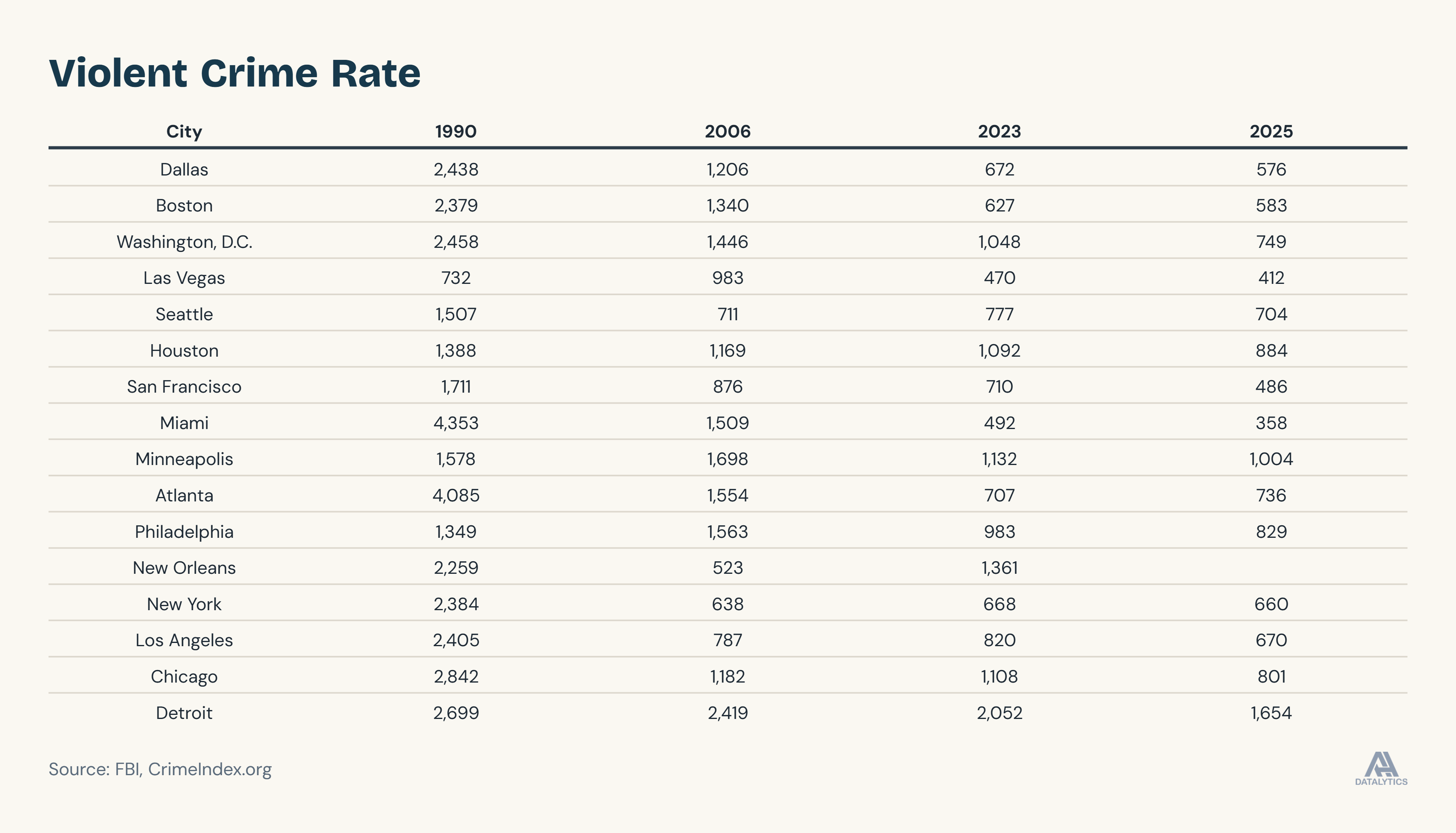
And these numbers showing perceived safety bear little resemblance to the actual recorded violent crime rates in these cities which are almost universally falling (using 2025 violent crime data because 2026 is obviously not complete yet).
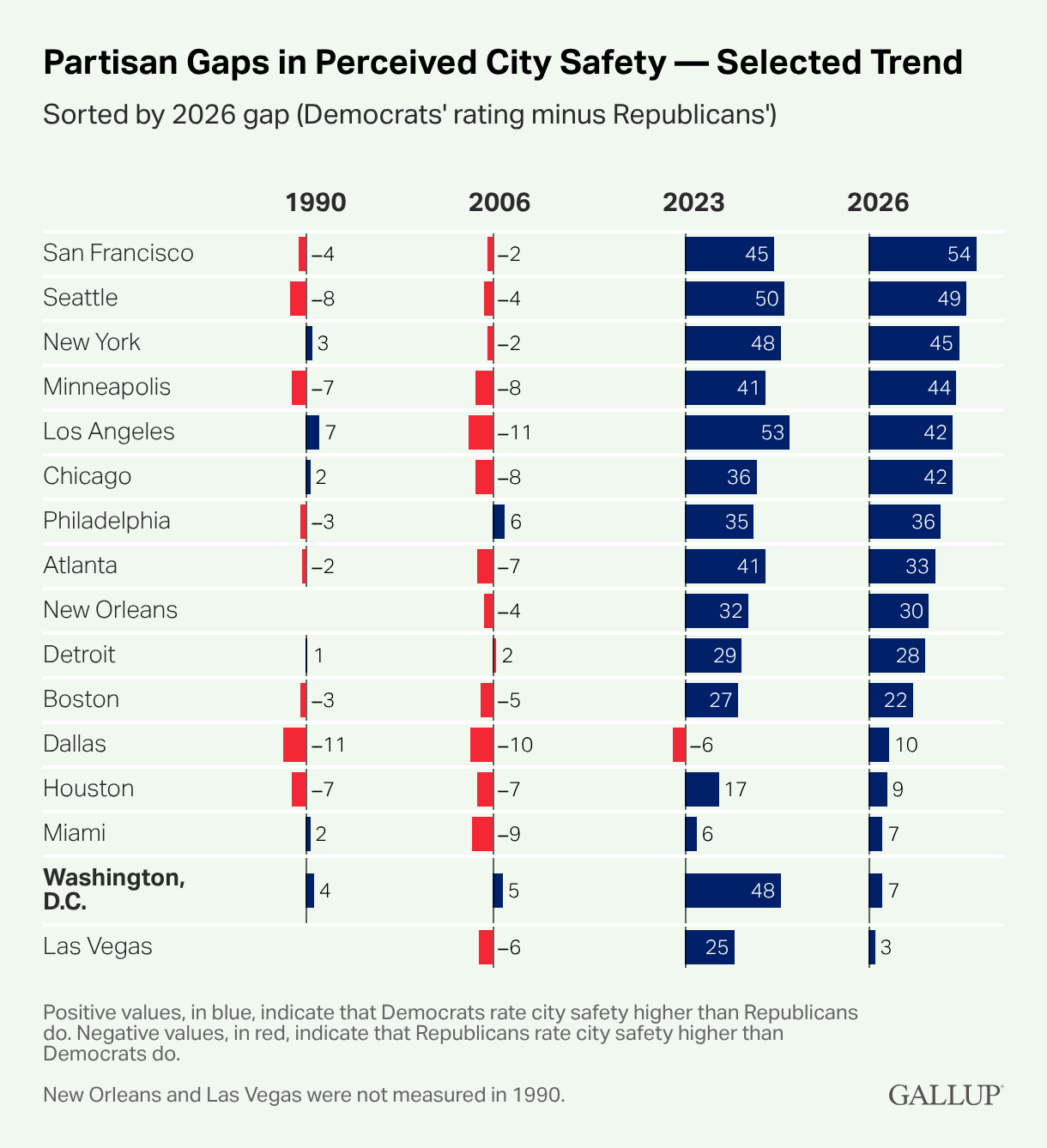
Unsurprisingly, there are enormous partisan gaps in how safety is perceived in cities. It is somewhat surprising, however, that these partisan gaps largely didn’t exist 20 years ago.
There are, of course, issues with measuring perception like this. What is crime? What is safety? These are not defined and different respondents may think of these concepts differently. I may see crime as vehicle burglaries and you may see it as murder, and we are both correct (in this case they are both falling rapidly). Safety could similarly also be widely defined.
Still, these polls are valuable additions to our knowledge of what Americans are perceiving. Not every American subscribes to this newsletter (though they obviously should) but I take it as evidence that the newsletter’s goal of spreading the nation’s actual crime trends is perhaps working.
Police departments said they solved 92 percent of homicides nationwide in the early 1960s. Today that figure hovers around 60 percent most years. Phil Cook has spent the last half century figuring out what that enormous drop actually means and why it actually might be a good thing.
Cook is one of the longest-serving researchers in American criminology — an economist by training who helped build the field of gun violence research when almost no other social scientists were working in it.
Over five decades, he has studied non-fatal shootings, gun markets, weapon effects, robbery, crime deterrence, and pretty much every other major issue related to criminology.
In this episode, we get into the real story behind the clearance rate decline, how one city figured out how to address non-fatal shootings like no other, and a ton more from Dr Cook’s lifetime of work.
Philip J. Cook is Professor Emeritus of Public Policy and Economics at Duke University, and a research associate at NBER. He is one of the first scholars of any discipline to undertake research on gun violence prevention. In 2020 his contributions in this area were recognized by the award of the Stockholm Prize in Criminology. Earlier, in 2001 he was elected to membership in the National Academy of Medicine. His gun-related research has focused on the costs and consequences of the widespread availability of guns in the United States, and what might be done about it. His current research program focuses on the police role in combatting gun violence, and his most recent book, with Anthony A. Braga, is Policing Gun Violence (Oxford University Press 2023). Cook received his Ph.D. in Economics from the University of California, Berkeley.
Source: jasher.substack.com