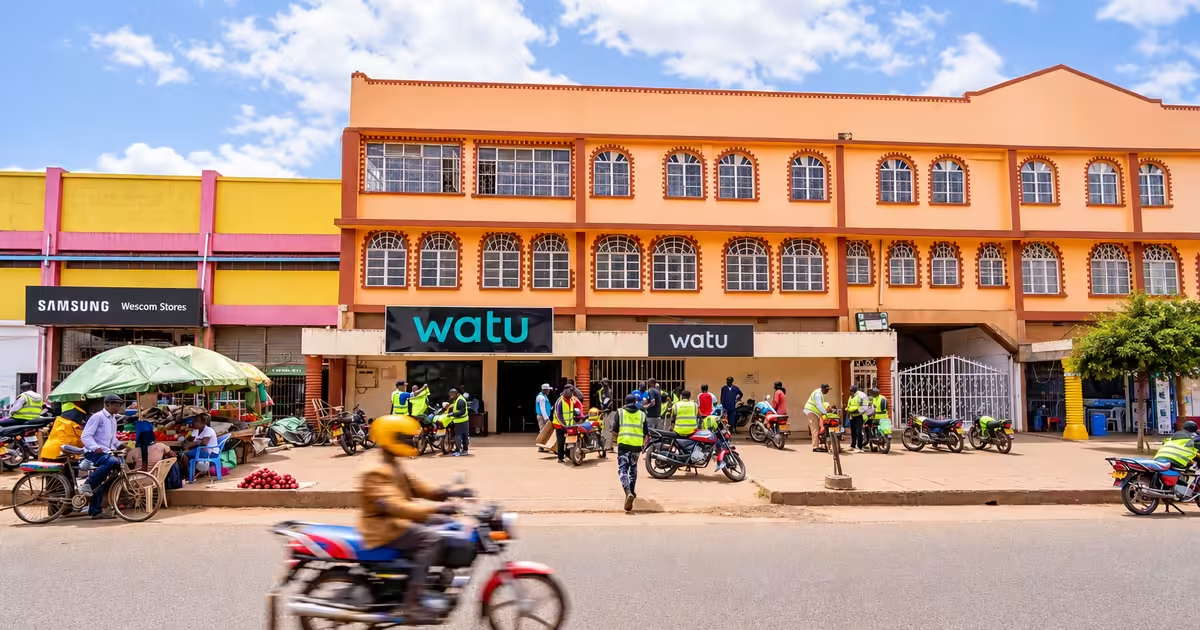

Motorcycle taxi riders, small traders and entrepreneurs often earn money daily but lack the payslips, formal credit histories or collateral required by conventional financial institutions.
This leaves many hardworking people struggling to acquire assets that could improve their livelihoods, expand their businesses and provide greater financial security for their families.
Watu, an asset financing company operating across Africa and Latin America, is addressing this challenge by providing financing for income-generating assets, including motorcycles, three-wheelers and smartphones.
Since 2015, the company has disbursed more than USD 1.2 billion in credit and supported over 8.7 million customers. Its model focuses on helping people acquire assets through manageable repayments, allowing them to generate income while gradually working towards ownership.
For customers such as Kenyan motorcycle taxi rider Amos Luu, the opportunity has gone beyond owning a motorcycle. It has opened the door to another business venture, demonstrating how access to financing can help people build on their existing sources of income.
How Watu assesses borrowers without traditional credit histories
Unlike conventional lending models that often depend on payslips, bank statements and physical collateral, Watu assesses customers based on their ability to generate income using the assets they intend to acquire.
A motorcycle taxi rider may not have formal employment records or an established credit history, but their occupation, operating route and daily earnings can provide useful information about their repayment ability.
The company’s assessment process includes verifying a customer’s identity and residence, evaluating affordability against the expected income from the asset and accounting for operating expenses such as fuel, maintenance and living costs.
Customers are also required to make a deposit. Watu said a person who saves between 20 and 30 per cent of a motorcycle’s purchase price demonstrates the financial discipline required to manage repayments.
Its lending decisions are further informed by more than a decade of repayment data collected across its markets, helping the company understand how customer earnings fluctuate during different seasons and economic conditions.
The approach recognises that people operating successful informal businesses may be creditworthy even without conventional financial records.
Turning daily payments into asset ownership
For many motorcycle taxi operators, the biggest obstacle to owning a motorcycle is raising the initial purchase price.
Some riders spend years renting motorcycles from other owners, making daily payments without eventually acquiring the assets they depend on for their livelihoods.
Watu’s financing model seeks to change this arrangement by converting regular payments into a pathway towards ownership.
Customers make an initial deposit, receive the motorcycle, and repay the financing using income generated from their daily operations. The repayment period for motorcycles typically ranges between 18 and 24 months, after which customers own the assets once they clear their loans.
The financed asset also acts as security, reducing the need for land titles or guarantors. Watu installs GPS trackers on financed motorcycles to support asset recovery in cases of default.
The same model extends to smartphones, which have become essential business tools for traders, entrepreneurs and other customers who depend on digital communication.
From security guard to motorcycle owner: Charles’ journey
In Migori County, Kenya, Charles Mwita Kuria’s experience illustrates how access to asset financing can change a family’s economic circumstances.
In 2021, Charles was working as a night security guard. Although the job provided an income, meeting his family’s growing needs, including rent, school fees and daily household expenses, had become increasingly difficult.
With a wife and children depending on him, he began considering motorcycle taxi operations as an alternative source of income.
He eventually left his security job and acquired a motorcycle through Watu Credit, taking a step towards becoming financially independent.
Within 18 months, Charles had completed his repayments and become the owner of the motorcycle.
The additional earning opportunity helped him improve his family’s living conditions, move into a better home and pay his children’s school fees on time.
His progress did not stop at motorcycle ownership. Through his daily work, Charles eventually managed to build a house for his family in Migori, allowing them to move into a home of their own.
Charles typically starts his working day at 5:30 am, serving passengers in busy Nairobi locations before spending much of the day around Upper Hill. He said the busiest period is between 3 pm and 6 pm, when demand for transport increases.
He reported making approximately KSh 2,500 on a typical day, with earnings exceeding KSh 3,000 on particularly good days.
Having achieved his initial goals, Charles is now looking towards establishing a small business for his wife to diversify the family’s income.
His experience demonstrates how financing a productive asset can create opportunities beyond the immediate business, including improved household stability and long-term family investments.
Smartphones give small businesses room to grow
Beyond mobility, Watu’s smartphone financing business is helping customers acquire devices that support their everyday commercial activities.
For Amos Luu, a Kenyan boda boda rider who had already completed his motorcycle repayments, acquiring a smartphone through Watu Simu opened another opportunity.
Amos had ambitions of establishing a small delivery business but lacked a reliable smartphone with sufficient storage and performance to manage his operations.
Through Watu Simu’s Buy Now, Pay Later (BNPL) model, he acquired a device without having to raise the entire purchase price upfront.
The smartphone enabled him to communicate with clients, manage orders and navigate delivery routes more efficiently.
He described the difference by saying, “My office is now in my hands”.
Amos credited Watu with helping him move from motorcycle ownership into another income-generating opportunity, adding that he viewed the financing provider as an enabler of his ambitions.
His experience also illustrates how customers can return for additional financing as their needs evolve, using one asset to establish a foundation for further business opportunities.
Financing helps traders protect their business capital
In Rwanda, Niyonkuru Esther’s experience highlights another challenge faced by small business owners: balancing the cost of acquiring essential equipment with the need to maintain working capital.
Esther explained that going without a phone had affected her ability to communicate with customers. Although she had a device for receiving money, she struggled to reach clients who needed to contact her about business transactions.
After her brother introduced her to Watu’s financing model, she explored the available smartphones and settled on the Samsung A17.
The option of paying in smaller instalments appealed to her because buying the phone outright would have required her to use money that could otherwise have gone towards purchasing stock for her business.
“What attracted me to Watu was that they offer financing, and you can repay it in small installments,” she explained.
She added that spreading the cost of the device allowed her to preserve money for other business needs while still acquiring a phone that improved her ability to communicate with customers.
For Esther, access to financing was therefore not simply about owning a smartphone but finding a way to balance business investment with the cost of essential equipment.
In Nigeria, restaurant owner Abiodun Funmilayo has also found practical value in smartphone financing.
She explained that owning a phone had made it easier to communicate with bush meat suppliers and inspect products before delivery.
“Ever since I bought the phone, it has been easy for me to contact my bush meat suppliers. I can also see and select the one I want via WhatsApp video call before delivery,” she said.
Her experience shows how a smartphone can improve everyday business decisions, helping traders communicate with suppliers and assess products before making purchases.
More than 62% of customers have completed their loans
Watu considers completed repayments an important measure of its impact because they represent customers who have moved from financing an asset to owning it.
According to the company, more than 62 per cent of customers across its mobility and connectivity loan portfolio have completed their repayments and own their financed assets.
Approximately 95 per cent of its customers across ten markets have financed only one asset for the first time, with the highest proportion coming from connectivity customers. Repeat financing is more common among mobility customers.
The company also reported that GeoPoll research conducted across Kenya, Tanzania and Uganda found that approximately 47 to 50 per cent of surveyed smartphone customers experienced improved financial stability after acquiring their devices. Between 37 and 44 per cent reported improved saving abilities.
Watu said smartphones help customers manage businesses, communicate with new clients, receive digital payments and access information.
Expanding access to financing across Africa
Watu currently operates in ten markets: Kenya, Uganda, Tanzania, Rwanda, the Democratic Republic of Congo, Nigeria, Sierra Leone and South Africa, alongside Mexico and Brazil.
In 2025, the company financed more than three million smartphones and over 65,000 mobility assets.
Its products are adapted to different markets, including electric motorcycle financing in Uganda and Rwanda, where charging and battery-swapping infrastructure is developing. In Tanzania, the company has supported financing for compressed natural gas-powered three-wheelers.
Technology also supports its operations through digital customer onboarding, credit assessment and repayment monitoring. Its Watu App allows customers to check balances, make payments and follow their financing progress.
Looking ahead, the company plans to deepen its mobility and connectivity businesses, expand electric mobility financing and invest in technology, risk management and customer support over the next three to five years.
Source: africa.businessinsider.com