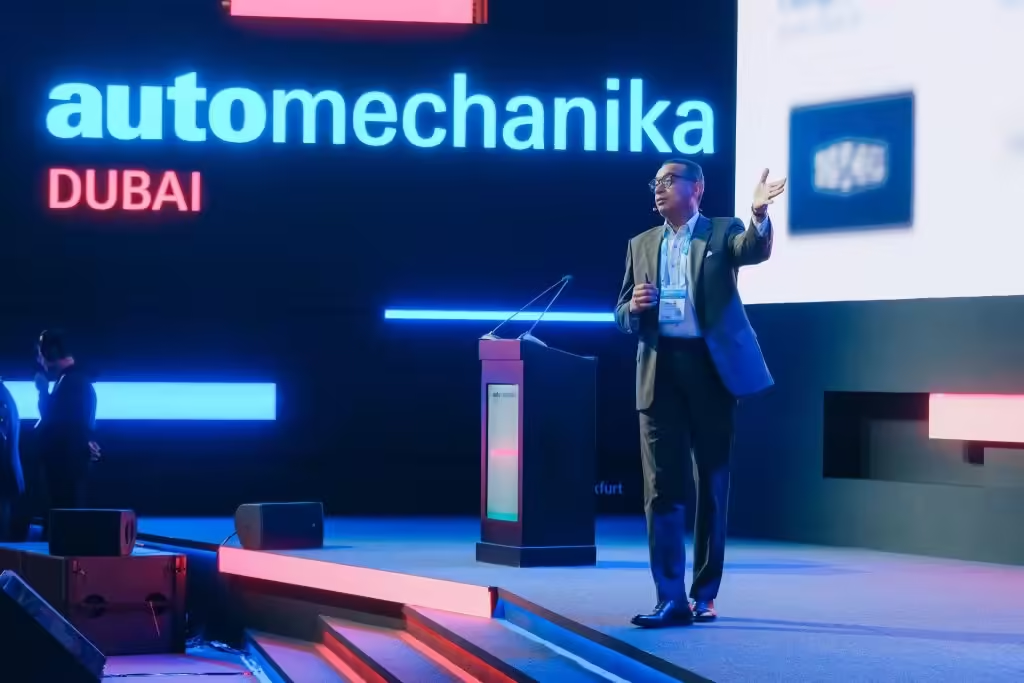

African and international automotive businesses explored opportunities in aftermarket trade, sourcing, supply chains and electric mobility during AfriConnections, a dedicated programme held at Automechanika Dubai in the United Arab Emirates. The event brought together African distributors, workshop operators, industry associations and international suppliers to examine how trade integration, changing vehicle technologies and investment in electrification could shape the continent’s automotive aftermarket.
The programme, held during the final day of Automechanika Dubai, focused on the commercial opportunities emerging from Africa’s large vehicle population and growing demand for spare parts, maintenance services, technical skills and electric mobility infrastructure. Discussions covered intra-African trade under the African Continental Free Trade Area (AfCFTA), Dubai-Africa trade corridors, sourcing and supply-chain partnerships, as well as the requirements for expanding electric vehicle adoption.
AfriConnections was chaired by Vitali Bielski, Managing Director of Intelia Nova. Mercy Mwaura, Chief Executive Officer of the Kenya Motor Repairers Association (KEMRA), opened the sessions with an assessment of the African automotive aftermarket, highlighting the continent’s demand for vehicle maintenance and repair services.
Africa’s aftermarket opportunity is supported by a vehicle market in which many consumers retain vehicles for extended periods, creating sustained demand for servicing, replacement components and workshop services. For suppliers and distributors, this creates opportunities across spare parts, diagnostic equipment, workshop technology and technician training. However, accessing the market requires an understanding of different national regulations, distribution networks, purchasing conditions and trade arrangements.
Mwaura said the longevity of vehicle ownership across African markets contributes to consistent demand for aftermarket services. She argued that businesses able to recognise the continent as an increasingly integrated market could benefit from the opportunities emerging across its automotive sector.
Trade integration was a central part of the discussions. The African Continental Free Trade Area provides a framework for reducing trade barriers and encouraging the development of regional value chains. For the automotive industry, the implementation of rules of origin is particularly relevant because it determines which products qualify for preferential treatment when traded between participating countries.
The African Union’s approval of automotive rules of origin in 2026 has added to efforts to develop a more integrated continental automotive market. These rules are intended to establish the conditions under which vehicles and automotive components qualify as originating within Africa, supporting regional production and trade. Their practical impact will depend on implementation, compliance requirements and the capacity of manufacturers and suppliers to meet the agreed thresholds.
The discussions also reflected the importance of existing commercial links between the United Arab Emirates and African markets. Dubai Chambers reported that non-oil trade between Dubai and Africa exceeded US$145.9 billion in 2025. These trade flows provide a foundation for businesses seeking to strengthen sourcing relationships, distribute automotive components and connect African buyers with international suppliers.
For African distributors and workshop groups, Dubai offers access to a broad network of manufacturers, technology providers and parts suppliers. AfriConnections sought to use these relationships to facilitate business discussions around reliable sourcing, supply-chain efficiency and the technical support needed to serve changing vehicle markets.
Chris Lee, Portfolio Director for Mobility and Logistics at Messe Frankfurt Middle East, said African distributors and workshop groups were looking for suppliers able to combine technology with training and improved market access. He described AfriConnections as a platform for helping businesses understand trade frameworks, supply chains and opportunities for stronger partnerships between African and international automotive markets.
Electrification was another major theme, as African governments and businesses explore the development of electric vehicle production, distribution and charging infrastructure. Countries including Morocco and Kenya have introduced measures to encourage electric mobility, creating demand for components, battery systems, charging equipment and specialised maintenance services.
The growth of electric vehicles is also changing the technical requirements of the aftermarket. Workshops increasingly need diagnostic equipment, battery testing capabilities, advanced driver assistance systems calibration and expertise in connected-vehicle technologies. These requirements are creating opportunities for training providers, equipment manufacturers and certification bodies to support technicians adapting to newer vehicle systems.
Automechanika Dubai’s Training and Development programme addressed these skills requirements through technical workshops, live demonstrations and industry-led sessions. Abdelrahman Farouk Mahmoud of LAUNCH led practical training on diagnostics, advanced driver assistance systems calibration and software-defined vehicle repair. Shubhra Tiwari of TÜV SÜD addressed cybersecurity and compliance for connected vehicles, while Philipp Türke of AVILOO demonstrated battery testing and its potential role in supporting used electric vehicle sales.
The need for specialised skills extends beyond individual markets. The UK’s Institute of the Motor Industry has projected a shortfall of more than 43,000 electric vehicle-qualified technicians by 2035, while the US-based TechForce Foundation estimates a shortage of approximately 140,000 technicians across trades, including automotive. These figures highlight the workforce pressures associated with technological change in the global vehicle industry.
For African markets, the challenge includes building technical capacity while the composition of vehicle fleets continues to evolve. Workshops must be able to maintain conventional vehicles while preparing for hybrid and electric models, connected systems and more advanced diagnostics. Without investment in training, equipment and certification, the expansion of new vehicle technologies could outpace the capacity of local repair businesses to service them.
Tommy Le, Show Manager of Automechanika Dubai, said the changing requirements of newer vehicles were creating practical challenges for workshops seeking to upgrade their capabilities. He said the programme allowed technicians to test equipment, engage directly with trainers and take practical knowledge back to their businesses.
The event’s Fleet FWD programme extended these discussions to commercial transport and logistics. Sessions examined the future of freight, driver and technician skills, logistics resilience and global parts supply chains. Fadi Azzi of Aramex discussed logistics resilience, while Vitali Bielski of Intelia Nova and Mohammed Hamdan of Maersk addressed the movement of automotive parts through international supply networks.
Autonomous trucking also featured in the programme, with Jad Ayoub, Principal at Kearney, presenting analysis of the economics of autonomous freight. Kearney’s 2026 cost modelling placed the total cost of ownership of autonomous trucks in the Gulf Cooperation Council region at approximately US$0.70 per kilometre for conventional trucks, highlighting the commercial challenge of deploying autonomous systems in markets where driver costs remain relatively low.
Ayoub said the region was developing autonomous vehicles, supporting infrastructure and regulatory frameworks simultaneously, but that the next challenge would be translating these initiatives into reliable and commercially viable freight services. The discussion underlined the importance of evaluating autonomous transport not only through technological capability but also through operating costs and the wider ecosystem required for deployment.
Sustainability in the automotive aftermarket also featured in a roundtable led by PwC’s Strategy&, which examined remanufactured components, sustainable packaging and battery recycling in the UAE. These areas are becoming increasingly relevant as automotive businesses face pressure to manage material use, waste and the environmental impacts associated with vehicle production and maintenance.

For Africa, remanufacturing and recycling could create opportunities to strengthen local value chains and reduce dependence on imported replacement components. However, developing these markets will require appropriate quality standards, collection systems, technical capacity and regulatory oversight, particularly for used batteries and other materials requiring specialised handling.
AfriConnections brought these issues together within a wider discussion about the future of Africa’s automotive aftermarket. The combination of trade integration, international sourcing, electric mobility and workforce development points to a market where growth will depend on more than vehicle sales. Distribution networks, reliable suppliers, technical skills, charging infrastructure and regulatory alignment will all influence how businesses participate in the sector.
As African markets pursue greater regional integration and adapt to changing vehicle technologies, partnerships between local businesses and international suppliers could help strengthen the continent’s aftermarket capacity. The commercial opportunity will depend on whether these relationships translate into more efficient supply chains, accessible technical services and investment in the systems needed to support a growing and increasingly diverse vehicle market.
Was this article helpful?
Source: africasustainabilitymatters.com