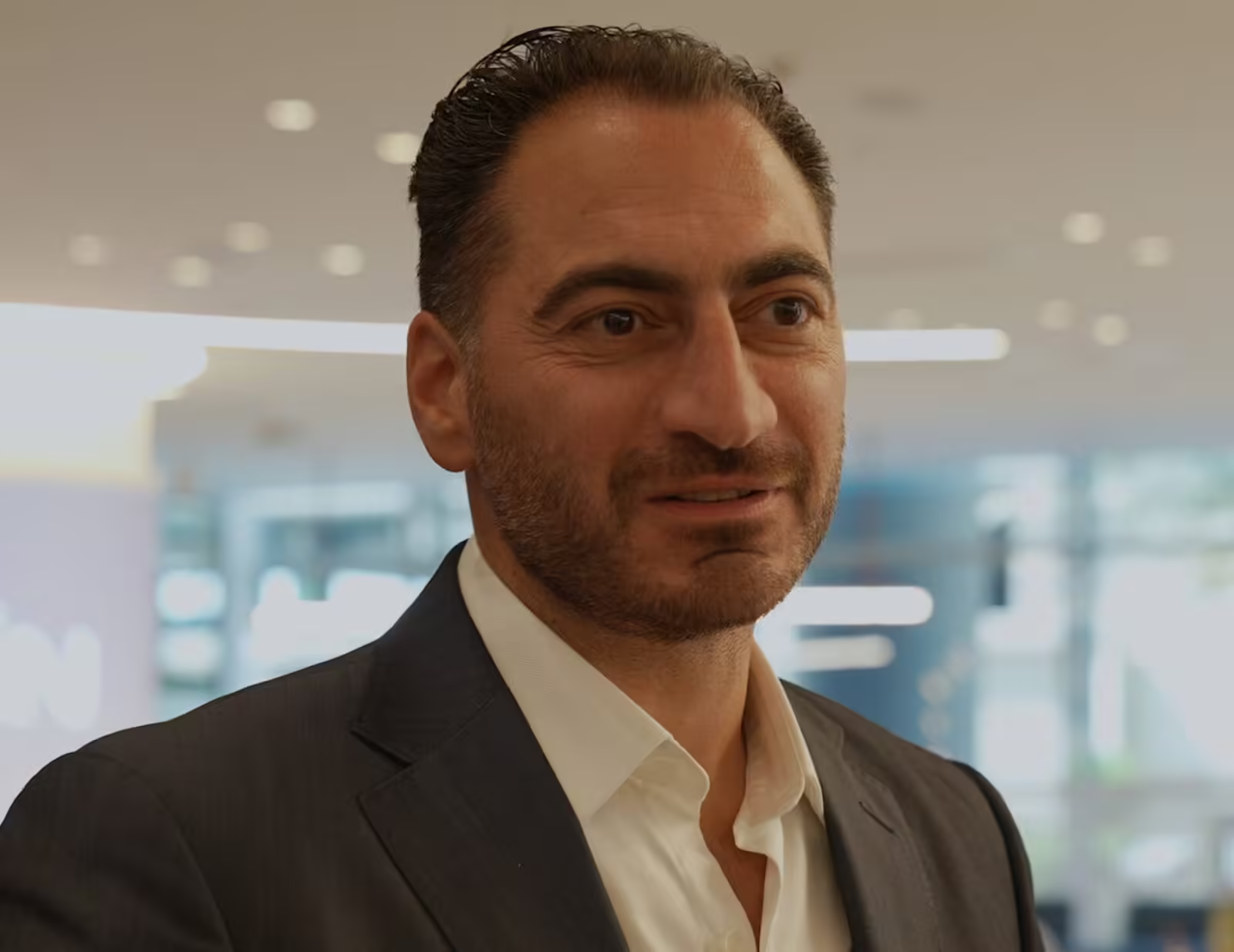

Zain’s digital chief explains how fintech is driving growth beyond telecom across the Middle East and Africa.
Zain is a leading telecommunications and digital services group headquartered in Kuwait, operating across the Middle East and Africa, with South Sudan and Syria among its next destinations. About a decade ago, the group entered financial services through mobile money. Today, Zain’s fintech services reach approximately 6.4 million customers across the Middle East and Africa, offering services ranging from digital payments and money transfers to microloans. In 2025 alone, Zain’s fintech platforms processed more than 117 million transactions, valued at over $11 billion.
To understand how Zain is building its fintech business across diverse markets and where it sees the next opportunities for growth, we spoke with Chief Investment and Digital Officer Malek Hammoud.
Global Finance: Ten years ago, you were among the first telcos to enter the MENA fintech market. What was it like, and what value did you add?
Malek Hammoud: Ten years ago, we were like aliens entering the market. People would say, “Why are you doing this? There’s no point in doing it.” I think our customer base and our brand helped a lot. When I put money in a bank, I want to make sure it’s a large bank with a reputable name. In our case, people know and trust Zain. Then there is the market approach, which differs from banks. For us, the opportunity lies in addressing gaps in the market, because you don’t want to compete head-to-head with large, established banks. Instead, you tap into the underserved segments of the market. This is where financial inclusion becomes a major factor, and it’s a card to play with regulators. They want to ensure that everyone has access to appropriate financial services, whether at the wallet, fintech, or mobile money level, or through traditional and digital banking.
GF: How do you work with the with the regulators and when you decide to walk into a market?
Hammoud: It really depends on the maturity of the local digital ecosystem, but in each market, the approach is: Let’s go sit with the regulator, engage, understand their expectations regarding fintech, and act in accordance with the rules and guidelines.
GF: How do you adapt your fintech strategy to the different markets?
Hammoud: First, we have to study the market very well. We need to understand who is already playing, what services banks already provide, and whether there are any gaps. For example, one of the gaps we’ve seen pretty much everywhere in the region has been SMEs, which goes back to financial inclusion because financial inclusion is not only for regular consumers but also for the SME side of business.
GF: Where are the gaps in GCC markets?
Hammoud: We’ve identified a gap in micro-lending. We’re already working in this segment in Saudi Arabia and Bahrain and applying for licenses in other markets. SMEs are another area of opportunity. Beyond basic services, access to working capital is particularly important. We’ve also seen a surge in demand for digital banking services. Some banks have launched sub-brands, but we have yet to see a standalone digital bank. This is something we’re currently working on for Iraq.
GF: How do you see your relationship with existing banks?
Hammoud: Look, you can’t play alone. In most markets, regulations require a banking partner to offer mobile money, so it goes without saying that we’re close to banks. We believe in partnerships, and in every market, we have a network of partners in an effort to maximize the value proposition for our customers.
GF: In the first six months of 2026, Zain’s fintech customer base grew 35% year over year, driving 29% revenue growth. Which is growing faster: your fintech activities or your traditional telecom business?
Hammoud: Core telecom is now mature in most markets. You typically have two or three operators in each market, all competing for the same population, so achieving single-digit growth is difficult. We’re performing very well in our newer auxiliary services, all of which are growing at double-digit rates. Fintech is definitely growing at double digits as we continue to introduce more products and services for our customers. Whenever we receive regulatory approval for a new product, we see a significant leap in growth. For example, when we launched a remittance service in Iraq, revenue doubled.
GF: What’s the future of the industry?
Hammoud: As a company, we constantly monitor the evolution, and today some of the major headlines focus on AI and Space. Zain is investing in and working closely with various technology providers in these verticals to ensure we are future-ready and to bring the latest technologies and services to customers. The future is extremely bright for agile, visionary TechCos that adapt to meet the ever-growing demands of digitally savvy customers.
This interview has been edited for length and clarity.
Chloe Domat is a contributing writer based in France.
Source: gfmag.com