
Going into last week’s midterm elections there was a widespread assumption around the Middle East that after Americans finished voting, the U.S. military would resume bombing Iran.
A good bit of this anxiety was fueled, at least indirectly, by President Donald Trump, who repeatedly said in the final weeks before Election Day that he had no plans to restart the war before the midterms – a choice of words which led many to conclude all bets were off after Nov. 3.
And shortly before Election Day, the State Department’s official travel website renewed its “reconsider travel” rating for most of the Persian Gulf and the wider Middle East. Many schools reportedly moved back to remote classes and office employees were told to work from home.
Last week, the Wall Street Journal reported that the U.S. formally told its allies in the Persian Gulf to expect a short but intense resumption of the war shortly after the midterms.
All that happened before Republicans were trounced in the elections where unhappiness over the war and the cost of living increases that accompanied it were viewed as major factors in their overwhelming defeat.
- Make Your Inbox Smarter
- Sign up for these free email newsletters from U.S. News:
The main problem, he said, was that voters were confronted with “candidates they didn’t like.”
But, he added, “there’s something beyond that. They didn’t like the war.”
Later in the interview, however, he appeared to change course, saying: “It’s not really the Iran War, because the numbers are phenomenal.”
“We won that war. That war has been won. Now (Iran is) withering away as a country, and they’ll come and they’ll make a deal. They want to make a deal. They wanted to make a deal just before the election. And that gives them a little bit of a hope certificate now. But we were close to making a deal. If we didn’t have this election, we might’ve even had — or within the next few days we would have had — a deal.”
Trump also told CNN Sunday that a resumption of the war is “highly unlikely”. That helped push international oil prices to a 10-week low, despite reports from Saudi Arabia that the country’s key east-west oil pipeline was attacked on Monday.
The War Never Really Stopped
On one level, the debate about “resuming” the Iran War is misleading because it never really stopped.
Yemen’s Houthi rebels, who are allied with Iran, have also continued their attacks on Saudi Arabia. On Sunday, falling shrapnel hit the Riyadh offices of Saudi Aramco, the national oil company, after ballistic and cruise missiles fired from Yemen targeted the Saudi capital.
The Houthis said the attacks were retaliation for Saudi airstrikes on Yemen’s capital, Sana’a, a day earlier.
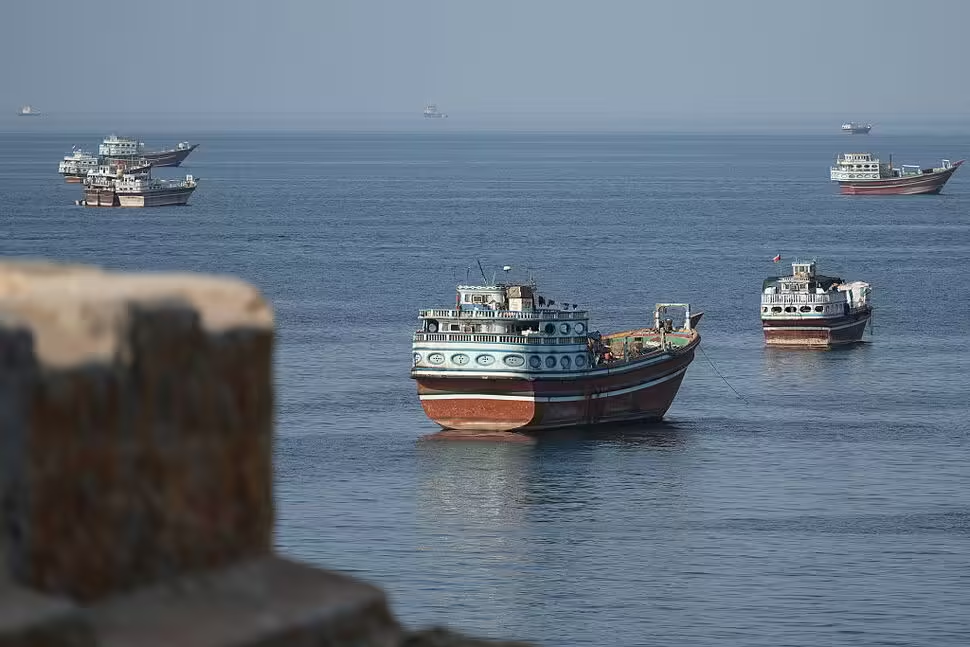
There have been regular attacks by Iranian and U.S. forces around the Strait of Hormuz and in the adjacent Gulf of Oman. A fire on a cargo ship last weekend required help from the United Arab Emirates’ coast guard to rescue 22 crew members.
Diplomats have criss-crossed the region for weeks seeking to diffuse tensions, and there have been periods when shipping volumes in the Gulf approached pre-war levels. But just as often, upticks in violence have prompted shipping volumes to drop abruptly and the cancellation of commercial flights.
Last month, Houthi attacks forced the Saudis to cancel several high-profile business conferences that normally draw large numbers of foreign investors to the country.
Would A New Round Of Bombing End the War?
It is also unclear whether a new U.S. and Israeli offensive against Iran would bring the war to an end or escalate it further.
The anniversary of Iran’s 1979 seizure of the U.S. embassy in Tehran and the taking of its staff hostage fell the day after the midterm elections. In a statement marking the embassy seizure anniversary, Iranian Supreme Leader Mojtaba Khamenei warned that his country’s response to a new American attack would involve “much wider dimensions” than Iran has employed so far, without providing specifics.
Iranian attacks on the Arab side of the Gulf during earlier phases of the war focused mostly on oil and natural gas facilities, airports and U.S. military bases. New Iranian attacks targeting the region’s basic infrastructure, such as electrical power and water desalination plants could be catastrophic.
Trump now faces military and political decisions on Iran that are tightly linked. Would a new round of bombing definitively end Iran’s nuclear program and oust its regime? And if new attacks raise the already high price Republicans have paid for this war, are they still worth it?
Source: www.usnews.com