
Why would anyone leave a lucrative career in finance to create a charity for shrimps?
Yesterday, I interviewed (watch the full interview here) Andrés Jiménez Zorrilla, one of the two co-founders of the Shrimp Welfare Project, to find out. An edited transcript is below.
Walter Veit: Let us start with your background. Who are you, and how did you first become interested in shrimps?
Andrés Jiménez Zorrilla: I was born and raised in Mexico. I married my high school sweetheart; we have been together for more than 20 years and have two kids. I studied economics, then spent more than 15 years in finance: investment banking, private equity, and so on. I have launched five ventures, some for-profit and some not-for-profit, including Shrimp Welfare Project, and I have lived a nomadic life across three continents for half my adult life.
I launched Shrimp Welfare Project for two reasons. I cared about animals, and I had found effective altruism and bought into the idea that evidence, reason, and scope sensitivity matter enormously. Put those together, and you arrive at caring a great deal about shrimp welfare.
WV: Did you always have an interest in animals?
AJZ: Not really. I liked animals the way most people do. I grew up with a dog, and my family had a farm, but animals did not occupy much mental space, and certainly not my career. My wife was different. She is a very caring person by nature. When we lived in London, she worked helping women leaving prison reintegrate into society, and many of her colleagues were animal advocates in their spare time. She became one too and tried to convince me it was worthwhile.
It took me a long while to believe her. For the longest time I thought: that is nice for someone with spare time, but I work in finance. I have a serious job. I go to Canary Wharf every day. Little by little, though, the strength of her arguments chipped away at my doubts, and when I decided to leave finance, that was what I wanted to dedicate my time to.
WV: That is quite similar to my own path. Until recently, philosophers did not talk much about animals. There was Thomas Nagel’s famous paper, “What Is It Like to Be a Bat?” which argued that we can never really know what it is like to be another animal. Then Peter Godfrey-Smith came along. But for me it was really my wife. When we met, she was writing a Ph.D. thesis on how we can study animal welfare, and we began writing about it together. She also cured me of an early bias: I worried that a philosopher who got too close to activism would look less objective. That was a mistake.
AJZ: Well, I am very grateful to your wife for that, because I am very grateful for your work and your writing.
WV: She worked as a zookeeper before becoming a philosopher, and she was involved with effective altruism, visiting the Global Priorities Institute, so she pulled me in that direction too. Now, in some of your interviews, it sounded as though you were initially unsure what kind of project to start. How did you end up choosing shrimps? Why shrimps?
AJZ: There are many layers to that. My wife’s day job was working with refugees, in children’s hospices, or helping women reintegrate into society, so she had a broad portfolio of ways of doing good. At some point I decided I wanted that too. By the time I left finance, around 2018, I cared a lot about animals, but also about many other cause areas, and I struggled to work out where I could actually have an impact.
Then a good friend of ours emailed my wife about a programme for launching charities, run by what is now Ambitious Impact and then called Charity Entrepreneurship. By her own admission, she found it too nerdy: all those numbers, all those spreadsheets. So she forwarded it to me and said that this looks up your alley.
It was a stark contrast to everything else I had been exploring. At one point we had considered buying land in Spain, where we lived at the time, and running an animal sanctuary. I thought that mattered, but I was grossly unprepared and almost scared of having animals in my care. I think I avoided a train wreck. The way effective altruism talks about doing good, following reason and evidence but ambitiously, at scale, really spoke to me. I applied, went very deep into effective altruism as fast as I could so I would not flop the interviews, and got in.
The programme identifies ideas that are important, neglected, and potentially tractable, and not only in animal welfare. My cohort was offered all kinds of super interesting options, including an organisation to optimise the taxation of alcohol, whose burden of disease is huge and, in my opinion, underappreciated. There were ideas in family planning and a couple in animal welfare. Fortunately and unfortunately, I was drawn to every one of them.
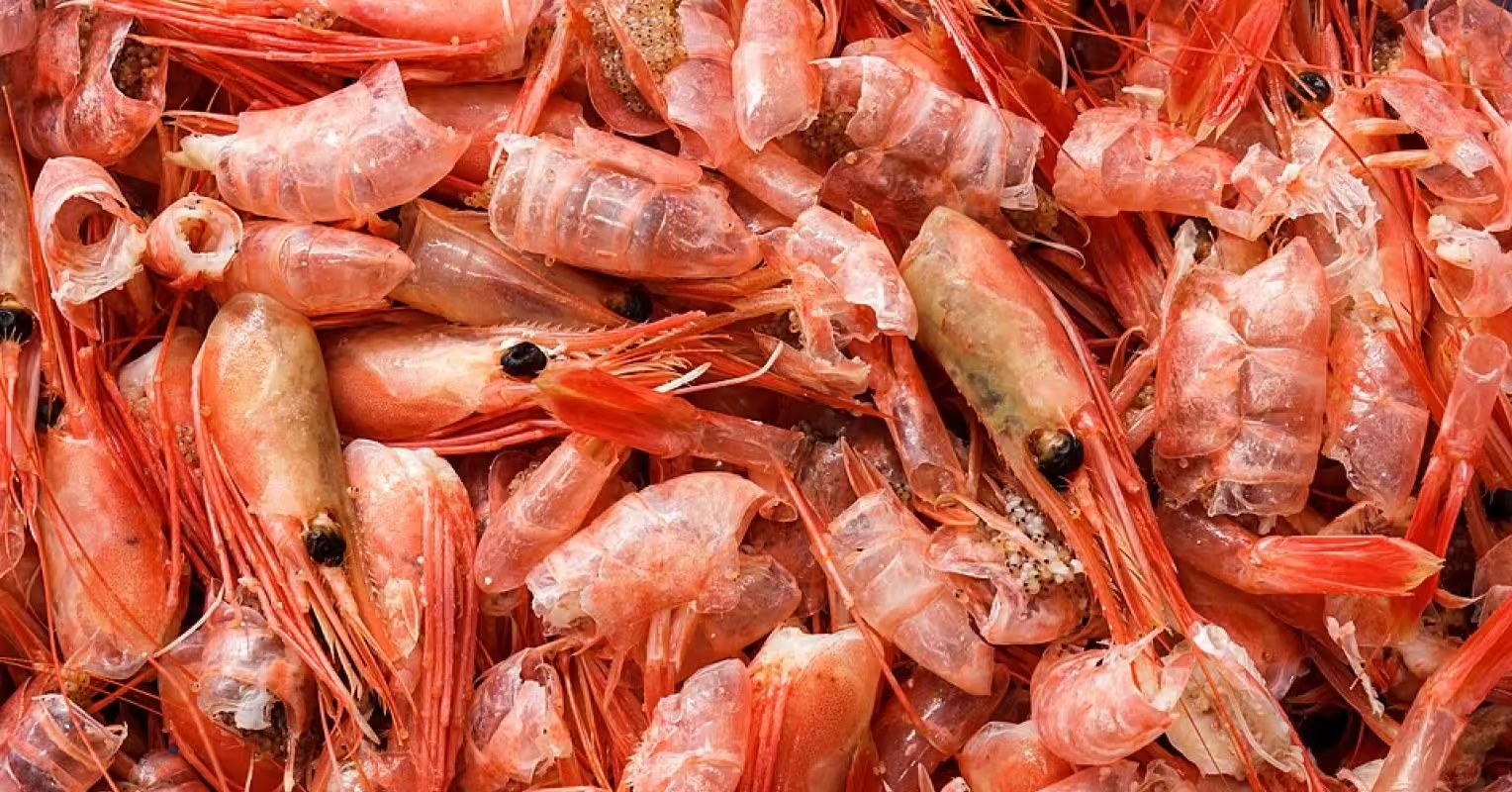
In the end, I relied on a heuristic effective altruists use: Where is your counterfactual impact greatest? For many of the ideas, there were people as good as me, if not better, to launch them. But if my co-founder, Aaron Boddy, and I had not launched a shrimp charity, it is very unlikely anyone would have done so at that moment. It was just too idiosyncratic. Once we looked into it, the argument was simple. Shrimp are the animals we raise and kill for food in the greatest numbers, by multiples: roughly half a trillion a year. And not a single person was working full-time on minimising the harms these likely sentient beings might face in the food system.
Source: www.psychologytoday.com