
November 13, 2026 • 10:16 am ET
On October 30, Russia vetoed a US-drafted resolution renewing the mandate of the UN Mission for the Referendum in Western Sahara (MINURSO). Subsequently, Russia’s alternative twelve-month rollover of the mission also failed to pass, receiving only three affirmative votes. The mission’s mandate expired on October 31, ending thirty-five years of UN peacekeeping aimed at monitoring the ceasefire between Morocco and the Polisario Front, which seeks independence for the Western Sahara.
Meanwhile, in Libya, Washington has been pressing eastern and western leaders toward a unified military that could include units that UN investigators found aided Sudan’s Rapid Support Forces (RSF), a paramilitary group implicated in atrocities in Sudan’s civil war. In both cases, Washington is taking a more active role in shaping regional security arrangements, yet Congress has little opportunity to scrutinize their potential impacts.
When the 120th Congress convenes in January, members and staff on the House Foreign Affairs and Senate Foreign Relations subcommittees covering the region will inherit these files, among others. Congress does not need to agree on what North Africa policy should be to insist that the administration explain it. Much of what Washington is doing in the region rests on discretion that goes unexamined unless Congress asks the administration to justify it. Congress has a responsibility to scrutinize risks before they materialize. Decisions taken in Washington could heighten regional tensions, deepen US involvement in unresolved conflicts, or even strengthen armed groups implicated in abuses.
Oversight hearings with administration witnesses are likely to be at a premium in the new Congress. The House Foreign Affairs Committee and Senate Foreign Relations Committee need not wait for them. Working with appropriators and the armed services committees, they can use conditions on assistance, requirements to explain waivers, and reporting requirements to put the administration’s rationale on the record before it acts.
What is next for the Western Sahara after MINURSO?
The US-proposed text would have dropped “referendum” from the mission’s name and made Morocco’s autonomy plan the only basis for continued talks. It also would have asked the secretary-general for proposals on the mission’s structure and staffing by January. A previous version went further, proposing cuts to uniformed personnel, the closure of team sites, and an end to peacekeeping altogether by April 2027. Washington had been pushing in that direction since October 2025, when an earlier draft would have renewed the mission for only three months and sought recommendations on its “transformation or termination.” In April, US Ambassador to the UN Mike Waltz told the Senate Foreign Relations Committee that Washington was “downsizing or closing missions that have outlived their purpose.” The mandate expired because the UN Security Council adopted neither text, an outcome Washington’s own drafts had partly anticipated. Whether it planned for what follows is a fair question.
UN mediation continues, despite the mission’s expiration. Washington has also taken a direct hand in the talks. Earlier this year, US officials and UN envoy Staffan de Mistura convened three rounds of talks in Washington and Madrid, the first direct meetings between Morocco and the Polisario in seven years, with neighboring Algeria and Mauritania attending. The talks stalled when the Polisario refused to treat the autonomy plan as the basis for negotiations.
After last month’s UN veto, Washington insisted that despite the mission’s closure, it will “continue working with the parties, and the United Nations, towards a lasting settlement.” Rabat welcomed MINURSO’s closure, stating that its commitment to the ceasefire is “voluntary” and unchanged. But Morocco has not said what it intends to do about the former UN buffer zone, which it warned in 2022 it would occupy if MINURSO left. High-profile international events like the 2030 World Cup may give Rabat reason to proceed with caution. However, should Rabat take unilateral action as MINURSO withdraws, the Polisario could respond with attacks launched from neighboring states. Moroccan pursuit across those borders would risk drawing those countries into a regional conflict.
Congress should therefore take two steps:
- Ask for the plan. The next National Security, Department of State, and Related Programs (NSRP) appropriations act should require a report, due sixty days after enactment and with a classified annex if needed. The report should explain how the ceasefire will be monitored following MINURSO’s withdrawal, how the parties will communicate during potential incidents, and how the United States plans to respond if forces enter the former buffer zone. It should also lay out how the US administration plans to engage Morocco, Mauritania, and Algeria to prevent outbreaks of fighting and promote a resolution. The accompanying explanatory statement should make clear that Congress expects Morocco and Algeria to prevent tensions from escalating along the berm or spilling across borders.
- Go to the region. Members of both foreign affairs committees should travel to Rabat, Algiers, and the Sahrawi refugee camps near Tindouf, in southwestern Algeria, to demonstrate that Congress still views the Polisario as a legitimate party to the conflict, despite bills proposing to designate it a terrorist organization. The visit would also allow lawmakers to hear directly from parties to the conflict and assess the risks of renewed fighting.
What Washington is offering in Libya
Washington is more directly engaged in Libya than at any point since its 2016 air campaign to drive the Islamic State out of the coastal city of Sirte. In July, the State Department notified Congress that it planned to spend nearly $41 million on security for a phased reopening of the US embassy in Tripoli, which has been closed since 2014. US senior advisor Massad Boulos has led a year-long mediation effort with leaders in both eastern and western Libya, pursuing political, economic, and military reunification in parallel. Washington says its efforts “remain fully complementary” to the UN roadmap for Libya. A UN-brokered agreement reached in late August commits Libya’s rival blocs to elections under a unified executive within two years. On October 30, the Security Council renewed the mandate of the UN Support Mission in Libya for another year and welcomed the August agreement.
Military unification is a central piece of Washington’s approach. Senior officials from both eastern and western Libya have visited Washington in recent months, among them Libyan National Army (LNA) Deputy Commander Saddam Haftar, who met US Secretary of State Marco Rubio in June. In April, Libya hosted part of US Africa Command’s annual multinational special operations exercise, Flintlock, with units from both eastern and western Libya. Discussions are reportedly underway for Libya to host parts of Flintlock in 2027, alongside plans for a joint operations center in Sirte and a unified air command. Leaders from eastern and western Libya have also continued unification discussions, most recently in Ankara
However, Washington’s push for military unification carries risks. Groups in both eastern and western Libya have documented histories of abuse. In Tripoli, the UN Panel of Experts found that groups under the Government of National Unity were involved in unlawful killings and forced disappearances during fighting in 2025. The panel also documented violations at detention facilities run by units under the LNA in 2025. LNA units also reportedly escorted RSF fighters across Libyan territory and facilitated their “access to fuel and spare vehicle parts.” A separate investigation identified four previously unknown RSF camps in Libya. In February, Washington sanctioned RSF commanders for atrocities it describes as including genocide. Providing training to units that aided the RSF would therefore put US policy at odds with itself. Military unification offers a chance to establish civilian control and accountability. Without credible vetting and oversight, Washington risks legitimizing some of the groups responsible for Libya’s abuses. Congress will likely be asked to help fund unification efforts. What a unified force would look like, and who would command it, is still unclear.
Congress should:
- Condition US assistance. Before providing training or equipment to any Libyan unit, the State and Defense departments should assess whether it has supported the RSF. The next NSRP act and National Defense Authorization Act (NDAA) should restrict assistance to units found to have done so, subject to a national security waiver. Any waiver should be submitted to the committees fifteen days before funds are obligated, identify the units, and state the reasons. Making RSF support an explicit eligibility criterion would add to existing human rights restrictions.
- Ask what Washington is buying. The NSRP act or NDAA should also require the State and Defense departments to submit a joint plan before any new or expanded funding for Libyan military integration is provided. The plan should outline how Libyan authorities will exercise civilian oversight, how units and commanders will be vetted (including for possible support to the RSF), and what the United States intends to contribute. It should also set out benchmarks for measuring progress and explain how the effort fits within the UN roadmap. The plan should be unclassified, with a classified annex if needed. The Government Accountability Office should also be asked to review the effort, allowing Congress to compare the plan with developments on the ground.
Over the last year, Washington has pushed to shrink a UN mission in Western Sahara that has now closed after thirty-five years and has put its weight behind unifying Libya’s military. Both may prove to be the right calls. Using fairly straightforward oversight tools, the next Congress should ask the administration what each policy is meant to achieve, what risks it is accepting in pursuing them, and how it will know whether its strategy is working.
Frank Talbot is a nonresident senior fellow with the North Africa project at the Atlantic Council’s Rafik Hariri Center & Middle East Programs. Previously, he served in the Department of State supporting stabilization initiatives in the Middle East and North Africa.
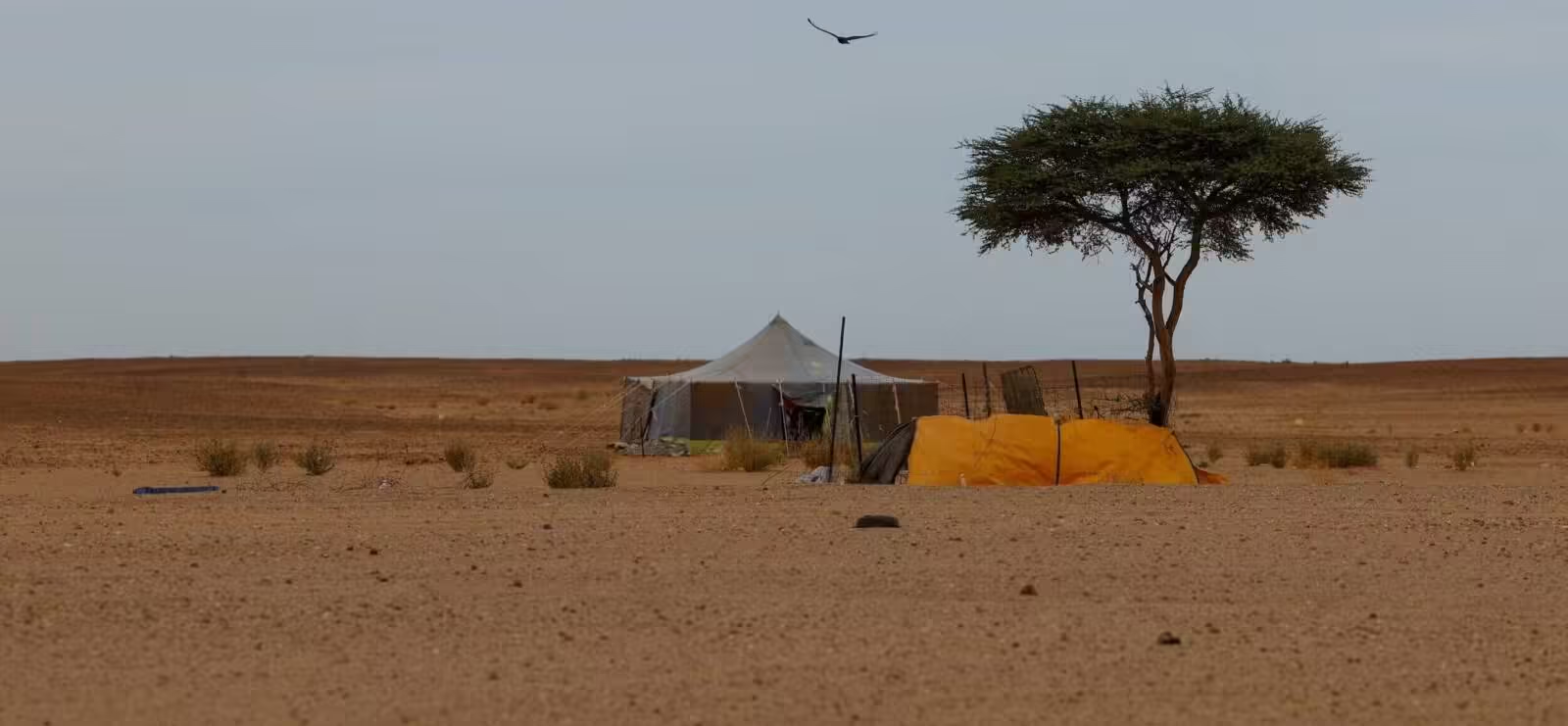
Image: A bird flies over a Sahrawi tent in the middle of the desert in the Smara Sahrawi refugee camp in Tindouf, Algeria, on December 6, 2023. (Borja Suarez via Reuters Connect)
Source: www.atlanticcouncil.org