
(Liberal) Party favours from the campaign bus
Reporters are able to ride along with politicians on the Liberal and Labor campaign buses as they make their way across the state to pitch their cases to voters.
It gives reporters a chance to get up-close and personal with the leaders, with Premier Ben Carroll taking the time to sit next to members of the media to chat.
But the Liberals have gone one step further, providing members of the media with souvenirs.
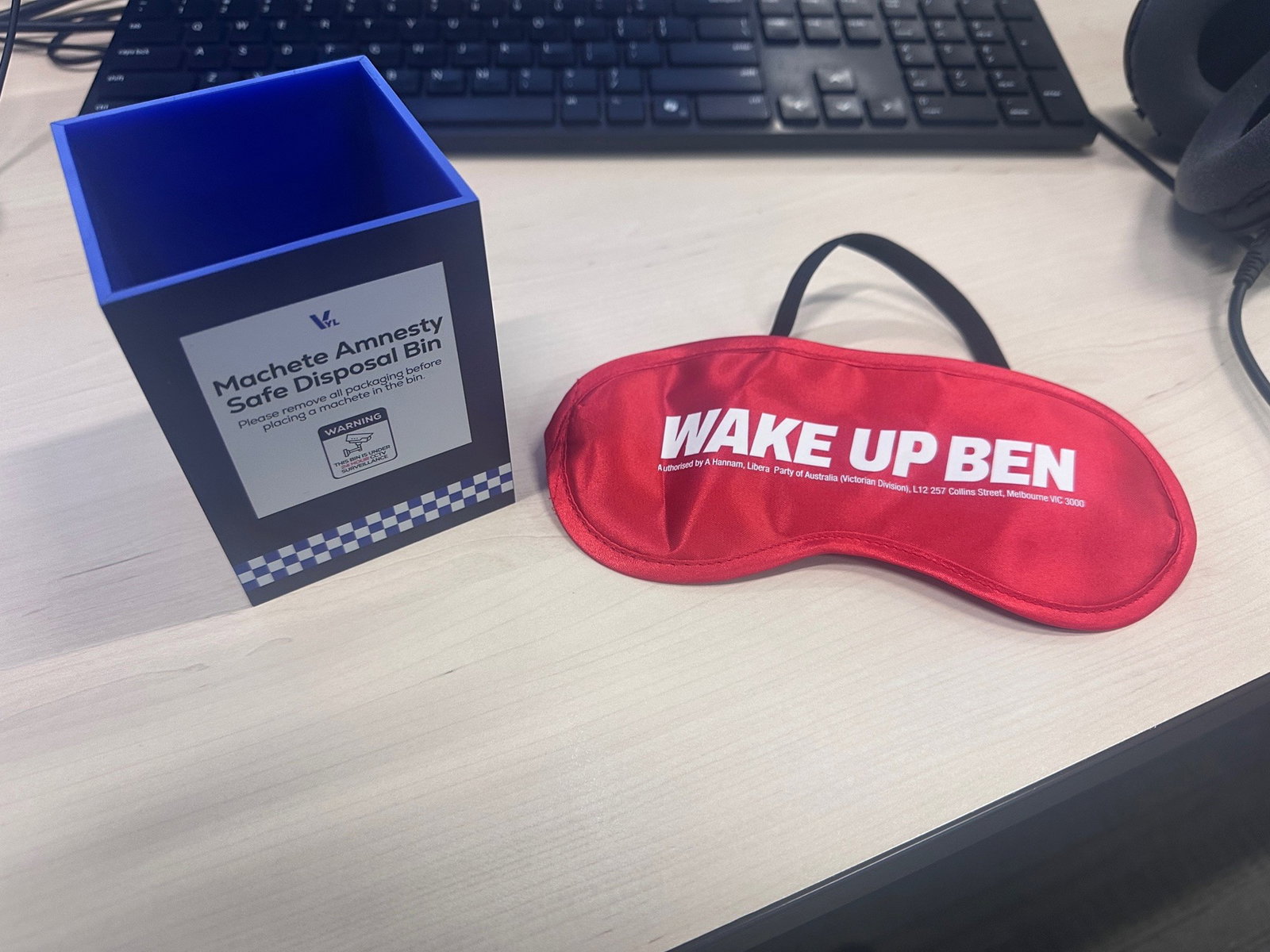
The Liberals have made miniature machete bins to hand out, mocking the multi-million-dollar machete bin program rolled out by Labor across the state.
They’ve also included an eye-mask reading “Wake Up Ben”, a jab at the premier’s reported habit of taking an afternoon nap on the job. He has denied those allegations.
Both Jess Wilson and Ben Carroll have been absent from the campaign trail today after their morning media appearances, as they prepare for a debate later tonight.
Seats in focus: Gippsland East
Gippsland East was first contested back in 1889 and has an almost unbroken history of electing members of conservative parties to parliament. Two deputy leaders of the Country Party, Albert Lind and Bruce Evans, have served as the MP for the seat.
Seventy-nine years of Country and National Party dominance was broken by independent Craig Ingram in 1999. He won the seat from third place by slashing the Nationals vote to 35 per cent and attracting significant preference flows from Labor, One Nation, and other independent candidates. Ingram was one of the three independents that supported Steve Bracks over Jeff Kennett, allowing Labor to return to government after seven years.
The Nationals struggled in the seat at the next few elections. Ingram was re-elected in 2002, handily defeating future federal MP Darren Chester, and the Liberal Party made it into second place in 2006. It wasn’t until 2010, on the Coalition’s return to government, that Ingram was defeated by Tim Bull, who has held the seat safely up until his retirement at this election. Bull briefly served as minister for local government and Aboriginal affairs in the dying days of the Napthine government.
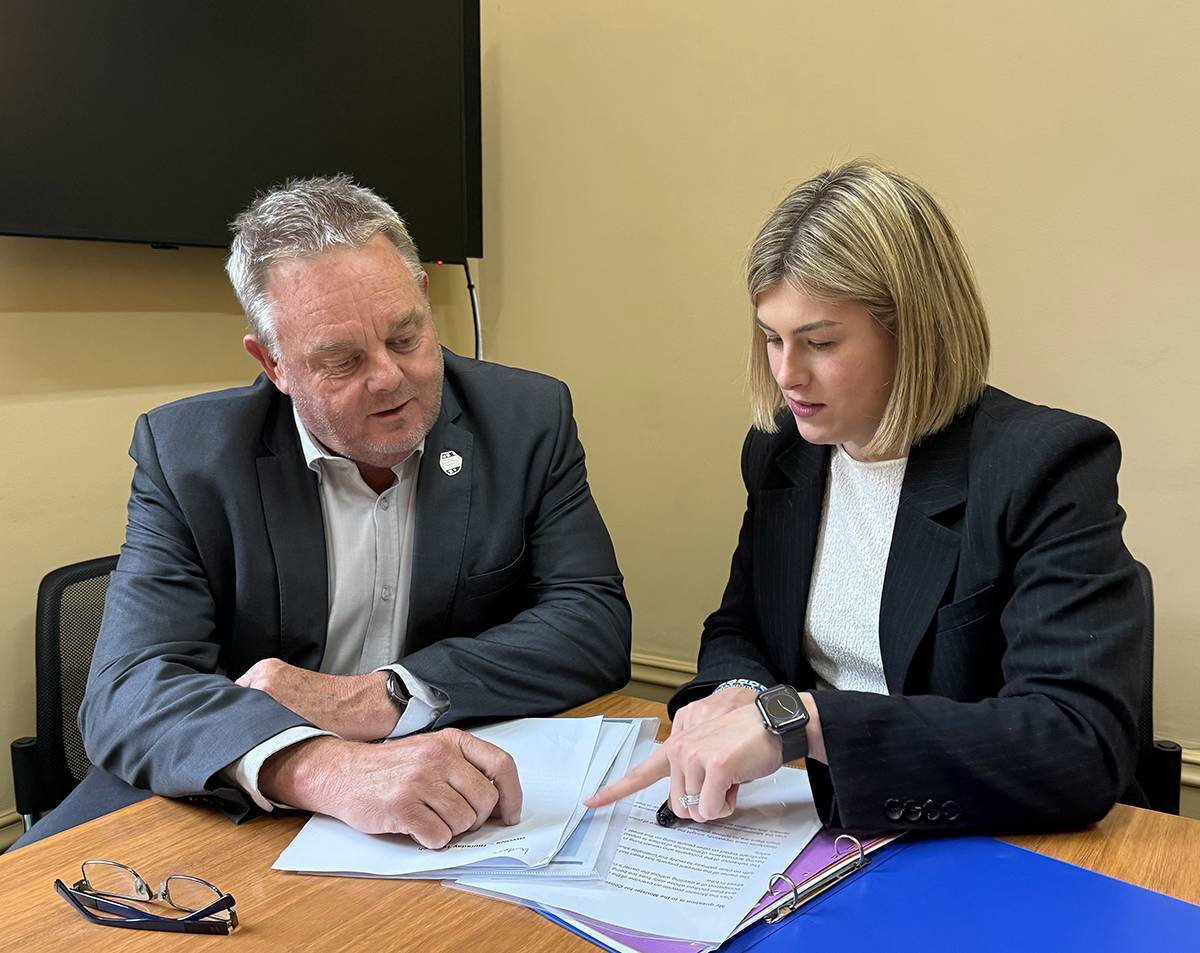
With the National Party relying on the strength of its local representation to hold onto other regional seats against a rising One Nation, an open seat with these demographics presents fertile ground for the insurgent party.
What are the major parties promising?
Want to keep track of all the promises made during the Victorian election campaign?
Check out our guide below:
🎧: The regional seats to watch this state election
This Victorian election, even seats on a margin labelled “very safe” do not seem safe at all.
One analyst says regional seats will be particularly “seismic” at the election.
The ABC’s regional Victoria team canvassed voters from Mildura to Morwell, Bendigo to Wodonga, to find out how people were voting this November.
Listen below:
Bikie asked if he’s seen medical practitioner for apparent lack of memory

Big Build royal commissioner Chris Kourakis asked Joel Leavitt if he has seen a medical practitioner about his lack of recollection of events from 2021 or if he has been diagnosed with any cognitive decline.
Leavitt responds no.
The majority of his replies to questions asked in today’s hearing which has spanned for several hours have been “I don’t recall” or “I can’t remember”.
It comes after the commission was shown more text messages where CFMEU organiser Jerry McQuaid suggests he is continuing to push to get Leavitt on the Laing O’Rourke job, which eventually happens in February 2021.
In some of those messages McQuaid says the company had done a “180” on their decision to hire Leavitt and that “Joe’s abused the f*** out of them and we’re all going there to play up tomorrow”.
While Leavitt could not recall who was being referenced in these messages, it’s understood to be former top construction union boss Joe Myles.
Counsel assisting Chris Carr puts to Leavitt that by “playing up” McQuaid meant to interrupt work.
In another message, McQuaid writes “I don’t see them lasting too long”, which Carr suggests is a reference to the pressure of industrial action McQuaid was inflicting on the company.
Eventually Laing O’Rourke signs an EBA with the CFMEU which aligns with the time Leavitt starts work with them.
Carr asks why McQuaid would have gone to such lengths over a series of months to get Leavitt work and puts to him that “one possibility might be … because you’re an intimidating bikie”.
In later text messages after he started working at the job site, Leavitt tells a friend that “all the lads knew about me”.
Other messages suggest that Leavitt had been hearing from people on the building site that he was going to have control of it.
Again, he can’t recall the meaning behind any of the messages.
Newbury gives blunt response to Labor campaign stunt
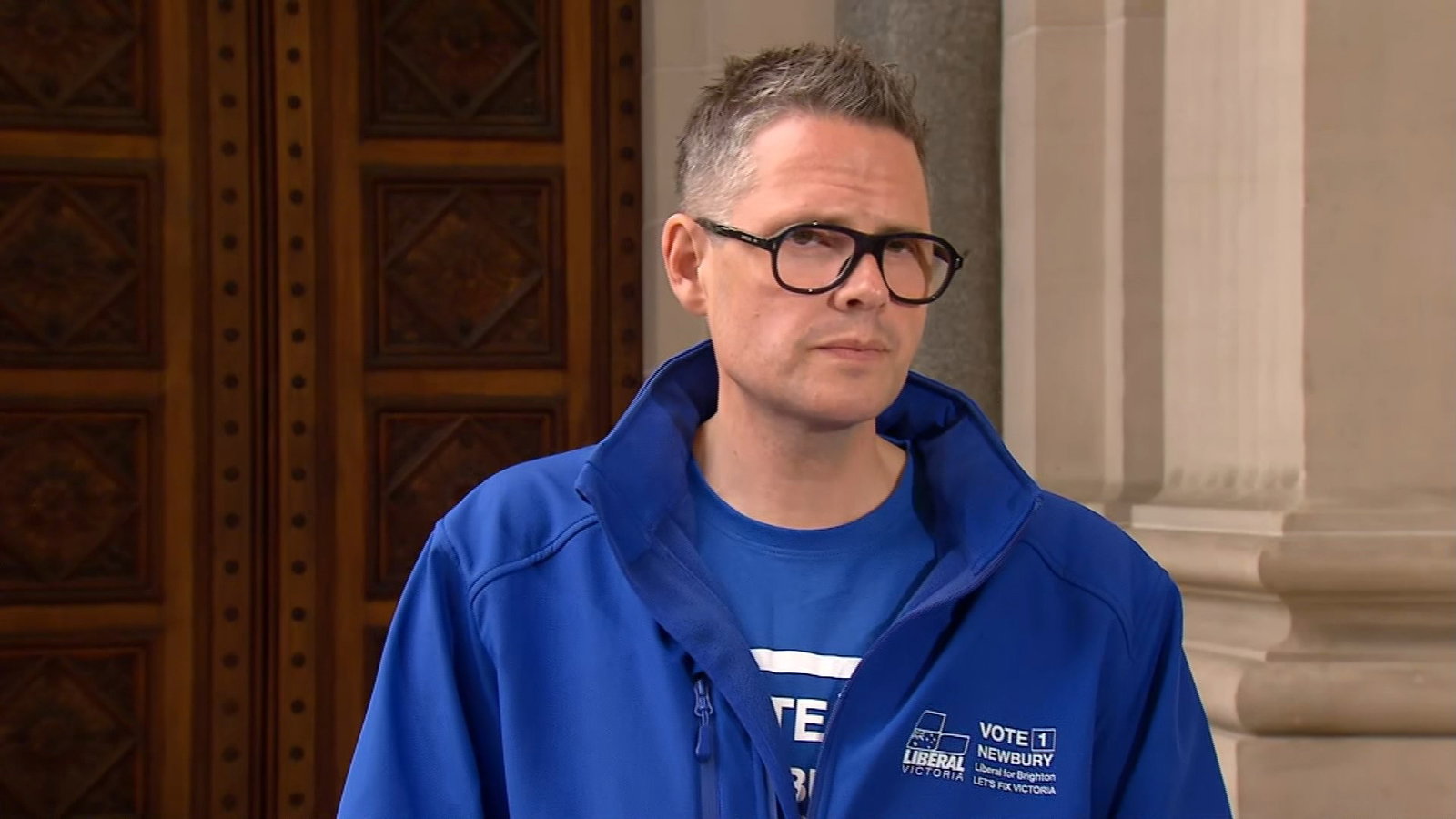
James Newbury pulls no punches when asked about his thoughts on Anthony Carbines’s story time press conference earlier today.
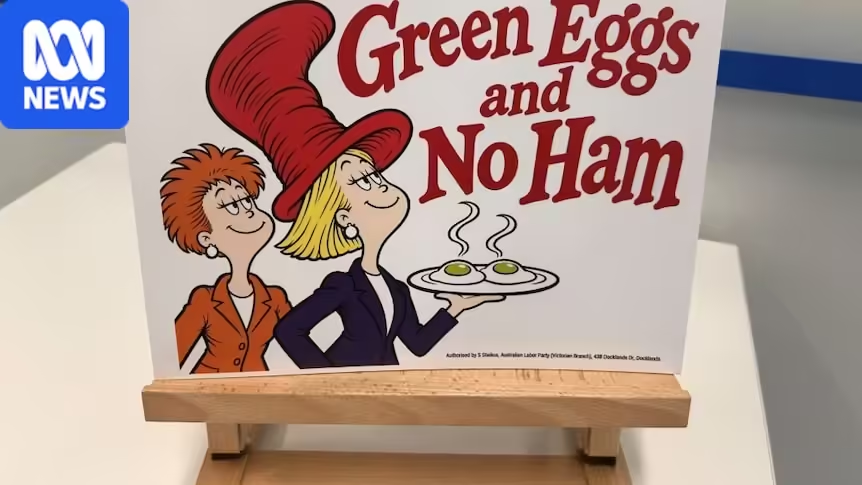
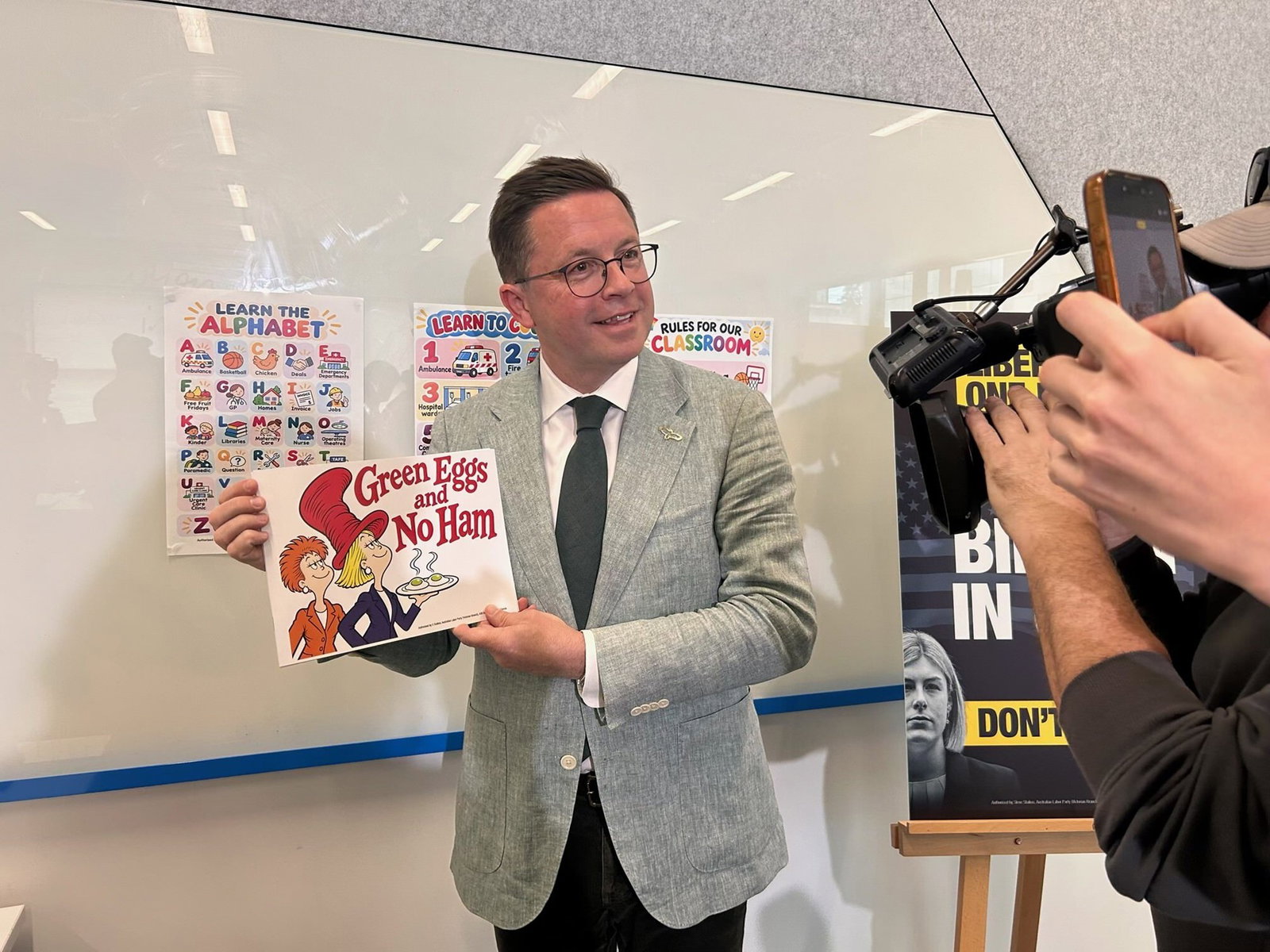
Carbines read to reporters from a children’s book, written as a parody of Dr Seuss to mock the Coalition.
“I think again, we have a second minister today demean themselves, and I think it reflects very poorly on him,” Newbury said.
“Before coming here, I was standing on my pre-poll booth talking to voters about our plan to fix this state. If Labor wants to throw mud at people, I think that reflects on them.”
Opposition defend position on kindergarten fees
The story of the day has been the topic of kindergarten funding, with Labor in attack mode over a letter sent by Jess Wilson in 2024.
In the letter, Wilson urged the Labor government to allow kindergartens to charge gap fees under the state’s free kinder scheme, with the Coalition vowing to continue the program but review its framework.
The opposition’s James Newbury is up to defend the Coalition’s position, saying it acknowledged the financial realities of providing free kinder.
“We don’t want to see kindergartens’ doors close, we want kindergartens to remain open,” Newbury said.
“If there is a difference between the genuine operating cost of a kinder and the government’s model, it’s only reasonable … to work out a solution to keep the doors open.”
He said it wasn’t a “one-size-fits-all” solution and would depend on individual kindergartens’ needs.
A comment from a voter at a low sensory centre
I just voted at the low sensory centre near me, and I have to say: it was very much appreciated. I get overwhelmed easily if there’s too much noise (especially when I’m tired), and being able to walk into a place to cast my vote where there weren’t many people helped me significantly.
I wasn’t keen on the number of volunteers that were outside distributing their leaflets, but at least they weren’t pushing the material on me – it looked like they were there in case they were asked for it. Another small thing that makes life a lot better for people like me.
Fingers crossed we see more of this in the future at both the state and federal level, and especially on voting day proper – not everybody can take time off work in the middle of the week to take advantage of these accommodations.
– Spartacus
Thanks for sharing Spartacus.
We love hearing from all of you, so keep your questions and comments coming!
Seats in focus: Frankston
Frankston sits at the end of the train line that ends in the suburb of the same name and runs through a string of marginal seats in Melbourne’s eastern suburbs. Frankston itself has behaved similarly to these other seats, although has been the site of particularly crowded contests.
The seat has a chequered past for the Liberal Party. Parts were once included in the former seat of Frankston East, which was subject to a supplementary election in 1999. This followed a state election that produced a hung parliament and Labor’s victory in the supplementary election allowed it to form government with crossbench support.
The Liberal Party narrowly reclaimed the seat at the 2010 election, along with a number of others along the Frankston Line, allowing it to form majority government. But in 2013 Liberal MP Geoff Shaw left the party, pushing it into minority government. Shaw’s promise of confidence and supply proved shaky throughout the remaining term of government and the Liberals narrowly lost the seat in 2014.
One Nation did not contest this seat in 2022, but Frankston’s demographics make it a seat to watch. It could diverge from its counterparts up the train line for the first time since the 1990s.
Carbines reiterates Labor’s Free Kinder pledge
As we reported earlier this morning, Opposition Leader Jess Wilson wrote to the government in 2024 asking the government to open the door for gap fees to help kinders cover additional services.
“Once you open the door to putting in gap fee charges, not explaining them, suddenly instead of a free service there’s suddenly small print saying: ‘if you want to come here, you’ve got to pay more’,” Carbines said.
“We’re saying free kinder is not negotiable under Labor.”
Labor’s Anthony Carbines does story time
In one of the most bizarre moments I’ve seen since we’ve been running this election blog, government minister Anthony Carbines reads out the children’s book, which appears AI-generated, to a room full of reporters.
“Here comes Jess, that Jess-I-am
With her friend One Nation
And “just a cut” plan,” Carbines reads.
He reads the entire book over the next three minutes or so.
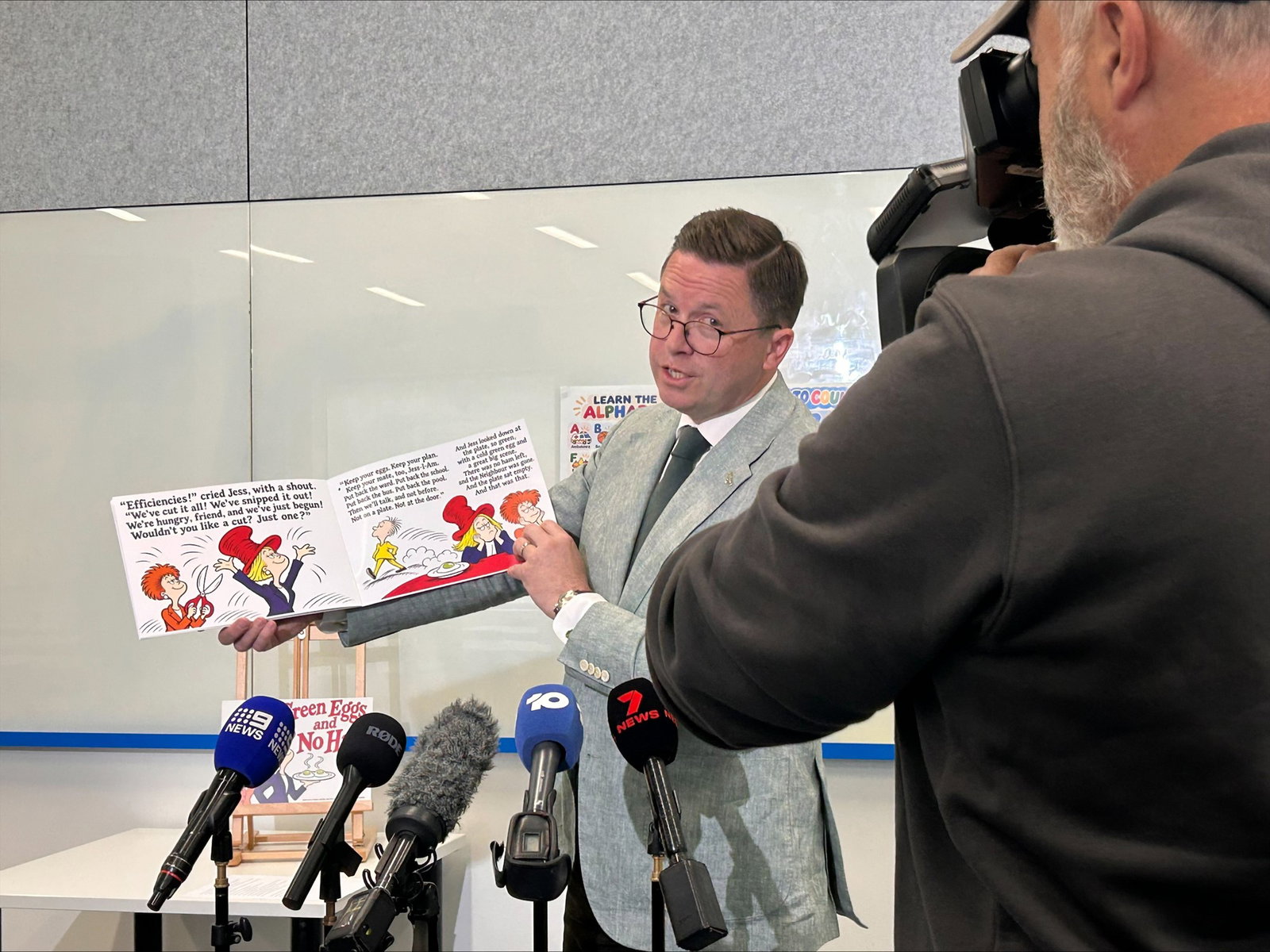
He said he didn’t have a role in the “artistic preparation” but said it was a “team effort” as to who wrote it.
Labor continues AI-assisted attacks on Coalition
As we reported last week, Labor have been happily using AI to craft attack ads on the Coalition in the lead-up to the election.
Minister for Artificial Intelligence Anthony Carbines has also been happy to provide some of the more theatrical moments on the campaign trail so far.
Today was perhaps the most elaborate yet, as Labor printed out what appears to be an AI-generated faux-Dr Seuss book and schoolroom posters to attack the Coalition on their cuts.
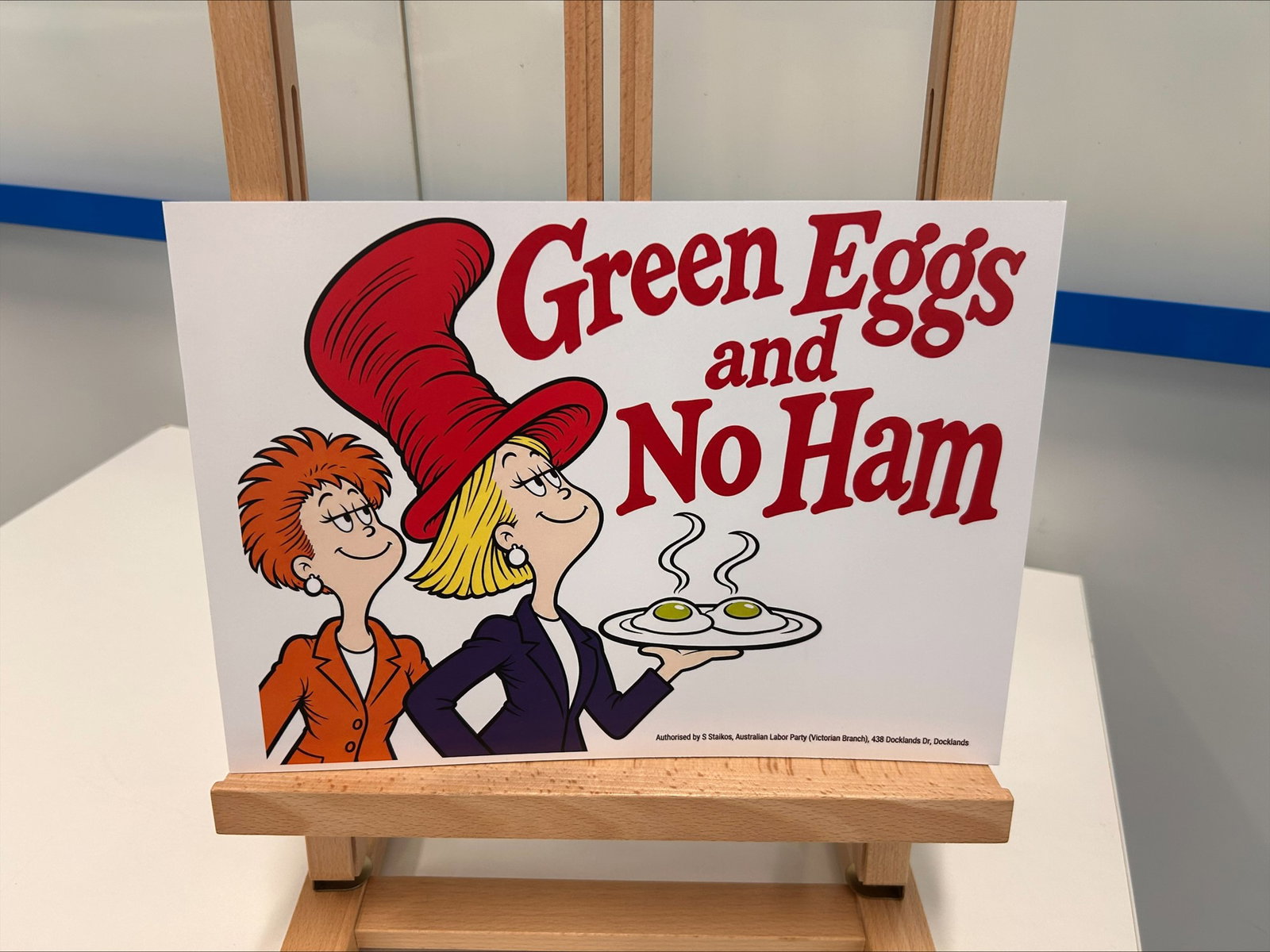
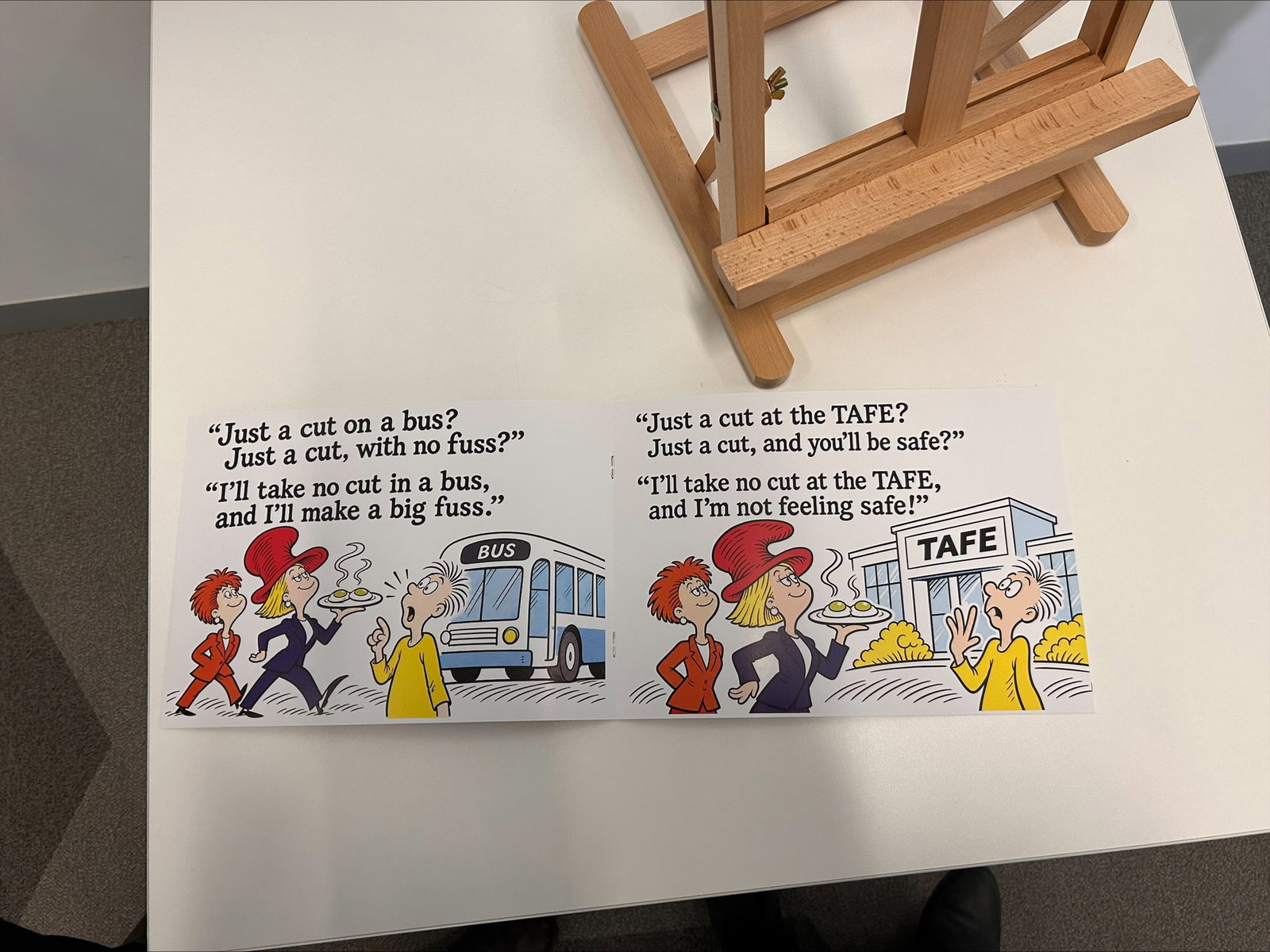
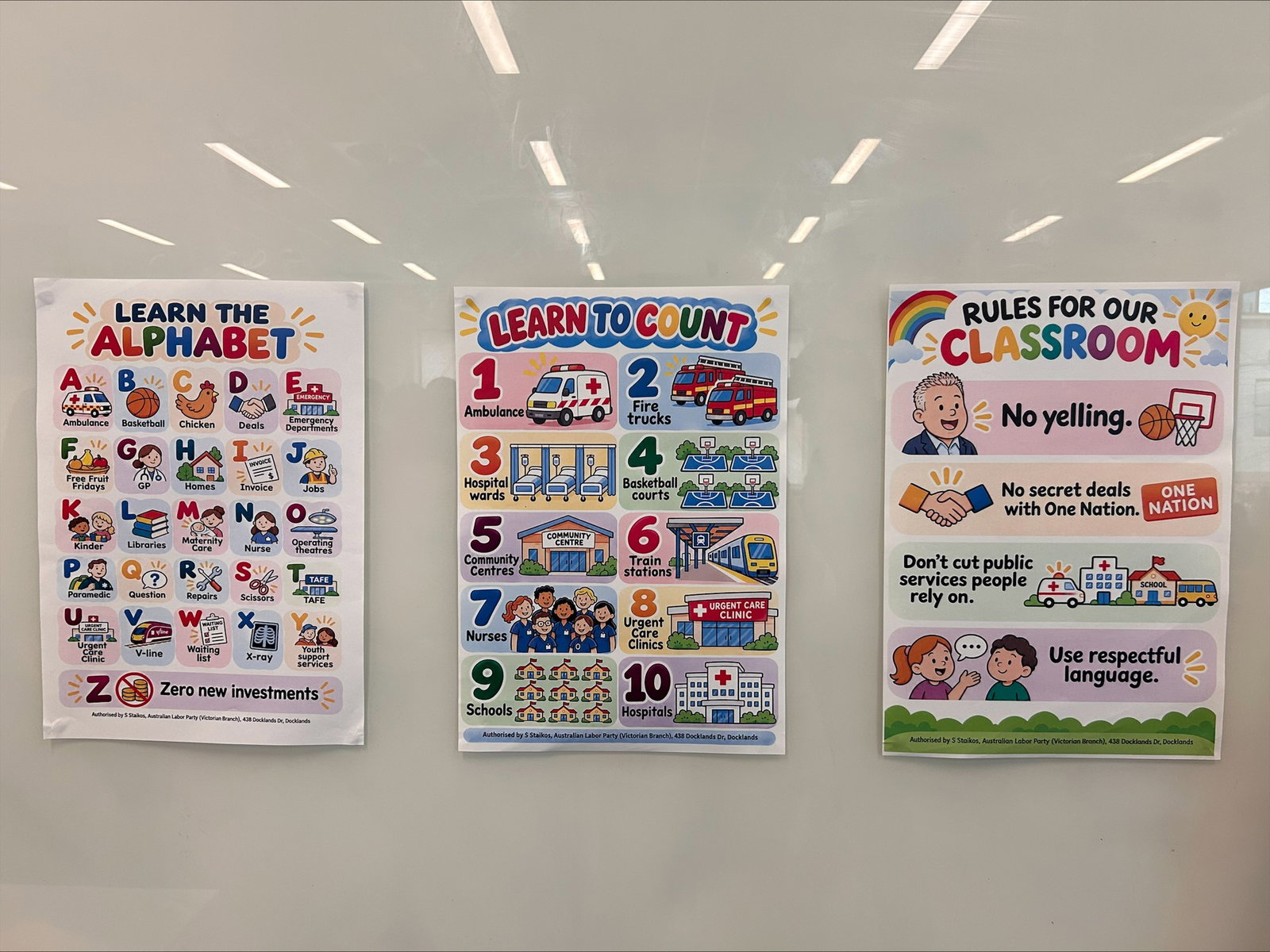
The signs listed various attack topics such as cuts to services and “secret deals with One Nation”.
The classroom materials also mocked dumped Liberal candidate Paul Lindemann over an incident where he was found to have yelled at a teenage basketball player while acting as coach.
CFMEU organiser ‘pushing like f***’ to get bikie job
The Big Build Royal Commission has been shown a series of text messages between Joel Leavitt and CFMEU organiser Jerry McQuaid.
In some of the messages read out, it appears McQuaid is trying to get Leavitt a job on a Big Build project in Cranbourne for Laing O’Rourke.
The attempts start in around November 2020, according to the messages and by January 2021 it had not been successful.
In one message McQuaid writes to Leavitt “the CFMEU is pushing like f***”.
Leavitt again appears to dodge questions about what he thinks that means.
Chris Carr SC puts to him that Laing O’Rourke was being difficult in McQuaid’s attempts to get him onto their job site.
After highlighting his criminal record and that his own name was associated with some notoriety at the time, Leavitt can’t answer why Laing O’Rourke may not have wanted him on their job site.
Biodiversity Council calls for parties to halt nature loss
The Biodiversity Council has laid out its hopes for the 2026 Victorian election, calling on all parties to halt and reverse the decline of the state’s environment.
A new report from the council says Melbourne residents have the poorest access to national parks and conservation areas of any capital city.
The Biodiversity Council’s Sarah Bekessy called on political parties to take action to save the garden srate.
“The next Victorian government has an opportunity to halt the destruction of nature and start rebuilding, but it will take more than promises. We need proper funding, stronger laws and accountability for delivering results,” she said.
The council called on the government to close loopholes on native logging and prevent logging by stealth, which enviromental groups say is still occurring despite a statewide ban enforced two years ago.
It also called for more funding for Parks Victoria, saying staffing at the agency had dropped more than 30 per cent since 2020-21.
Seats in focus: Footscray
Labor has had a firm grip on Footscray since it was recreated as a seat in 1927, with the party winning with more than two-thirds of the two-party-preferred vote at most elections. But these margins conceal some complex contests over the years.
Labor’s primary vote dipped under 50 per cent at the 2010 election and the Greens came within about 200 votes of overtaking the Liberals in second place. This was partly due to the strong flow of preferences from independent Catherine Cumming, who ran in the seat at every election from 2002 to 2014.
Weaker preference flows and less favourable boundaries kept the Greens in third for the next few elections. But population growth pushed Footscray further towards the CBD ahead of the 2022 election. Although the Greens’ primary vote only modestly increased, the Liberals were disadvantaged by the new boundaries and ended up in third. The Victorian Socialists also entered the contest and polled nearly 10 per cent, giving the Greens a sizeable pool of preferences from which to maintain their place in second.
Although the Greens failed to win the seat, they reduced Labor’s margin to just over 4 per cent, by far the lowest in the seat’s modern history.
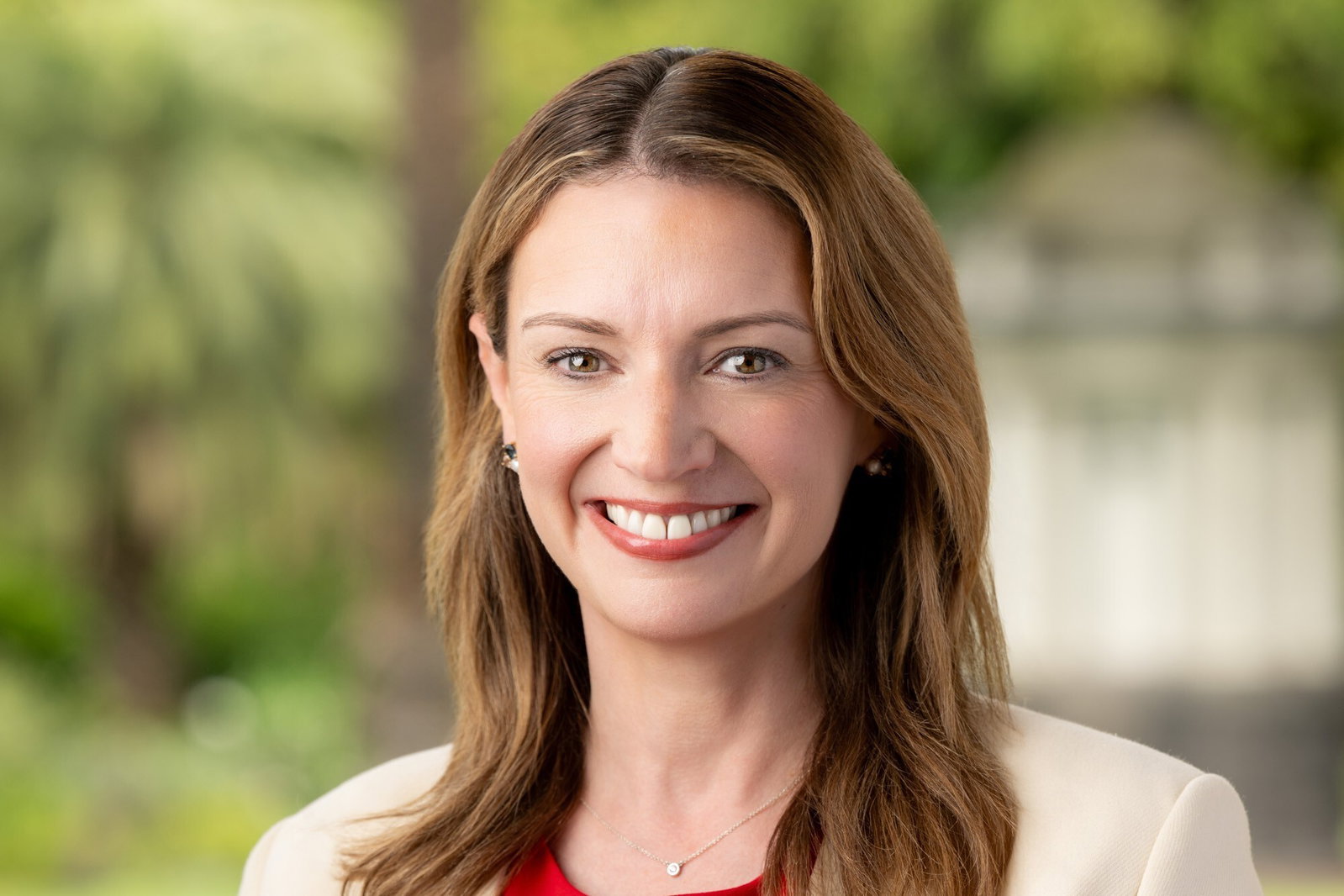
The Greens have a clear path to winning this seat should the Labor vote continue to decline and they get favourable preference recommendations from other parties. While the former seems plausible heading into this election, the latter is never assured.
Early voting kicks off tomorrow
The Victorian Electoral Commission says a record 210 early voting centres will open tomorrow for the state election.
The VEC said there would be 30 per cent more venues for early voting compared to last election, with about 60 per cent of voters expecting to cast their vote before election day.
“You don’t need a reason to vote early in Victorian state elections. Early voting in person is a safe, convenient option if you’re travelling or working on election day,” Electoral Commissioner Sven Bluemmel said.
“Anyone can choose to vote early. Visit the VEC website to find your nearest early voting centre.”
Early voting centres will operate from 9 am to 6 pm each day until Friday 27 November, except for Sunday 22 November when all voting centres are closed.
To find out more about early voting, check out this explainer from the ABC’s Alex Sinnott:
Vision Australia calls for Victorian driverless taxi trial
Vision Australia is calling on the next Victorian government to become the first state in the country to fund an autonomous accessible taxi pilot program.
Under current laws, an automated driving system (ADS) permit is required to operate an automated vehicle in automated mode for testing or development purposes.
But Vision Australia’s Chris Edwards says a dedicated driverless taxi pilot would test the practical benefits for all people who cannot drive and provide evidence to guide future transport planning.
“Whether someone is travelling to work, going to a medical appointment or visiting family and friends, the ability to travel independently is pivotal,” said Mr Edwards.
“We can see from the national data that only around half of people with disability are currently able to use all forms of public transport without difficulty, so there is certainly room for improvement.
“As Victorians we want to see how this technology could support and build upon existing transport options for people with low vision or who are blind.”
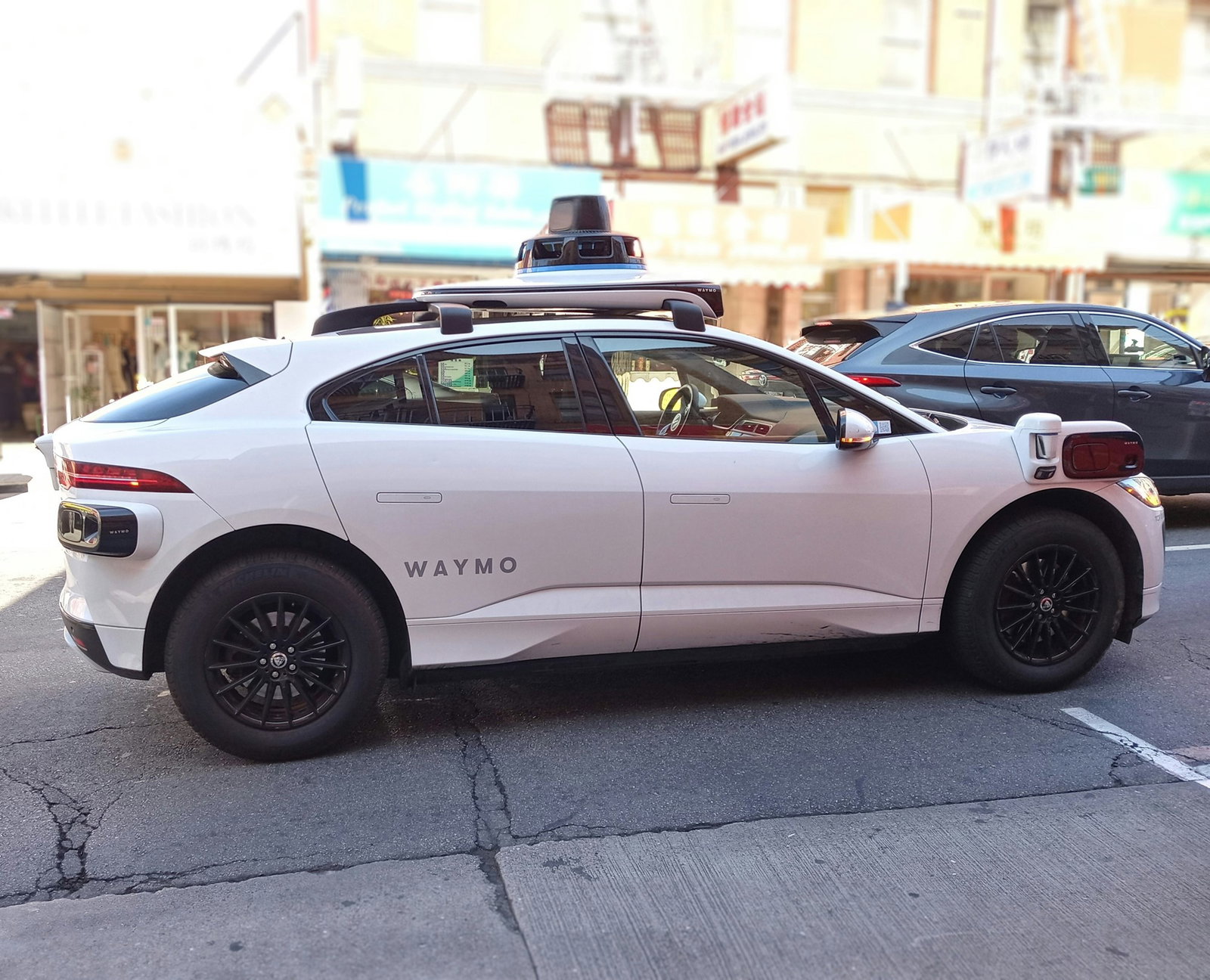
Self-driving robotaxis are already in use internationally on the streets of London, San Francisco and Beijing as rideshare companies expand into driverless transport.
The push for robotaxis comes as part of a package of priorities to improve the state for vision-impaired people for the coming election, which also include:
- funding and supporting a training and employment program in Victoria
- higher penalties for dog attacks on dog guides
- audio announcements on public transport
Seats in focus: Evelyn
Evelyn is one of the oldest electoral districts in the state and has always traditionally favoured the conservative side of politics. Since 1985, Labor has only won the seat once, in the “Brackslide” of 2002, and even then with a very small margin.
Despite this history, the seat has often been closely fought between the major parties, as the boundaries have shifted slightly further down the Maroondah Highway toward Melbourne in recent decades.
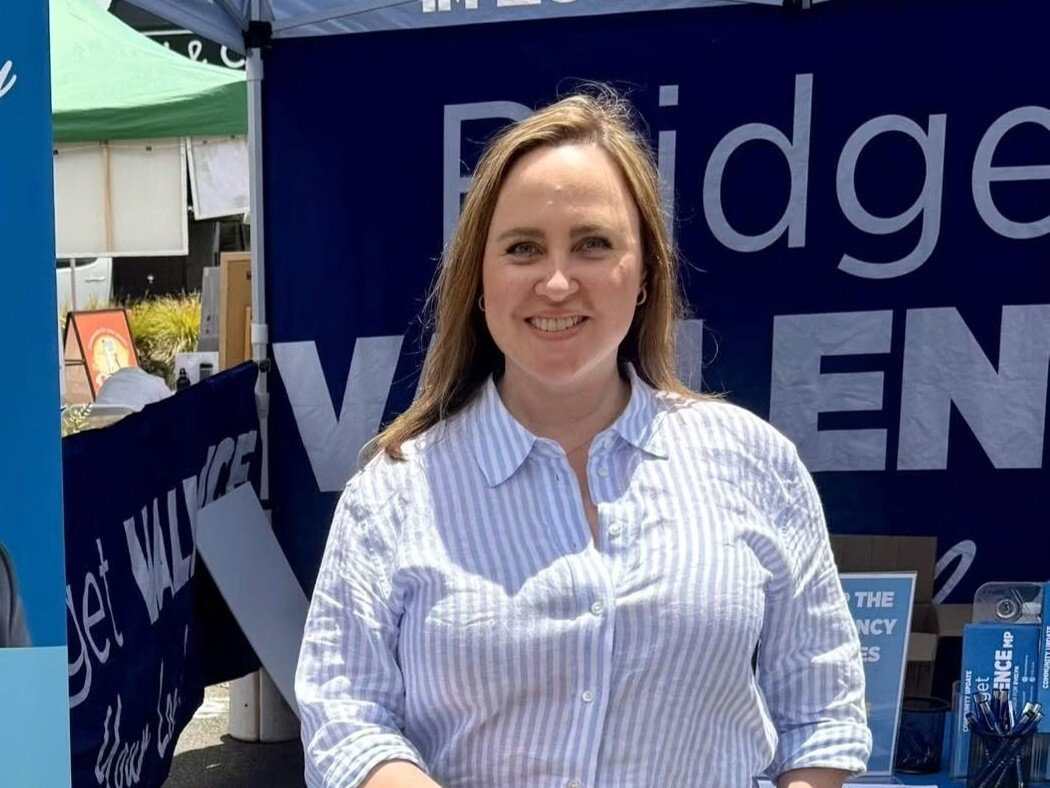
Current member Bridget Vallence withstood an almost 7 per cent swing against the Liberals when she succeeded longtime member Christine Fyffe in 2018. In 2022, Labor’s primary vote dropped dramatically and she increased her two-party-preferred margin by a few points.
Labor attacks Jess Wilson over free kinder
Labor has seized on a January 2024 letter that Opposition Leader Jess Wilson sent to Minister for Children, Lizzie Blandthorn, which argued the “restrictive nature of free kinder” meant quality had been compromised.
All Victorian three- and four-year-olds are entitled to free kindergarten under a program launched in 2023, with the government gradually increasing the hours provided.
In her letter, Wilson said teachers at a kindergarten told her they had been forced to cut back because the funded hours did not cover their service.
In a statement, Blandthorn said the letter showed where the Coalition stood on free kinder.
“It’s free kinder under Labor, and fee kinder under the Liberals,” Blandthorn said.
The ABC’s state political reporter Rachel Eddie has more in her story below:
The minor parties running in the Victorian election
Labor, Liberal, the Greens and One Nation continue to dominate the news cycle, but there are more than a dozen smaller parties vying for a seat in the Victorian parliament this year.
Some parties have been campaigning for decades, while others have popped up to contest in their first ever election.
Check out our guide to find out what each party stands for and is campaigning on this election:
Seats in focus: Euroa
Regional Victorian seats underwent a significant redrawing of boundaries in 2013, particularly north of Melbourne. Euroa was created out of the abolished seats of Benalla, Rodney, and Seymour, with the former seats being Nationals strongholds and the latter a swing seat held by both major parties.
The Nationals have had little trouble winning Euroa since 2014. Its first member was Steph Ryan, a former journalist and adviser to Liberal premier Ted Baillieu, who immediately upon entering parliament was elected deputy leader of the Nationals. Citing a desire for a greater work-life balance, Ryan retired ahead of the 2022 election and was succeeded in Euroa by another former journalist, Annabelle Cleeland.
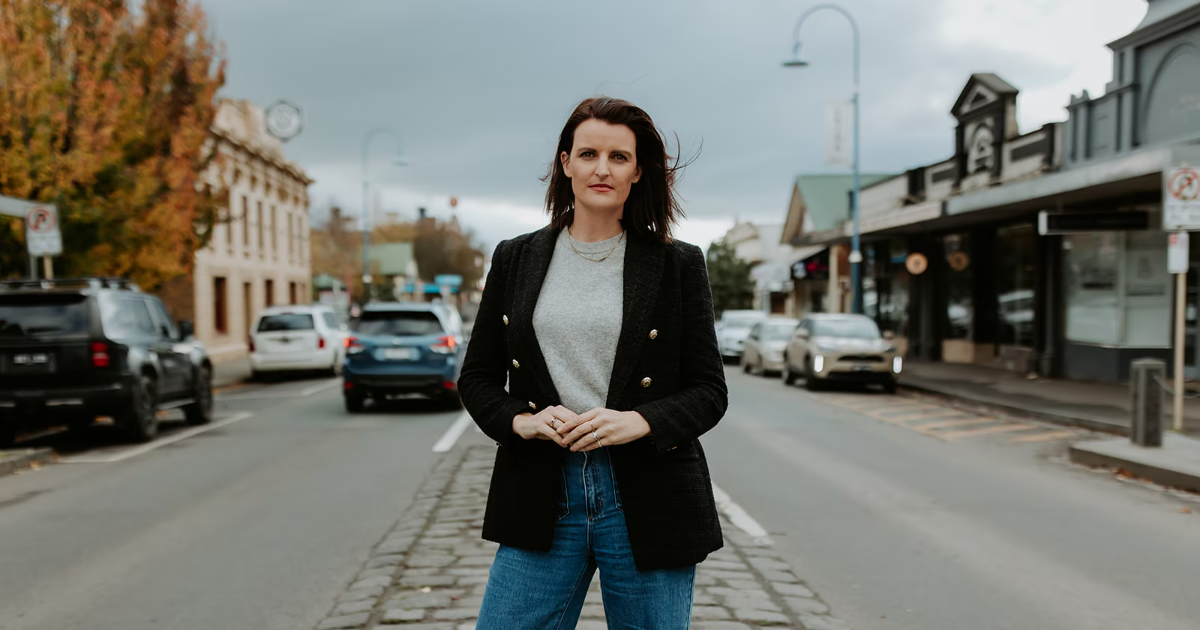
With Ryan’s retirement, the Liberals once again contested Euroa at the 2022 election. They performed best in Benalla, where they outpolled the Nationals on the primary vote, and in the small towns to the west of Shepparton. Labor attracted the most support in the southern end of the seat and in the town of Heathcote in the west.
Heading into this election the question will be whether Cleeland has established enough local support to hold off a One Nation challenge. Like the surrounding rural seats, Euroa’s population is older and less diverse.
🎞️: Run for Office: Glen Waverley
In the ABC’s Run for Office series, our intrepid suburbs reporter Margaret Paul is running through different Victorian electorates and finding out what matters to voters.
She visited the electorate of Glen Waverley in Melbourne’s south-east, where the Suburban Rail Loop, car parking and potholes all features as issues on the minds of voters.
Loading…
Seats in focus: Eureka
The seats covering Ballarat have shifted substantially at the past two redistributions. Eureka was created from the abolished, but similar, seat of Buninyong, which itself was created from much of the former seat of Ballarat East. All three seats cover parts of Ballarat’s eastern suburbs but Eureka now includes the commuter town of Bacchus Marsh and a swathe of small towns to the south of Ballarat.
The seat’s incumbent member, Michaela Settle, was elected to Buninyong in 2018, succeeding longtime Ballarat East MP Geoff Howard. Settle transferred to Eureka in 2022 and in April this year entered cabinet as agriculture minister.
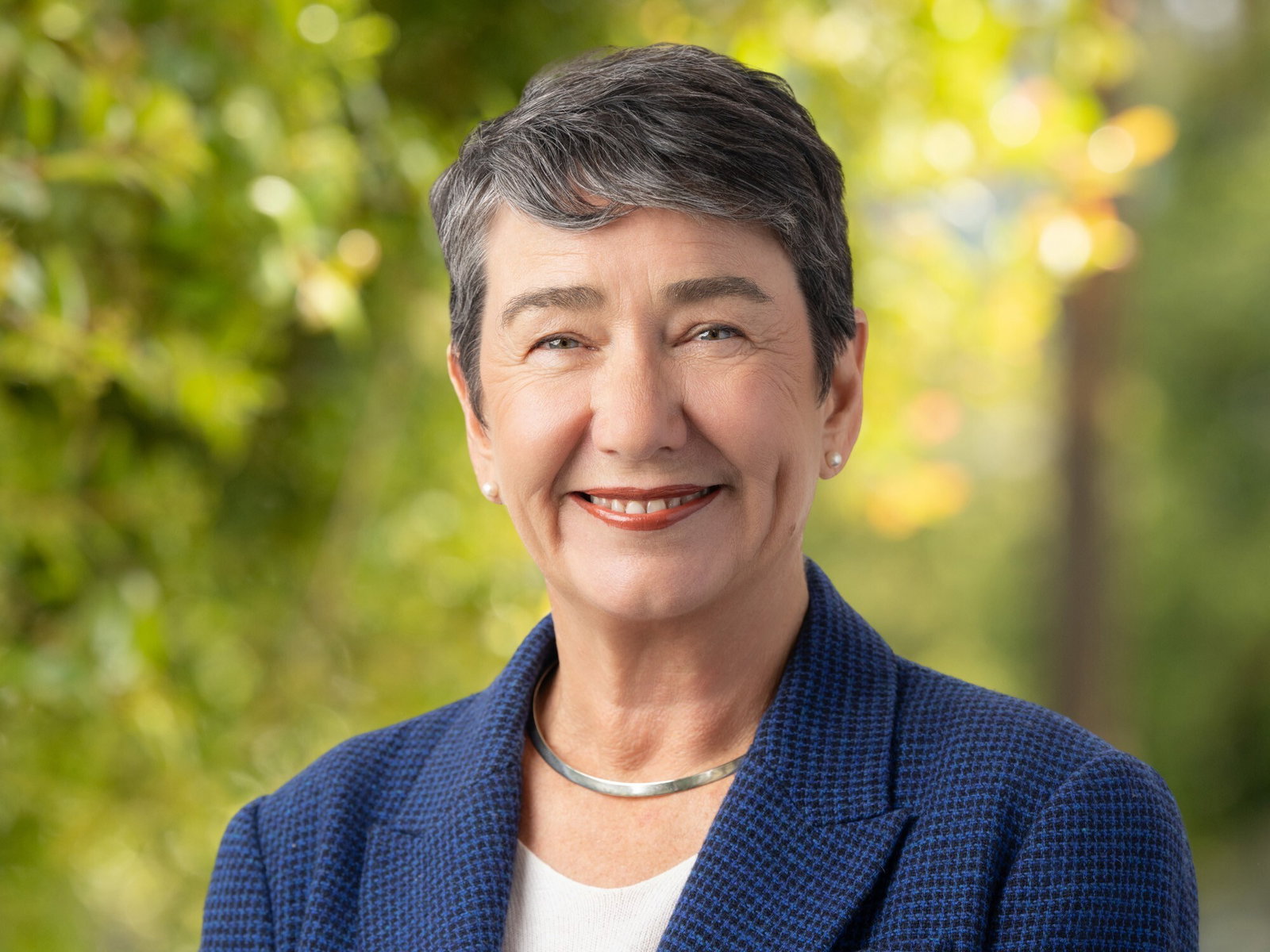
Electorally, Ballarat and its suburbs have a strong Labor history. But Labor’s margin is weaker in the other towns in the seat. One Nation did not contest this seat in 2022, so this election will be a gauge of the party’s current support in semi-rural areas.
Big Build Royal Commission returns
The Big Build Royal Commission has commenced after taking the day off yesterday to review documents belatedly submitted by the state government.
The documents were originally submitted heavily redacted, which was criticised by the commission.
To start today’s hearing, Counsel Assisting Chris Young KC read out a letter from Premier Ben Carroll to his department which called on all government departments to comply with the royal commission.
Following his letter, the documents were resubmitted and lawyers scrambled over the weekend to go through them, which is why yesterday’s scheduled hearing did not sit.
Have your say on the Victorian election
We want to know what’s shaping your vote in this election and why.
Whether it’s the cost of living, housing affordability, crime, regional roads, health care or jobs, let us know in our form below.
You can also ask the election questions you want answered from candidates, parties or the ABC.
All submissions will be reviewed by a journalist, and we may be in touch if we need more information.
Welcome to the blog
Good morning and welcome to our Victorian election blog.
We’ll be bringing you coverage from the election campaign, as well as all the major revelations from the second week of public hearings in the Big Build royal commission.
Source: www.abc.net.au