
Inflation in the UK rose to 3.6% in October after petrol prices increased and diesel hit a record high amid the fallout from the war in the Middle East.
Figures from the Office for National Statistics (ONS) show the headline rate of inflation as measured by the consumer prices index rose from 3.5% in September and was in line with City economists’ forecasts.
As households brace for the colder winter months with household gas and electricity costs soaring, the latest figures push the headline inflation rate to the highest level in a year.
In a reading underscoring the pressure on the Bank of England to raise interest rates, the ONS said fuel prices were the major contributor. Annual costs of raw materials and goods leaving factories also continued to climb, driven by rising energy and crude oil prices amid the Iran war.
Fuel prices for motorists rose at an annual rate of 33.2%, the largest increase since July 2022 after Russia’s full-scale invasion of Ukraine sparked a global surge in energy prices.
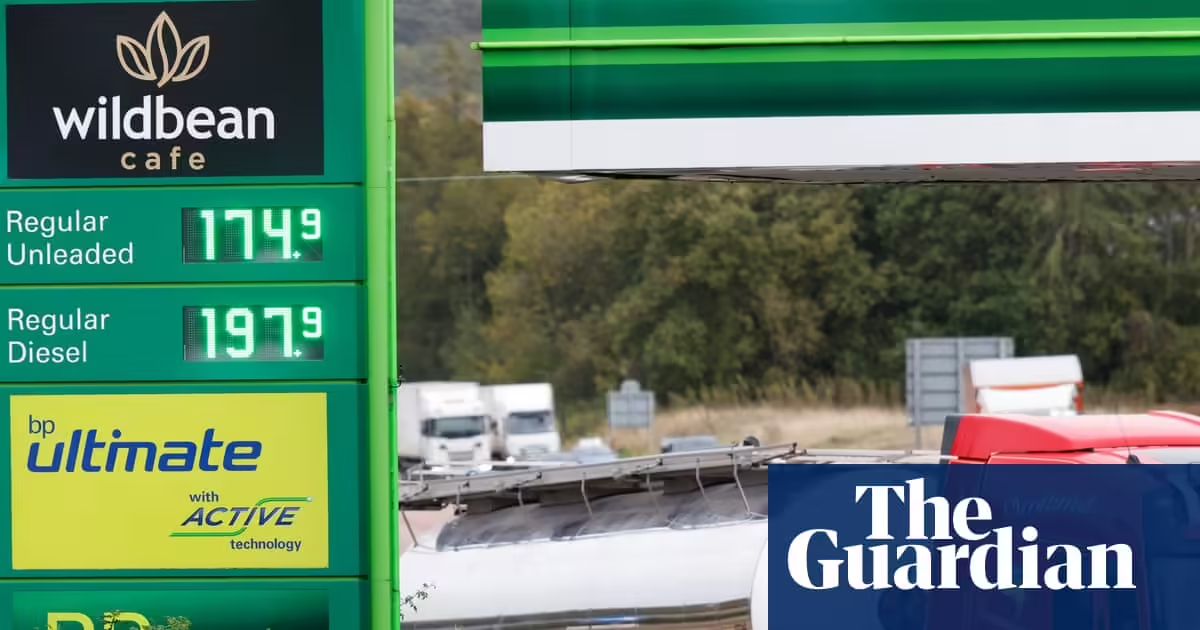
The average price of petrol rose by 5.2p a litre between September and October to reach 174.7p a litre, the highest level in four years. Diesel prices rose by 7p a litre to 199.5p a litre, the highest price on records dating back to 1996.
Andy Burnham’s government has pledged to offer support for households grappling with a fresh cost of living squeeze as the stop-start Iran conflict rattles the global economy and drives up inflation worldwide.
At the budget last month the chancellor, John Healey, announced plans for a £100 winter handout for 20m households to cushion the blow from the global economic storm.
The latest inflation figures took into account a 4% increase in the Ofgem energy price cap from the start of October.
A forecast from the consultancy Cornwall Insight on Wednesday predicted a 26% jump in energy bills in Great Britain from January to the equivalent of £2,166 a year for a typical household.
Economic forecasters predict a further rise in inflation, with the Bank of England anticipating a peak of close to 5% next year.
Earlier this month, Threadneedle Street raised interest rates from 3.75% to 4% and warned further increases in the cost of borrowing might be required to combat inflationary pressures unleashed by the Iran war.
Andrew Bailey, the Bank’s governor, said the longer the conflict continued the more likely it was that rate increases would be needed, despite a recent drop in global energy prices since the US midterm elections.
Speaking at a conference in London on Tuesday, Bailey said inflation was “probably going to be a bit less” than the 5% forecast made by the Bank earlier this month.
after newsletter promotion
However, he said that if the war pushed energy prices higher, the “more likely persistent inflationary effects will take hold and the higher the level of interest rates will need to be”.
Financial markets anticipate at least two quarter-point increases before the end of next year. Analysts said the Bank could raise borrowing costs from as early as next month.
Core inflation – which excludes volatile energy, food, alcohol and tobacco prices – was unchanged at 2.8%, matching economists’ forecasts. Services inflation, which the Bank has been monitoring closely for evidence of domestic inflationary pressures becoming entrenched, also held steady at 3.7%, slightly below City predictions for a rate of 3.8%.
Air fares rose by 1.8% between September and October amid an increase in long-haul ticket prices – offset by a downward effect from European flights. Prices for alcohol and tobacco also rose, by 4.5%, influenced by the timing of an increase in tobacco duty at the start of the month.
Food prices rose at the slowest rate since September 2021, at 0.9%, down from 1.3% in September.
Emma Reynolds, the chief secretary to the Treasury, said: “The conflict in the Middle East and Russia’s illegal invasion of Ukraine have pushed up costs around the world.
“The household energy payment, announced in our budget, is providing £100 directly into 20 million bank accounts in January, which will help to give families breathing space now.
“The budget also started the long-term action needed to get energy costs down for good, including an end to levies on household bills, scrapping standing charges and ensuring Britain is better protected from global shocks in the future.”
Source: www.theguardian.com