The Sport Management Program at UConn’s Neag School of Education carries with it the goal, “to think about how we can make sport a more just and inclusive space,” says Laura Burton, associate dean for academic affairs at the Neag School and a faculty member within the program.
Through a decade of partnership in the Global Sports Mentoring Program (GSMP), faculty in the program are contributing to that goal through mentoring leaders who go on to address and champion the role of women at every level of sport.
The U.S. Department of State, the Center for Sport, Peace, and Society at the University of Tennessee, Knoxville, and espnW co-sponsor GSMP, a leadership initiative that empowers women to advance gender equity through sport.
“Our role is to provide an intellectually stimulating experience, in which they have the opportunity to learn from the UConn community while sharing their own experiences and insights,” says Danielle DeRosa, assistant professor-in-residence in the sport management program who coordinates logistics for the GSMP visits.
She and Burton serve as mentors for one fellow among a cohort of women chosen for the program each year. From Oct. 17 to Oct. 28, they welcomed Viktoriia Riasna, an emerging leader who currently serves as Ukraine’s Deputy Minister of Youth and Sports for European Integration. Following her time at UConn, Riasna traveled to Virginia for an additional week of mentoring at James Madison University.
Fellowships Lead to Action Plans
GSMP was launched in 2012 as a partnership with the U.S. Department of State and espnW, pairing emerging female leaders from around the globe with mentors and leaders at U.S. institutions in the sport industry. The program aims to increase cross-cultural relationships that build trust and mutual respect while breaking down cultural barriers. Since its launch, GSMP has hosted more than 300 leaders from over 100 countries who are advancing initiatives that promote women’s leadership and expand opportunities for people with disabilities.
Delegates are nominated by their embassies to participate in the program, which runs for about six weeks every year in the U.S. Following an orientation at University of Tennessee, Knoxville, delegates travel to their host institutions for partnership and cultural exchange.
The bulk of the mentorship focuses on the creation of an action plan — a strategic initiative each delegate drafts to address a critical issue within their society related to women and girls and sport. At the end of the fellowship, delegates present to GSMP program leaders, mentors, and members of espnW and the Department of State in Washington, D.C. Those action plans are as varied as the women chosen for the program, DeRosa says.
“It’s been wildly different each year, depending on what issue each woman has decided to take on,” she says. “As the mentors, it’s our job to be a sounding board throughout the entire time that they’re here to provide feedback and be a thought partner.”
As this year’s delegate to UConn, Riasna developed an action plan titled “Women Rebuild Through Sport,” aimed at using sport as a pathway to social and professional reintegration for Ukrainian women affected by the ongoing war with Russia, including women veterans and internally displaced women.
Through partnerships with sports organizations, local communities, and other stakeholders, she aims to establish a structured program that combines physical activity, mentorship, skills development, and professional opportunities, helping women rebuild their lives, regain a sense of belonging, and create new opportunities for their future.
“There are hundreds of thousands of examples where women and girls moved from their homes,” Riasna says. “I can bring these people to rebuild themselves, to create some sense of belonging.”
Last year, the Neag School hosted Serbian coach Jelena Pavićevićco-founder of the country’s Women’s Sport Institute. Pavićević developed a mentorship framework for coaches across her institute’s 25-city network for her action plan, focusing not on elite talent but on making participation accessible for every girl who wants to try a sport. Her plan embedded short, coach-led lessons on confidence and leadership into regular practices, helping girls build trust and skills in a familiar environment.
In the first year of UConn’s partnership with GSMP in 2016, Burton, along with sport management professor Jennifer McGarry and UConn Associate Athletic Director Ellen Tripp, mentored Jessica Wu from the Philippines. Wu’s action plan focused on empowering young women in her community who have been the victims of physical and sexual abuse.
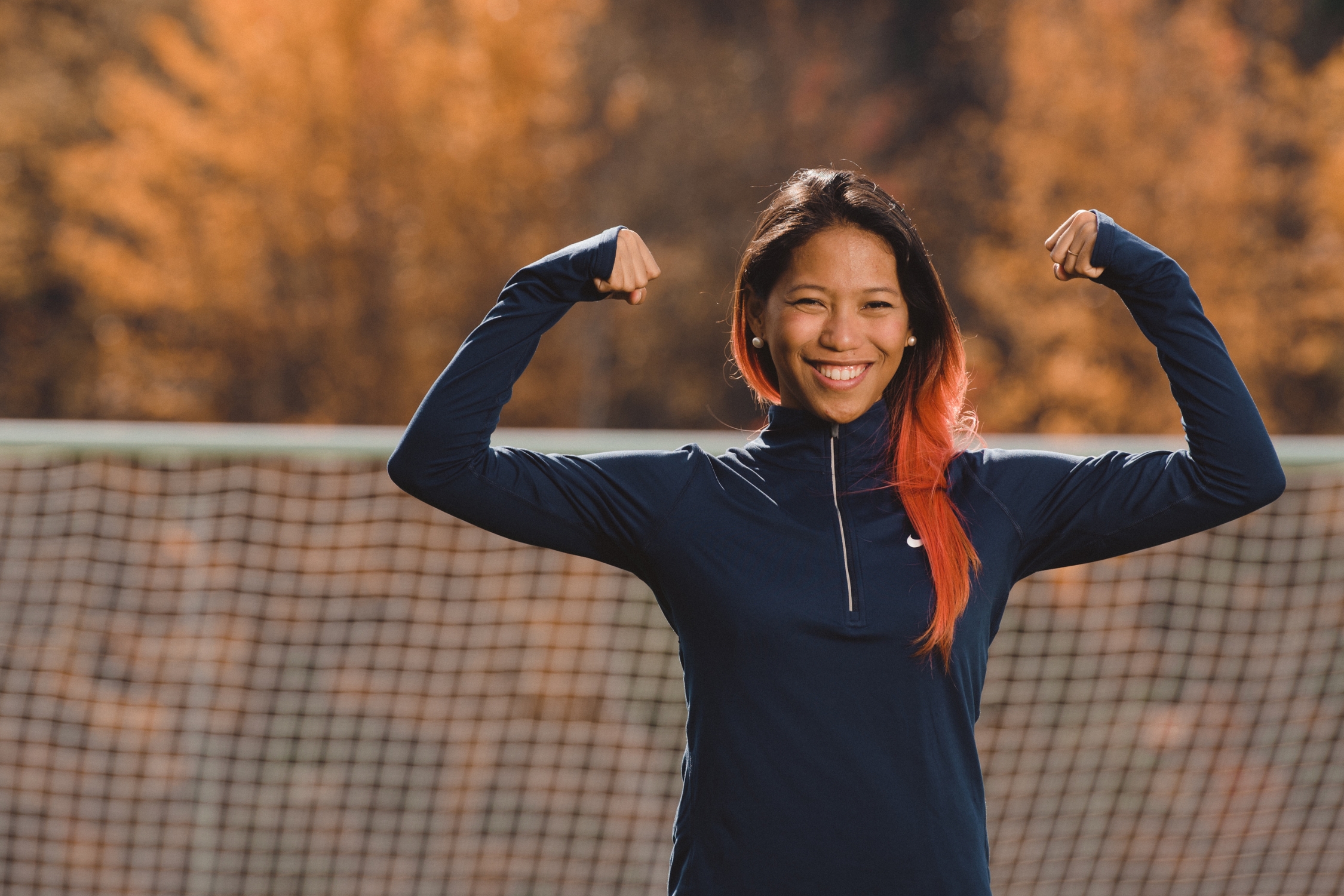
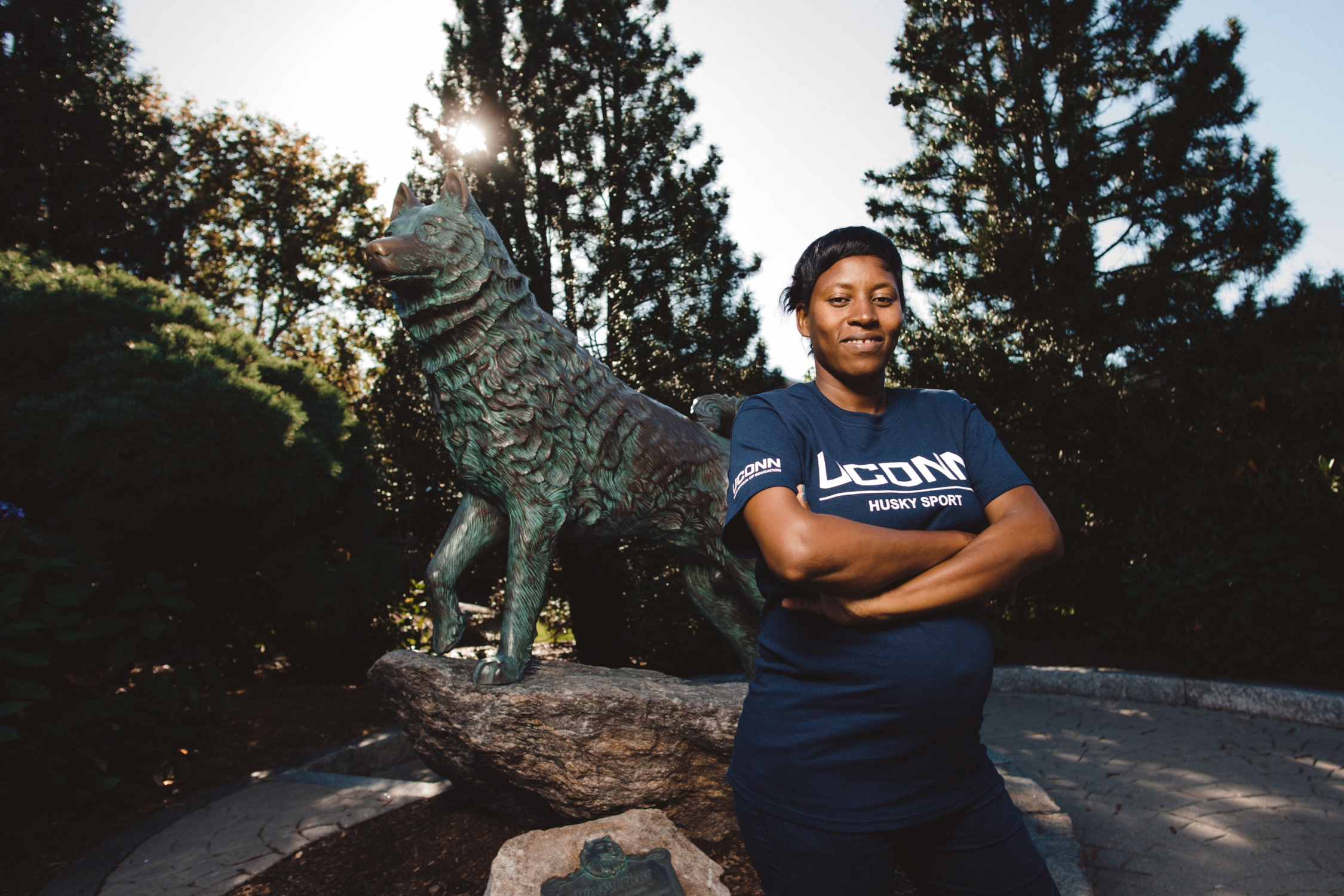
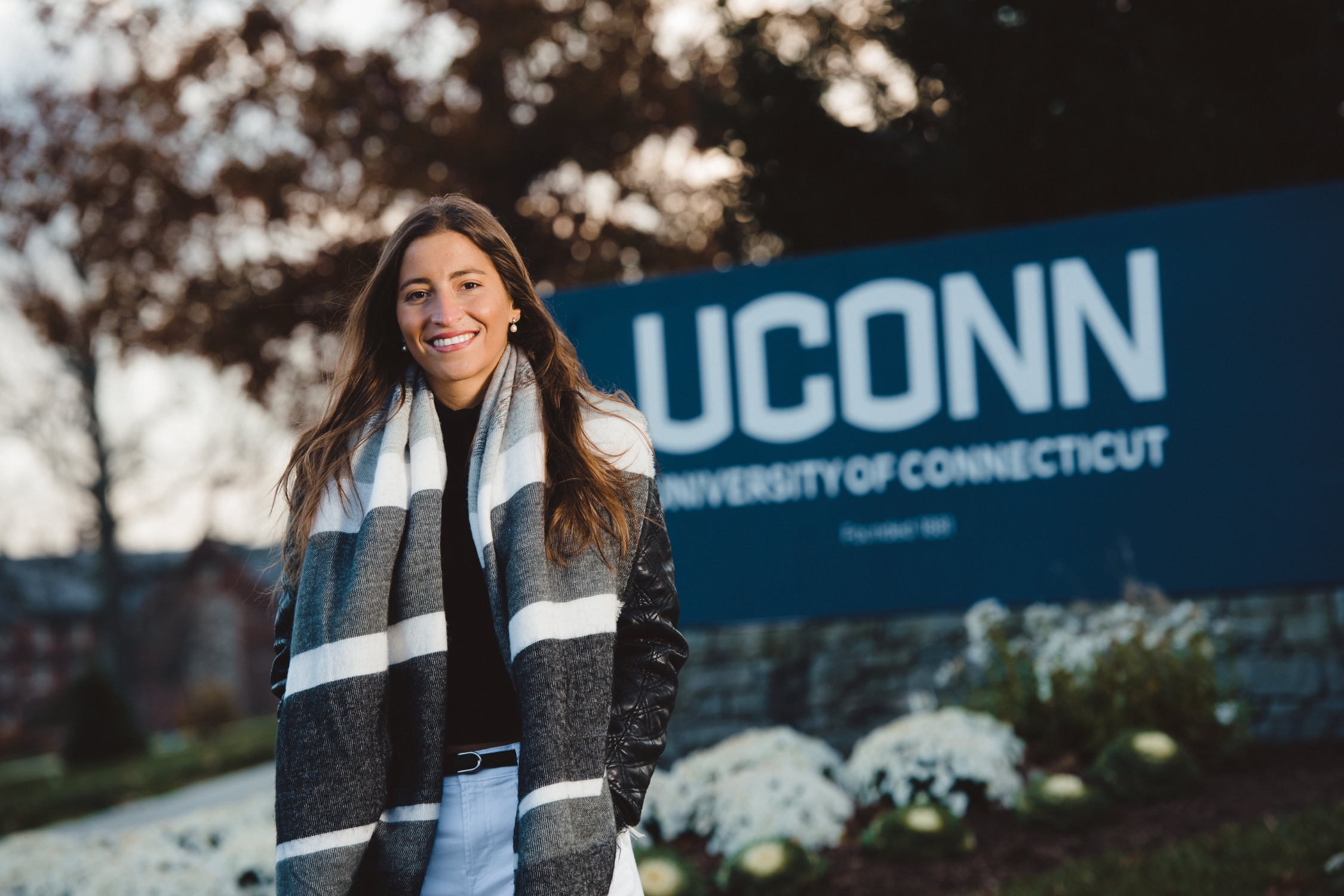
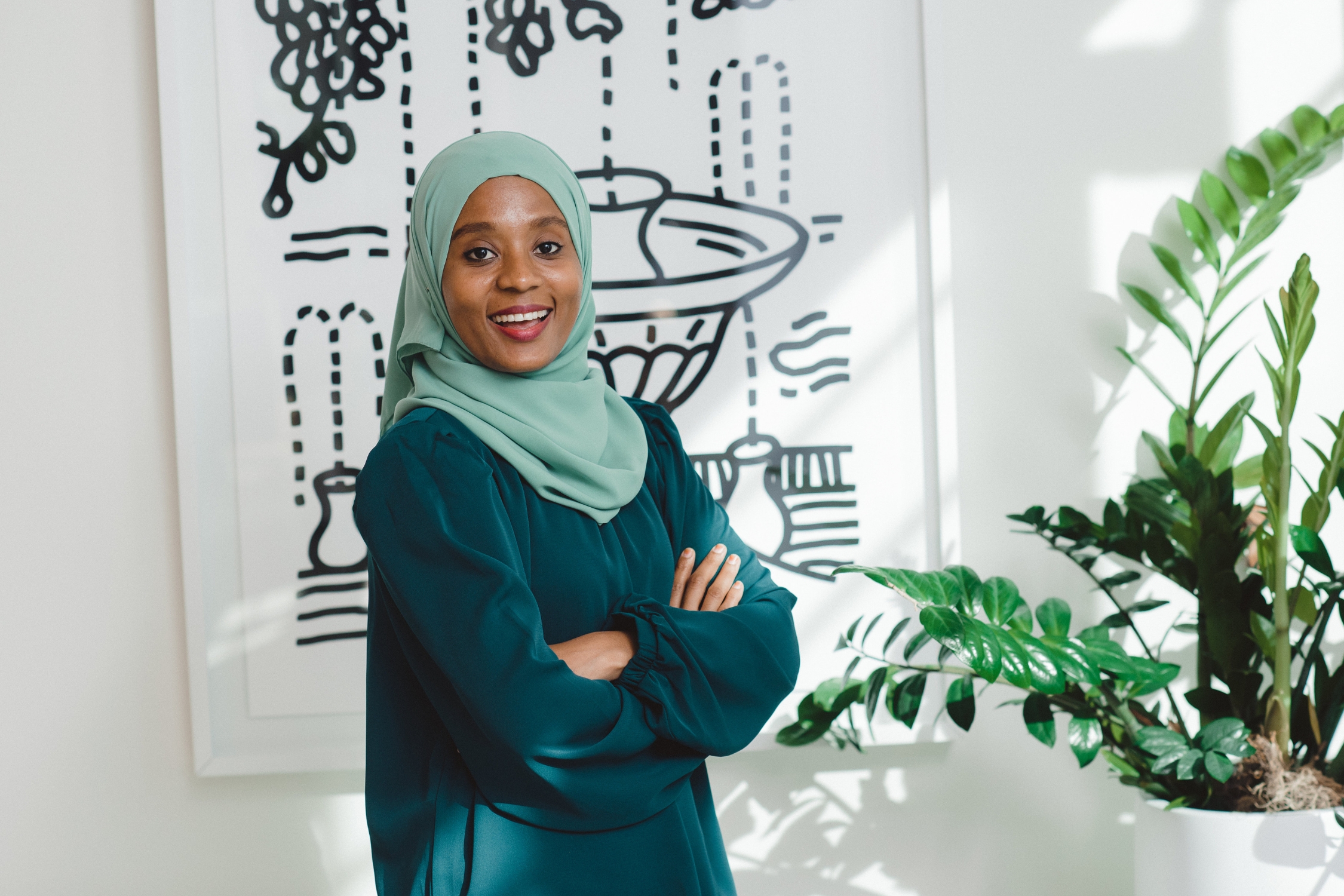
Past guests have also included Agnes Baluka Masajja in 2017 (Uganda), Tra Giang “Jane” Nguyen in 2018 (Vietnam), Karen Chammas in 2019 (Lebanon)Fatma Ahmed in 2021 and 2022 (Zanzibar, Tanzania), Nemesia Hijos in 2023 (Argentina), and Ghoroor Abdulwaheed in 2024 (Qatar).

Rebuilding Ukrainian Lives Through Sport
A former track and field athlete, Riasna studied at the National University of Physical Education and Sports in Kyiv. While recovering from a performance injury, she began thinking seriously about how she could continue making an impact in sport behind the scenes, rather than as an athlete.
Nearly five years after Russia launched its full-scale invasion of Ukraine in 2022, Ukrainians continue to face the devastating consequences of the ongoing war every day. Riasna has experienced these realities firsthand. After her apartment in Kyiv was damaged in a Russian attack, she was forced to relocate to a suburb of the capital, where she is currently staying.
“We are all affected by the war — some more, some less,” Riasna says. Her action plan, “Women Rebuild Through Sport,” focuses on using sport as a pathway to recovery, social inclusion, and new opportunities for Ukrainian women affected by the war, including women veterans, women with disabilities, internally displaced women, and women seeking to rebuild their lives.
Riasna emphasizes that sport has always played an important role in Ukrainian society. While it is often viewed primarily through the lens of competition and athletic achievement, she believes its potential extends far beyond medals and results.
“Sport is not about winning medals or broken world records; it’s one of the biggest social, universal experiences,” she says.
Sport is not about winning medals or broken world records; it’s one of the biggest social, universal experiences. — Viktoriia Riasna, 2026 GSMP Fellow
Through her action plan, she hopes to gather groups of people who have either been displaced within Ukraine from their homes or women veterans returning from the front lines to civilian life, many of whom lost everything: family, friends, community, businesses, when moving from more dangerous territories in the east of the country to the center and west of the country.
There are already many efforts underway in Ukraine to work with women veterans and temporarily displaced persons, Riasna says, but they don’t currently incorporate sport. She hopes, through her action plan, to combine those efforts and put in place a structure to mentor and develop women to rebuild their lives through training and organized athletic activities.
“Sport is a bridge,” she says. “It’s an entry point to the new chapter of their lives.”
Broadening Perspectives
Hosting delegates as part of GSMP aligns nicely with the goal of the sport management program to make sport a more just and inclusive space, Burton says.
It also creates a strong sense of community among women in the field. While each community and country has its own context and set of circumstances that shape the landscape, there is a universality to the struggle to improve equity for women and girls in sport.
“In the U.S., we have made a lot of advances, and we have laws that support access to women and girls in sport,” Burton says. “But not every girl and woman in the U.S. has all these opportunities easily available. Those challenges are universal.”
Burton says that brings a certain humility to the exchange as well. With UConn as a host institution, “we can show our guests what’s happening in basketball and all these amazing resources, but at the same time, we could also visit one of our under-resourced communities in the state of Connecticut. Those struggles are the same kinds of struggles in many areas of the world,” she says.
Hosting international leaders in sport each year also offers Neag School students a new perspective when studying sport as a discipline and engaging with current issues.
DeRosa says that broadens the perspectives of many students whose understanding of what it means to work in sport is influenced by their own experience in the U.S. or by consumption of a particular sport.
“I don’t know that many of our students come in thinking about sport as a lever for social change in a community, although some of them certainly do,” she says. “This helps them to understand sport in a global context; we’re not studying it in a textbook, we’re actually learning from someone how they use sport within their community to leverage change, and it’s impactful that they can see that in action in a very tangible way.”
Burton, who has been a mentor with the program since the first year of the UConn partnership, describes the effort as “a labor of love.”
“The opportunity for us as faculty to sit and learn from women who are on the ground trying to make this work certainly informs how I’m thinking about this work and how I’m engaging with our students,” she says. “It’s a great opportunity to meet really powerful women who are trying to make change in the world.”
Source: today.uconn.edu