
Two lesser-known “forever chemicals” have been linked to substantially higher odds of developing liver cancer in a pioneering study from the University of Southern California (USC). The findings also suggest that people with an inherited susceptibility to fatty liver disease may be particularly vulnerable to the harmful effects of certain chemicals.
Published in Environmental Health Perspectivesthe research identified two per- and polyfluoroalkyl substances (PFAS) associated with significantly higher liver cancer risk. One of these chemicals showed a particularly strong association in people genetically predisposed to metabolic dysfunction-associated steatotic liver disease (MASLD), commonly known as fatty liver disease.
Hundreds of products contain PFAS, from nonstick cookware and food packaging to stain-resistant fabrics and firefighting foam. These substances earned the nickname “forever chemicals” because they resist degradation, allowing them to accumulate in the environment and remain in the human body for years or even decades.
PFAS contamination has been detected in drinking water across roughly half of U.S. water systems, and an estimated 99% of the global population has measurable concentrations of these chemicals in their blood. Mounting scientific evidence has connected PFAS exposure to disruptions in thyroid function, problems with the immune system, and several types of cancer, including liver cancer.
How Forever Chemicals May Contribute to Liver Cancer
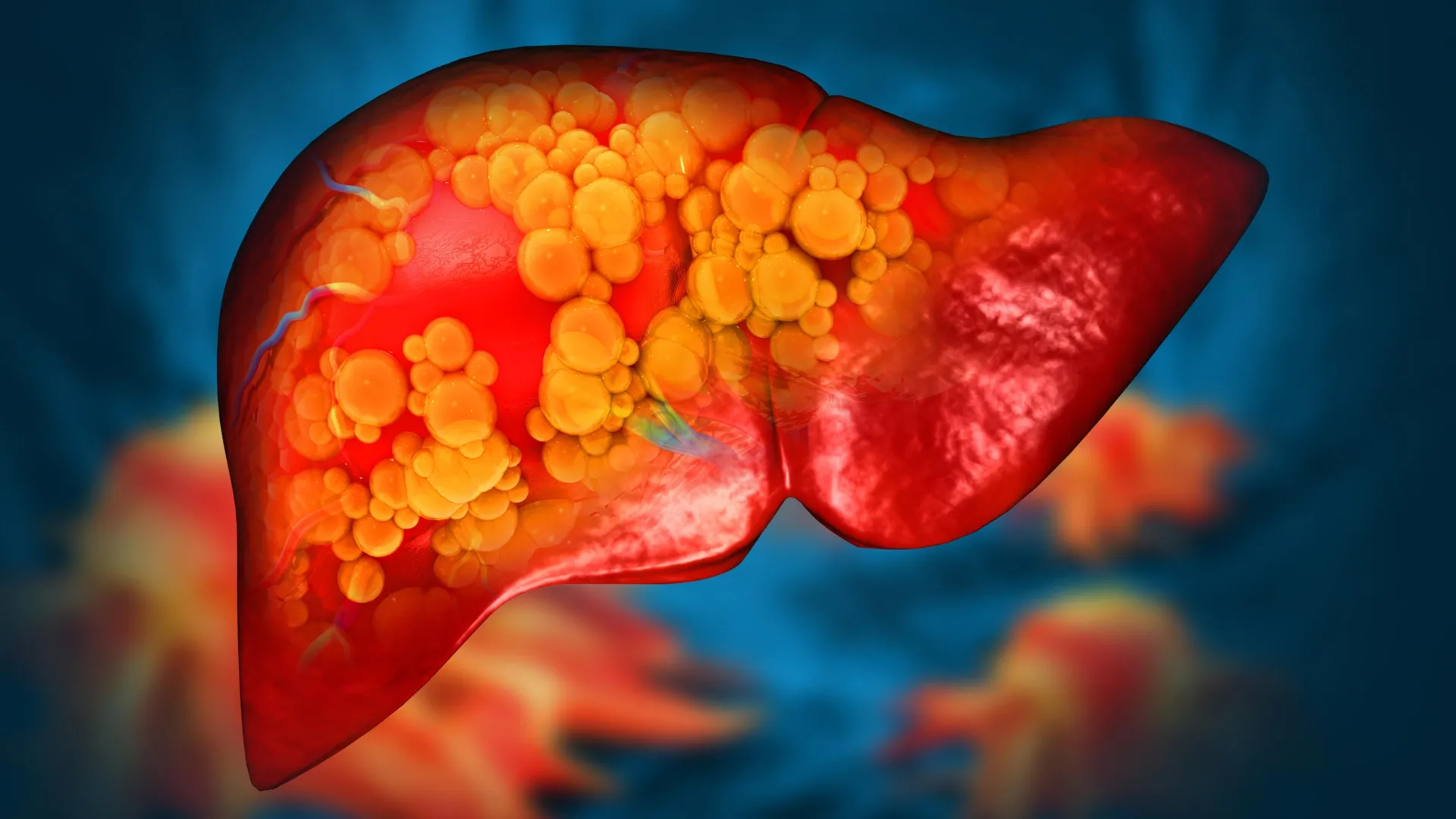
The most common type of liver cancer, hepatocellular carcinoma (HCC), has a five-year survival rate below 20%. Fatty liver disease is now the fastest-growing underlying cause of this cancer.
Scientists suspect that PFAS disrupt the processes the liver uses to break down and manage fats. This interference may encourage fat to accumulate in the organ, contributing to the development of fatty liver disease and potentially increasing the likelihood of cancer over time.
“PFAS have been linked to an increase in fat accumulation in your liver, and over time, that can actually increase the risk of liver cancer,” said lead author Jesse Goodrich, PhD, assistant professor in the Division of Environmental Health at the Keck School of Medicine of USC.
Two Overlooked Chemicals Emerge as Cancer Concerns
To investigate the relationship between chemical exposure and cancer, the researchers examined blood samples from 223 participants in the Multiethnic Cohort Study (MEC) who subsequently developed HCC, along with samples from 223 matched individuals serving as controls. The samples from those who developed cancer had been collected an average of 7.8 years before their diagnosis.
Since the 1990s, the MEC has followed more than 215,000 participants from diverse racial and ethnic backgrounds living in California and Hawaii. It is among a small number of studies worldwide with stored blood samples obtained decades before some participants became ill, giving researchers a valuable opportunity to investigate exposures that precede disease.
The team measured concentrations of 12 different PFAS compounds and identified two with statistically significant associations with liver cancer: PFHpA and PFNA.
PFHpA was introduced as a substitute for older PFAS compounds, including perfluorooctanoic acid (PFOA) and perfluorooctanesulfonic acid (PFOS). These older chemicals were phased out because of concerns about how long they remain in the human body.
“PFOA and PFOS have received much of the scientific and regulatory attention; however, they represent only a small part of the PFAS family,” said senior author Vaia Lida Chatzi, MD, PhD, professor of population and public health sciences and pediatrics at the Keck School of Medicine. “Our findings show why we need to look beyond those legacy compounds. We can miss important associations with liver health if we study only the chemicals we already know best.”
Up to 2.5 Times the Odds of Liver Cancer
People whose exposure to PFHpA or PFNA ranked among the highest 25% had between two and two-and-a-half times the odds of developing liver cancer compared with those in the lowest exposure group.
One of the most concerning aspects of the discovery is that the chemicals most strongly associated with liver cancer are not necessarily those that have been the focus of decades of scientific investigation.
“The concerning thing about our results is that the strongest associations were not in the most studied legacy PFAS,” Goodrich said. “They are among the newer PFAS, and we don’t have much information about their effect on human health.”
The results for PFHpA also provide independent confirmation of findings from a National Cancer Institute study published just two months earlier, which similarly identified an association between exposure to the chemical and liver cancer.
Genetics May Amplify the Dangers of Forever Chemicals
The USC investigation is the first to examine how inherited genetic characteristics and PFAS exposure may interact to influence the likelihood of developing liver cancer.
The researchers calculated a polygenic risk score, which estimates a person’s inherited susceptibility to fatty liver disease based on multiple genetic variations. They discovered that the association between PFHpA exposure and liver cancer was considerably stronger among individuals with a high genetic predisposition to fatty liver disease.
In contrast, the team found no statistically significant association between PFHpA and liver cancer among people with low genetic susceptibility.
“Our study shows that genetic differences in how the liver processes fats may play an important role in determining susceptibility,” Goodrich said. “You have this one-two hit: first, your genes and then PFAS impacting this pathway.”
The findings suggest that inherited difficulties in processing liver fats and exposure to certain environmental chemicals may reinforce one another, potentially increasing the chances of developing liver cancer when both factors are present.
New Opportunities for Liver Cancer Prevention
Detecting liver cancer at an earlier stage is associated with substantially better survival. In the future, assessing both PFAS exposure and genetic susceptibility could help medical professionals identify individuals who might benefit from earlier cancer screening.
“Our study actually provides something that is actionable,” Goodrich said. “You can make lifestyle and diet changes, and there are certain types of water filters you can put in that can reduce exposure. And if you have the information on genetic susceptibility, that could also provide additional evidence for things that you could do to mitigate risk.”
The findings represent the first published research from a USC Norris Comprehensive Cancer Center program investigating the potential contribution of PFAS exposure to liver cancer. The program received $3.4 million in funding from the National Cancer Institute and the National Institute of Environmental Health Sciences.
“This first paper from our NIH-funded study is an important step. Drawing on the diverse Multiethnic Cohort, it adds to the evidence that some PFAS may be associated with liver cancer,” said senior author V. Wendy Setiawan, PhD, professor of population and public health sciences and medicine. “We hope this work will help build the evidence needed to reduce harmful exposures and inform prevention efforts for diverse communities.”
The researchers intend to broaden their investigation to include additional environmental exposures. Their long-term goal is to better understand how exposure to chemicals throughout a person’s lifetime may contribute to the development of cancer.
About the Study
The research team also included Hongxu Wang, Adelynn Paik, Sihao Han, Brittney Baumert, Joseph Romano, Razieh Moghadam, Shiwen Li, Tanya L. Alderete, Syam S. Andra, Robert O. Wright, and David V. Conti. Senior authors Lida Chatzi, MD, PhD, and V. Wendy Setiawan, PhD, contributed equally to the research.
Funding for the study was provided by the National Cancer Institute under award numbers R01CA300355 and U01CA164973, and by the National Institute of Environmental Health Sciences under award numbers U2CES026555, U2CES026561, U2CES030859, and P30ES007048.
Source: www.sciencedaily.com