Indians have always loved a good bargain, whether it is haggling over daily groceries or negotiating a trade deal with another country. After all, it is not a deal until you know you have secured better terms than the next person in line!After months of trade negotiations, the US has agreed to give India a comparative tariff advantage over peer economies under the proposed bilateral trade pact. However, the deal is yet to be signed.Earlier on Wednesday, India said it could sign the agreement only after the new tariff framework is in place and investigations under Section 301 are concluded.The India-US trade deal has seen several twists and turns since negotiations began in February 2025, from tariff threats and hopes of an agreement to a sudden courtroom setback. Now, with the deal back on the table, the latest development has raised a key question: What has changed, and why is the US suddenly offering the ‘tariff king’ a better deal?
Until the framework of getting competitive advantage can be finalised, we can’t enter into force a US deal…So that’s broadly the discussions on how the US will find the appropriate tools and legal backing to give us that competitive advantage over our competitors.
Piyush Goyal, Minister of Commerce and Industry of India
The two sides had finalised the first tranche of the pact, which proposed an additional 18% tariff on Indian exports. However, the US Supreme Court’s decision to strike down the “reciprocal tariffs” put the agreement on hold.Now, Washington’s willingness to give India a comparative tariff advantage over its peers has brought the negotiations back into focus.
Do you believe that the US offering India a tariff advantage is a move towards a stronger trade relationship?
3k+ users shared opinion today
5k+ users already voted today
3k+ users shared opinion today
Why the US can’t afford to lose the ‘tough nut’
India’s importance to Washington goes well beyond trade figures. Its vast consumer market, supply of affordable medicines and potential to emerge as an alternative manufacturing base to China give the US several reasons to keep the partnership strong.Tariff competitiveness is another important part of the equation. When the first-phase BTA framework was finalised, India enjoyed a tariff advantage over ASEAN nations — Indonesia, Malaysia, Singapore, Thailand, the Philippines, Brunei, Vietnam, Laos, Myanmar and Cambodia — as well as Sri Lanka, Pakistan and Bangladesh.
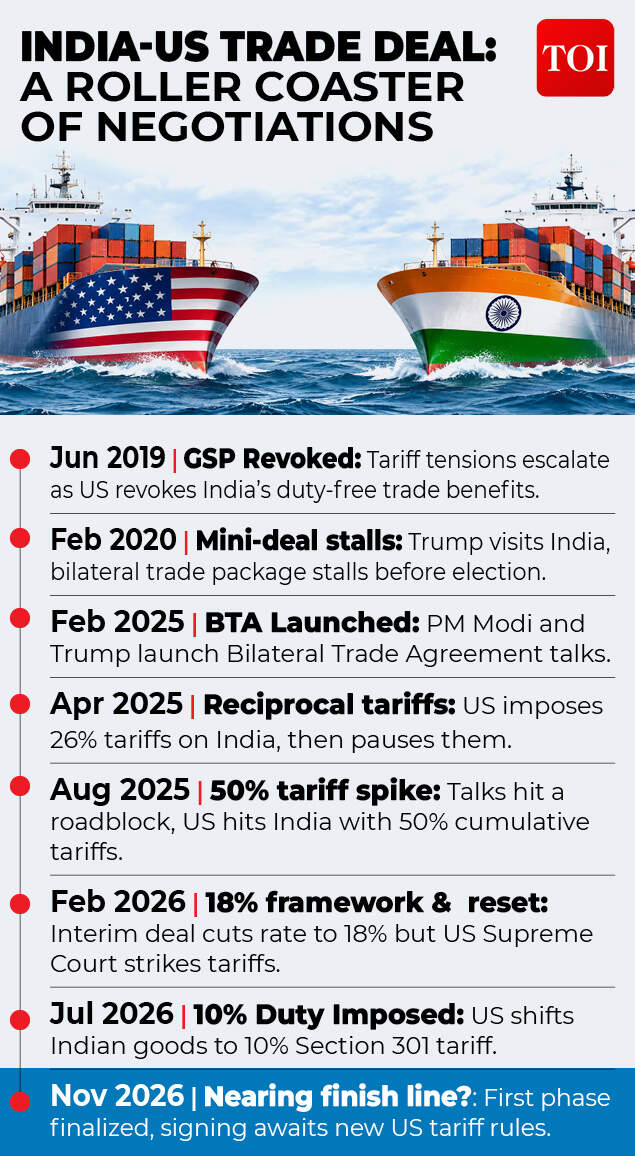
India-US trade negotiations over the months
But a lower tariff does not always mean a better deal.If India’s rivals secure bigger tariff cuts, their products could become cheaper in the US market, leaving Indian exporters struggling to compete. The real advantage, therefore, lies not just in lower duties but in ensuring that India remains ahead of its competitors.So, what makes India a partner Washington cannot afford to overlook?
Moving away from India might be a literal pain
India’s importance to the US goes beyond trade, particularly when it comes to medicines. The country supplies 47% of US generic prescription drugs and 60% of hypertension medicines. Steep tariffs could hit American consumers and patients first.Rohit Kumar Singh of Eminence Strategy Consulting warns, “Disruption in supply might impact American citizens directly.”Replacing approved manufacturers, he adds, takes both investment and time.Even when the US threatened a 100% tariff on pharmaceutical imports, India remained largely shielded. Generics account for over 90% of medicines used in America and were exempted to avoid shortages and price spikes.Similarly, under the February 6 framework, the US had proposed scrapping reciprocal tariffs on Indian generics and their ingredients, with further concessions subject to a separate US investigation.
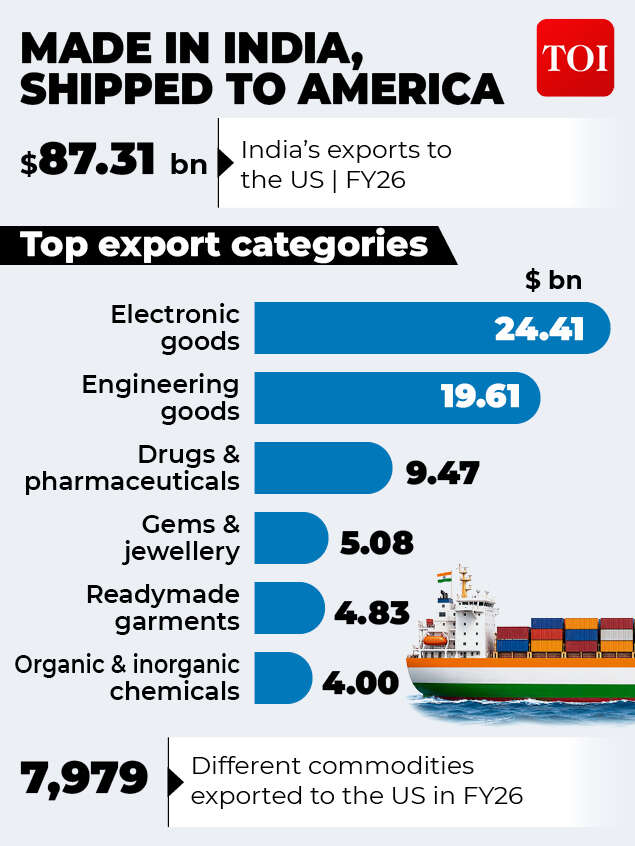
India’s exports to the US (Credit: IBEF)
India’s $500 billion opportunity for US businesses
The proposed purchases under the interim trade framework also give American businesses a reason to support closer trade ties with India.Under an earlier statement, India had indicated its intention to purchase $500 billion worth of US products over five years. These included energy products, aircraft and aircraft parts, precious metals, technology products and coking coal.For perspective, India’s imports from all countries stood at $527.21 billion during April-October 2026-27.Singh adds that pushing India too hard could jeopardise these potential sales.As Sandeep Gupta of Executive Access sums it up, “It’s a ‘we can scratch each other’s back effectively’ deal that works for both sides.”
New Delhi even suggested to discuss tariffs first and postpone more difficult market access issues. The plan to purchase $500 billion worth of US products over five years gave American exporters an interest in the negotiations’ result.
Rohit Kumar Singh, Eminence Strategy Consulting Pvt Ltd
US wants greater access to 140 crore buyers
With over 140 crore people, India is a shopper’s paradise for American brands. Nearly 65% of Indians are under 35, and rising household incomes are expected to drive demand across categories, from appliances and cars to IT services. This creates opportunities for American companies selling technology, parts and financing.Geopolitics expert Jagvinder Singh Virk told TOI, “This young demographic, our expanding middle class, growing purchasing power and rapidly developing economy make India one of the most attractive markets in the world.”The US already sold India $45.4 billion worth of goods and $42.9 billion worth of services in 2025, according to USTR. Walking away from the partnership could mean losing access to an expanding market and future customers.
Manufacturing and supply chain
Global companies do not just want to sell in India; they also want to manufacture here and benefit from its growth.Virk says, “India is also emerging as a trusted global manufacturing and supply-chain partner.”Despite a bumpy global economic environment, India’s exports grew over 16% in the first seven months of FY 2026-27.The US increasingly sees India as a strategic economic partner rather than just another trading destination. Its willingness to offer the country a tariff advantage over competing economies also reflects India’s growing bargaining power in trade negotiations.
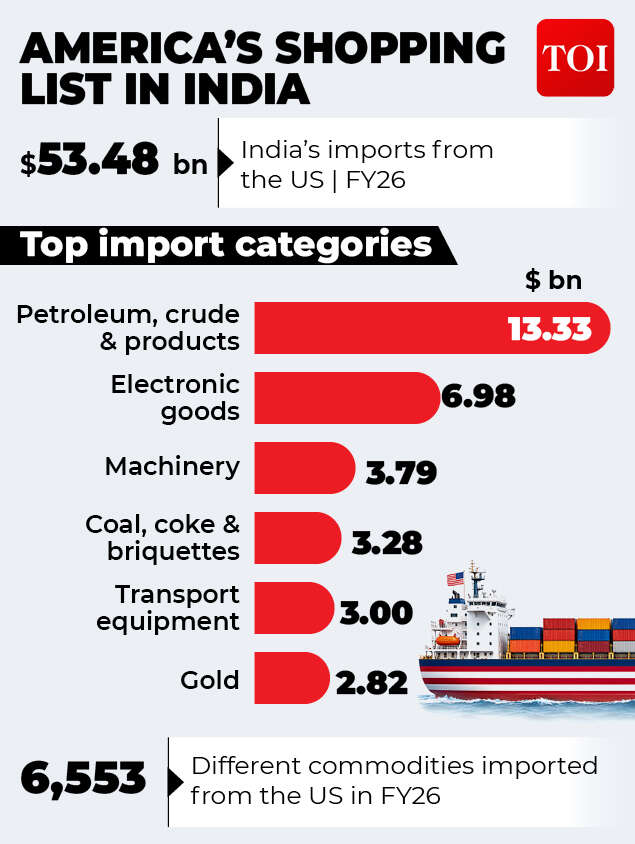
America’s exports to India (Credit: IBEF)
Strategic partnership
India-US relations extend beyond trade, with both countries sharing strategic interests in the Indo-Pacific region.One example is the Quad, comprising India, the US, Japan and Australia, which focuses on cooperation in maritime security and critical technologies. In May 2026, the four countries launched an Indo-Pacific maritime surveillance project and a framework to strengthen critical-mineral supply chains.Singh cautions that any weakening of this partnership “will make it harder to implement plans to develop alternatives to concentrated supply networks.”Ritik Bhandari, team lead, Centre for Law, Policy and Governance, NFPRC Foundation says that India’s growing importance to the US is driven by both economic opportunities and shared strategic interests.He further points out that India offers Washington a large consumer base, manufacturing capabilities and scope for collaboration in technology and energy. Its role in diversifying global supply chains and strengthening the US presence in the Indo-Pacific further adds to its importance.The proposed tariff advantage, he says, reflects Washington’s intention to ensure India remains competitive against other trading partners.
India, a strategic counterweight to China
For years, China has been America’s factory floor, supplying everything from electronics to industrial components. But Washington is now looking to reduce that dependence, and India is emerging as an important alternative.Gupta said, “The US wants to reduce its dependence on China-dominated manufacturing items such as electronics, pharmaceuticals, minerals and manufacturing, which India can effectively offer.”US Trade Representative Jamieson Greer echoed this view in an interview with Fox News, acknowledging that “India can be a way station for that.”Losing India’s trust, therefore, could prove costly for Washington on two fronts. American exporters risk losing access to Indian consumers, while US manufacturers could find themselves with fewer alternatives to Chinese suppliers.
For the US, India is not just a trading partner but a crucial alternative for diversifying global supply chains and reducing overdependence on a few countries…America recognises India’s importance, and any serious global economic strategy today must have India at its centre.
Jagvinder Singh Virk, Global Affairs & Geopolitics Expert
India’s approach: Firm on its terms, open to flexibility
India has made it clear that a trade deal cannot come at any cost. Finance minister Nirmala Sitharaman had earlier said negotiations had reached a stage where further give-and-take would be “very, very difficult”, describing the pact as a “hard and very vigorously negotiated agreement”.Both countries, however, maintain that they are working towards a fair and mutually beneficial deal. US embassy deputy chief of mission Jason Meeks recently described the proposed partnership as “fair, reciprocal, and mutually beneficial”, with cooperation extending beyond goods.
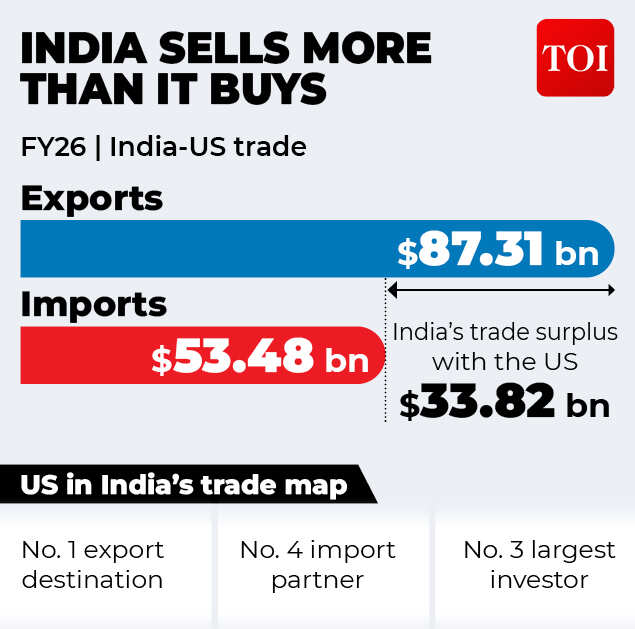
India-US trade bilateral trade
According to Jagvinder Singh Virk, India changed the tone of negotiations with “a clear economic vision, well-defined priorities and a willingness to find practical solutions”. New Delhi, he said, had shown that it could protect its core interests while remaining flexible where both sides stood to gain.Washington, too, has reasons not to push too hard. India offers US companies a vast consumer market, a young workforce, growing manufacturing capabilities and an opportunity to diversify supply chains.Comparing the talks with negotiations involving Canada and South Korea, Virk said India’s growing economic strength and strategic importance set it apart.India, meanwhile, remains firm on sensitive sectors such as agriculture and dairy. It is open to a deal, but wants one that safeguards its interests and recognises its growing economic role.
What’s next for India?
India-US ties may finally be turning a corner.Chief economic adviser V Anantha Nageswaran said recent weeks had shown signs of easing tensions, adding that a trade deal in early December could mean “we may have seen the worst of the unsettled phase behind us”.One of the bigger questions is whether the agreement can help India reduce its dependence on China. Initiatives such as Make in India, the PLI scheme and Aatmanirbhar Bharat offer a starting point. However, India must build its own manufacturing capabilities rather than simply replace dependence on China with dependence on the US.The next step, therefore, is to strengthen domestic capacity. Bhandari added that manufacturing incentives could encourage Indian companies to produce more raw materials at home, while long-term US orders could help fund these facilities.“The government’s focus on domestic manufacturing, infrastructure development and initiatives such as Make in India and the Production Linked Incentive (PLI) scheme provides a strong foundation for this transition. Importantly, India is approaching this partnership from a position of strategic autonomy, seeking to expand international economic cooperation while strengthening its domestic capabilities. This is an opportunity to reinforce India’s economic resilience and global standing,” Bhandari said.At the same time, India needs to find alternative sources for critical inputs. The real opportunity is not just to become an alternative to China, but to emerge as a manufacturing and technology powerhouse in its own right.
Source: timesofindia.indiatimes.com