I went to Augusta and came home without a green jacket. In fact, I spent the better part of four days in the Georgia city that hosts the Masters golf tournament every April and never played a round of golf.
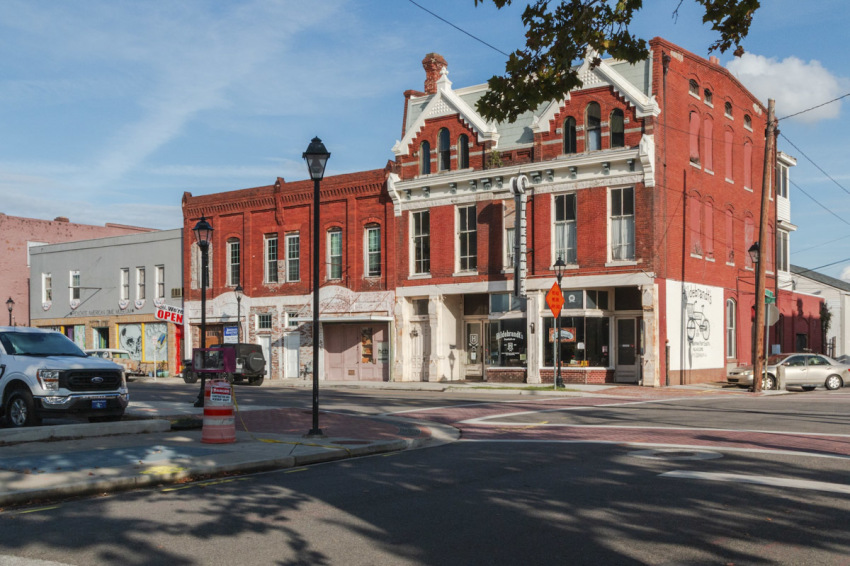
Start on Broad Street and look up. Above the shops are Italianate buildings with arched windows and elaborate cornices. A great fire in 1916 gutted 35 blocks, resulting in a hodgepodge of architectural styles. Some buildings are genuinely old; others are newer and not particularly notable.
As one might expect, the Episcopalians have Augusta’s most striking churches, though here I would put the Presbyterians and Methodists in a close tie for second. My frustration was every church, regardless of denomination, was never open outside services.
St. Paul’s, the original Episcopal (Anglican) parish, dates to Georgia’s colonial era. Down by the Savannah River, its bell tower rises above a pedimented brick front. To my eye, this is influenced by the works of Sir Christopher Wren, James Gibbs and Nicholas Hawksmoor in the late 17th and early 18th centuries.
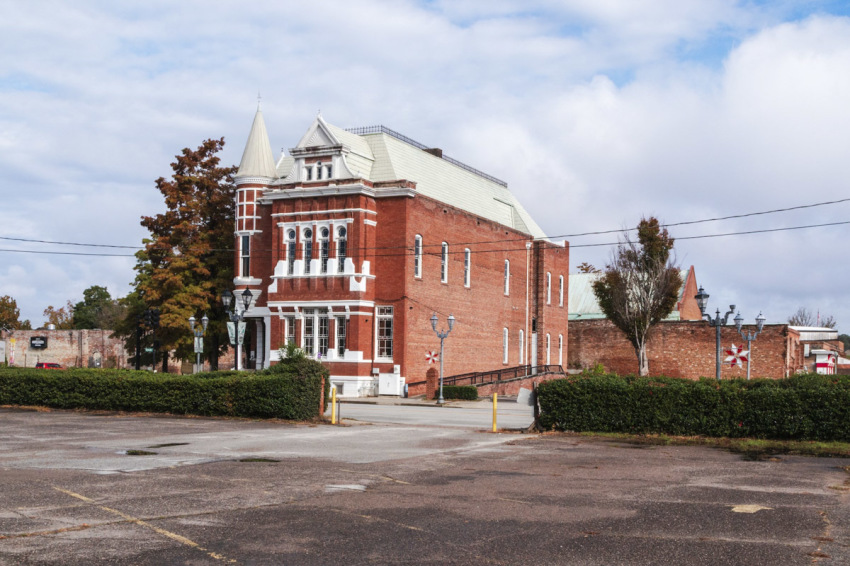
A short drive away, by the Augusta University campus, is the Church of the Good Shepherd. This Victorian Gothic revival church is Disneyesque. The parish also founded an Episcopal day school.
Back downtown, St. John, part of the United Methodists, has an antebellum church. Meanwhile, First Presbyterian Church has the former manse or rectory where President Woodrow Wilson lived as a boy from 1860 to 1870. He spent more years under this roof than any other.
Two downtown museums punch well above their weight.
The Augusta Museum of History has an entire 1914 steam locomotive and a crown worn by the singer James Brown, who grew up here. At the Morris Museum of Art on the Riverwalk, the South is the subject. The collection includes several notable examples of regional impressionist art.
Then there is Pexcho’s American Dime Museum on Sixth Street. I have never seen anything quite like it. My guide told me it is the last of its kind.
Think P.T. Barnum, who drew crowds to his American Museum in New York before taking his circus on the road. Dime museums were the tourist traps of their day, the forerunners of sideshow tents and carnival midways. For a dime, someone could inspect wonders from the far corners of the earth, assuming that is where they came from. Some owed their existence entirely to the showman.
I particularly enjoyed the Augusta Canal tour on an Indian summer Saturday.
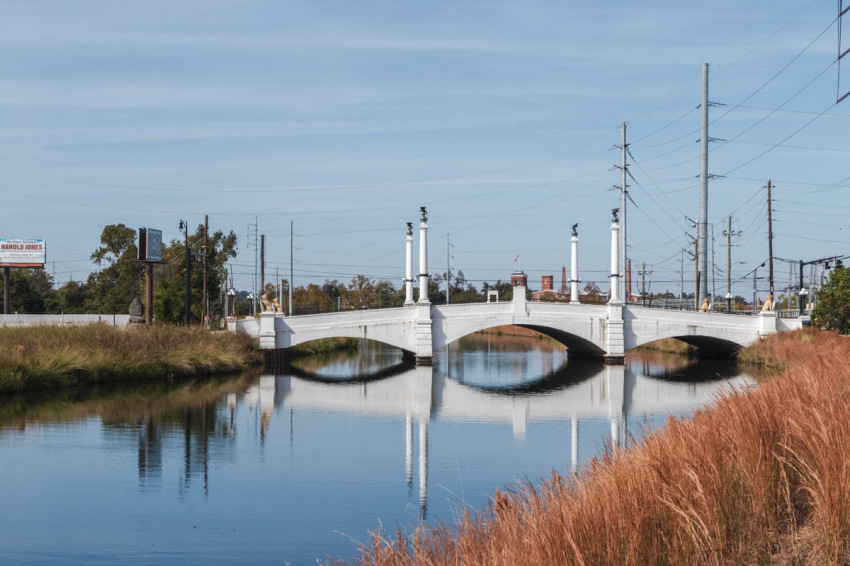
Open-air boats run daily, passing the surviving chimney of the Confederate Powder Works and the castle-like textile mill behind it. At 15th Street, a bridge honors U.S. Army Major Archibald Butt, an Augusta native and aide to Presidents Theodore Roosevelt and William Howard Taft. Butt died aboard the Titanic in 1912.
If you go
Delta Air Lines serves Augusta Regional Airport from many major airports with a single connection in Atlanta. Alternatively, the airport in Savannah, about two and a half hours by car from Augusta, has better service from more airlines. You probably want a rental car if flying into Augusta as Uber and other ride-sharing services have limited service with prolonged wait times.
I am not normally a Marriott fan, but the Augusta Marriott, right on the Savannah River, is the best hotel in Augusta. I would book it unless you prefer the nearby Hyatt House.
Restaurant options include Trellis for coffee and breakfast, Bodega Ultima for lunch or happy hour and Calvert’s, Finch & Fifth and Oliviana for dinner. Trip planning resources are available through Visit Augusta.
Dennis Lennox writes a travel column for The Christian Post.
Dennis Lennox writes about travel, politics and religious affairs. He has been published in the Financial Times, Independent, The Detroit News, Toronto Sun and other publications. Follow @dennislennox on Twitter.
Source: www.christianpost.com