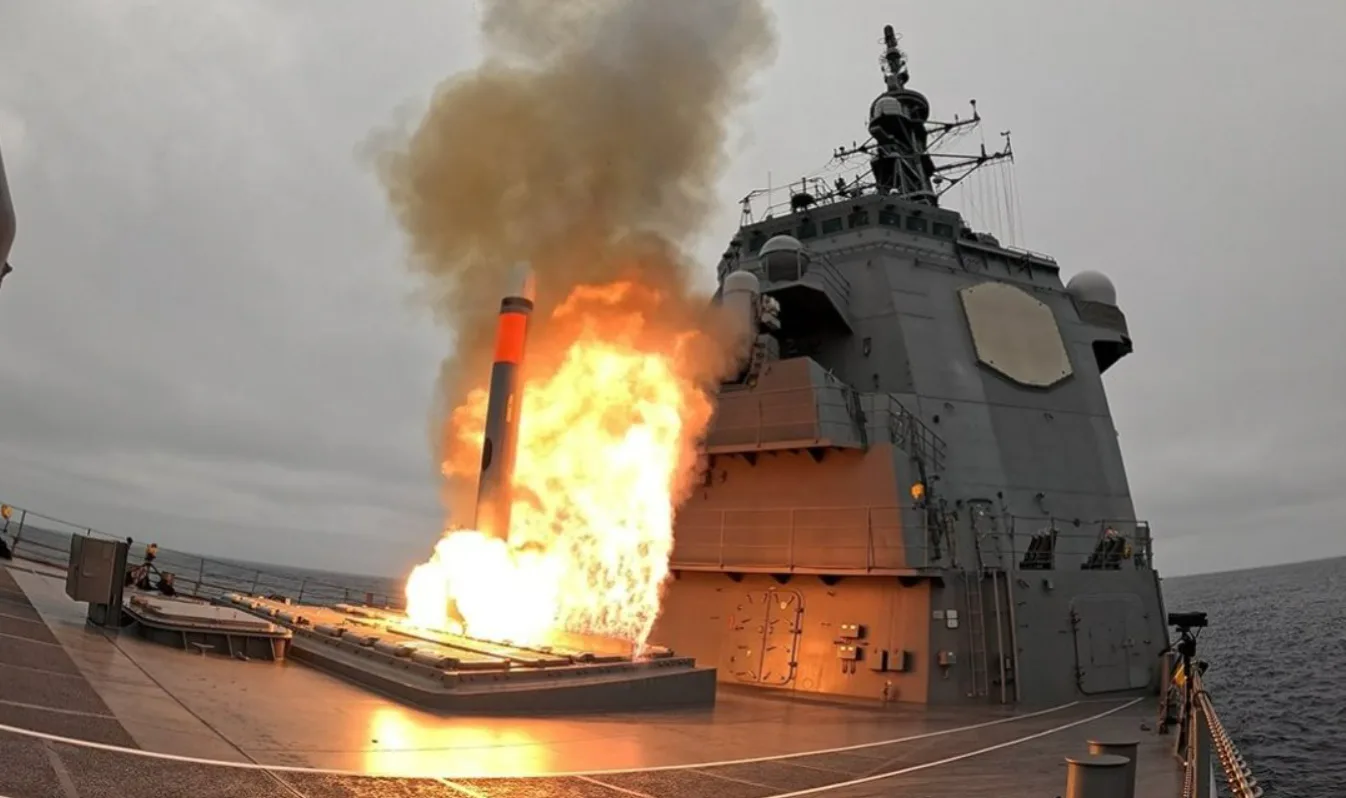

In the United States, a decommissioned warhead casing from a museum was used to launch additional production of components for BGM-109 Tomahawk cruise missiles. This is part of a large-scale program that envisages increasing missile production to more than 1,000 units per year. Defense Express reports this, citing Naval News, writes UNN.
Details
The Armament Division of the U.S. Navy’s Air Warfare Center Weapons Division (NAWCWD) announced the launch of facilities for loading WDU-36/B high-explosive fragmentation warheads with PBXN-107 explosive.
For this purpose, a new 300-gallon mixer was installed, twice the size of the previous one. It was placed closer to the production site, which will significantly reduce the time required to manufacture the warheads.
How a museum exhibit helped missile production
While preparing for production, NAWCWD specialists encountered an unusual problem—they did not have a production warhead casing to test the technology.
The solution was found at a local museum, from which they obtained a decommissioned WDU-36/B casing. It was cleaned, filled with explosive, tested, and inspected using X-rays. This made it possible to confirm the equipment’s readiness for serial production.
The expansion of capacity is being carried out under a $22.9 billion contract that RTX received from the U.S. Navy in August 2026.
Previously, only L3Harris handled the loading of warheads for Tomahawk missiles. Now NAWCWD has been temporarily involved in the production process while the company expands its own capacity.
General Dynamics will supply the metal casings, while the completed warheads will be transferred to Raytheon—the main manufacturer of Tomahawk cruise missiles.
Source: unn.ua