
This article is part of CafeTPM’s home for opinion and news analysis.
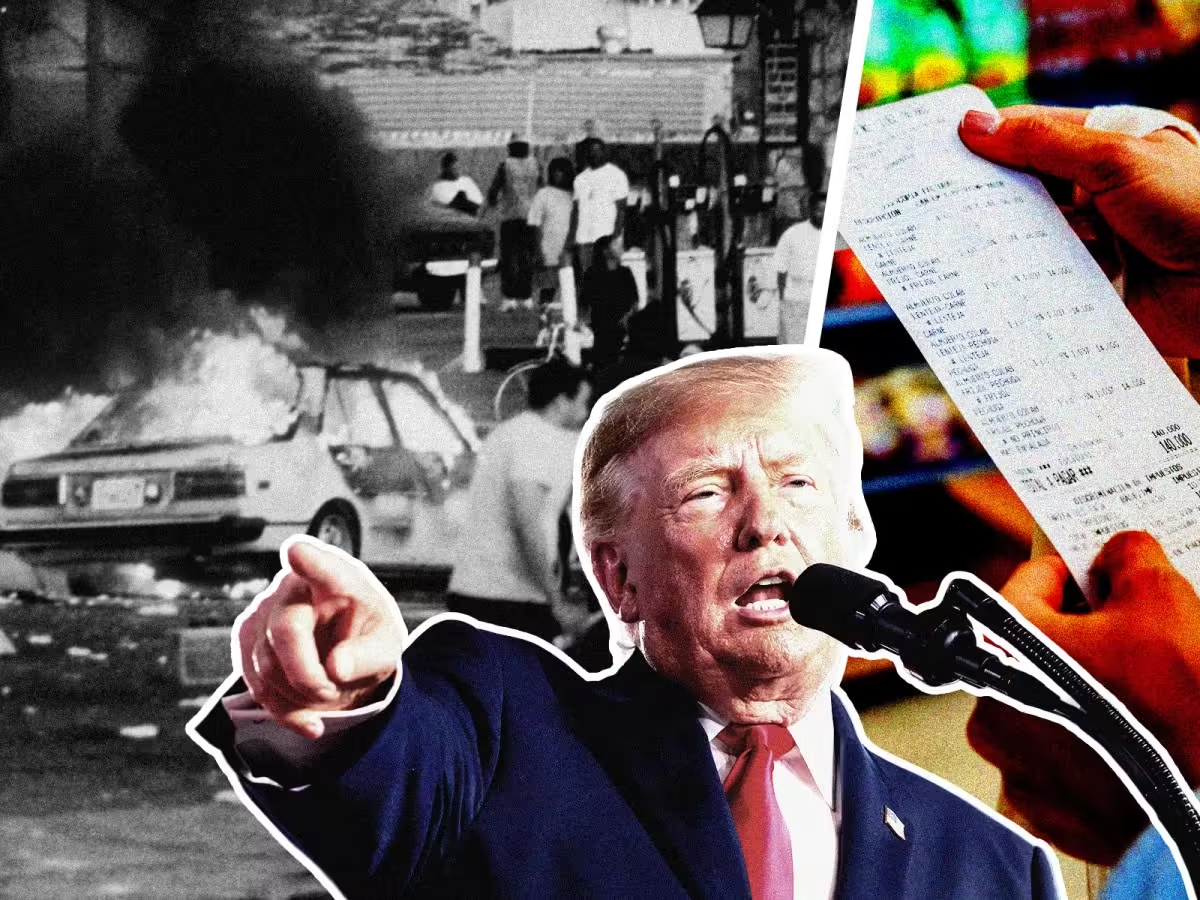
From Richard Nixon’s 1968 “law and order” campaign to George H.W. Bush’s Willie Horton ad two decades later, Republicans have a storied history of fear-mongering on the issue of crime to win elections. Yet despite pulling whole chapters out of that playbook and a media environment that benefits from keeping people on a constant state of alert, the GOP’s midterm wipeout could signal the limits, if not the end, of that strategy.
Yes, Donald Trump and GOP candidates trotted out all the familiar bogeymen; claims about immigrant crime with a particular focus on Somali populations,assertions that Democrats intend to “defund the police,” rioting in Paris. Each rolled out as a preview of coming attractions should Democrats be swept into power. Fox News dutifully amplified and shaped those messages, tossing in for good measure Islamophobic discussions of “terrorism” pegged to Michigan’s Senator-elect Abdul El-Sayed’s campaign.
As TPM noted, Trump eagerly stoked those efforts not only with a barrage of scary warnings about what “the radical left” had in store for America but by evoking the specter of a woman murdered by a Black man in North Carolina — a story seized upon by white nationalists and explicitly connected to Horton by Trump himself. Some observers referred to it as his “Willie Horton moment.”
After decades of efficacy, however, those fear-based appeals didn’t sufficiently move the needle to stave off disaster. For all their visceral qualities, concocted threats appeared to be little match for Americans’ actual challenges, including soaring gas prices spurred by Trump’s unpopular war in Iran, cruel immigration enforcement, and the prospect of unchecked data centers sucking up water and real estate.
Numerous factors played into a Democratic blowout of historic proportions, none more so than Trump’s look-out-below approval ratings and broken promises. Still, the power of fear, and hostility toward otherness, has often worked in prodding people to vote even against their self-interest. The reasons why that messaging did so little this year are worth examining.
To those who might note that crime has been declining, it’s worth remembering that the perception of crime often diverges from the statistical reality. That’s a dynamic the late media scholar George Gerbner identified in the 1970s with what he called “Mean World Syndrome,” in which heavy consumers of media see society as more dangerous than it actually is. While Gerbner predicated the theory then on heavy diets of police procedurals and “If it bleeds, it leads” local TV news coverage, the cultural menu has only become scarier with the proliferation of true-crime podcasts and docuseries across platforms like Netflix and HBO.
Candidates continued to wallow in anecdotal tales of violence, no doubt heeding consultants and following Trump’s lead. But even before the election, pollsters were taking note that the old “Tough on crime” pitch didn’t resonate the way it had in the past, as the New York Times reportedin a striking departure even from Trump’s previous electoral battles.
Indeed, what has made crime such a reliable political tool hinges on something that goes beyond reason — an emotional response to hearing about someone being victimized. While local news capitalizes on proximity to viewers to heighten that reaction, cases regularly pass into the national lexicon by being broadly identifiable enough to make any parent, anywhere, momentarily clutch their throat, as underscored by new Netflix docuseries recounting the murders of Natalee Holloway and JonBenét Ramsey.
The extent to which the election overcame those political tides, and that psychology, suggests voters perhaps grew weary of Republican hyperbole about crime as a campaign issue, including Trump’s characteristic bombast about how the U.S. was experiencing “crime like nobody’s ever seen” before he cracked down on its “open borders.”
As it happens, the country’s complicated relationship with crime, politically and culturally, gets the full Ken Burns treatment this month with “Crime and Punishment in America,” a four-part PBS documentary premiering November 16. Directed by Lynn Novick and produced with frequent collaborator Burns, the sweeping production includes sections on Nixon’s campaign to rouse the “silent majority” with a “law and order” theme, evoking a degree of irony worthy of that Alanis Morissette song. Another chapter explores how devastating Bush’s Horton ad was against Michael Dukakis, portraying him, and Democrats, as “soft” on crime.
“I don’t think you can overestimate the impact of the Willie Horton ad for a generation of politicians,” legal scholar James Forman Jr. explains in the documentary. Notably, that included Democrats like Bill Clinton, who sought to neutralize that vulnerability by championing a “three strikes” law in 1994 amid what Forman calls a “bipartisan bidding war for criminal justice harshness.” (Clinton later expressed regret about the bill, which led to an explosion in the prison population.)
It would be lovely to think the electorate has wised up to the GOP’s cynical tactics, or that the media have recognized their complicity in stoking irrational levels of anxiety with each salacious news story. But that would require considerable naivete, and ignores a plethora of bad-faith actors. Trump’s appointment of Stephen Miller as his chief of staff also makes clear he has no intention of retreating from his most virulent instincts, and fear remains a powerful motivator and means of garnering attention, especially for conservative media desperate to retain an audience reeling from its electoral shellacking.
For clues about how that will manifest itself, pay close attention to Fox News, which is quite adept at pivoting to material that will distract, outrage, and titillate its conservative-leaning viewers. Last week, that included stories about how unrest in European cities could come to the U.S. and devoting time to mocking a West Hollywood ordinance granting certain protections to people in polyamorous relationships, the latter providing a perfect distillation of liberal California stereotypes.
The most reasonable conclusion is that voters rejected GOP warnings of Democratic dystopia because of the grim reality staring them in the face right now. Democrats were able to offerpossible solutions to problems they could lay squarely at Trump’s feet. By contrast, when you’re getting robbed at the gas pump on a recurring basis, the unpredictable nature of becoming a crime victim and the threat from far-away immigrant caravans feel a bit less pressing.
Although it’s surely premature to hope crime-based campaigning recedes given the election’s outcome, the implication that people have grown more immune to such pleas is a welcome development. Or, as George W. Bush once put it while mangling the adage he was trying to quote, “Fool me once, shame on you. You can’t get fooled again.”
Source: talkingpointsmemo.com