
Travelers wait in line at a security checkpoint in Terminal 3 at O’Hare International airport on November 30, 2025 in Chicago, Illinois.
(Jim Vondruska via Getty Images)
Millions will travel for Thanksgiving this year — and the weather is known for complicating even the best-laid plans. Here’s a region-by-region look at where travel disruptions are most likely for the rest of November.
Seasonal signals
Before we dive into what Mother Nature might have in store for the end of November and your Thanksgiving travel plans, it’s important to note that these are trends, not your forecast for one specific day.
Even a warmer or drier month can still include a disruptive storm or busy travel day, so you’ll want to check your forecast again in the week before your trip.
But the strong El Niño does give us some dependable signals as to how the weather typically behaves around the country this time of year.
(MORE: What does El Niño mean for your fall and winter?)
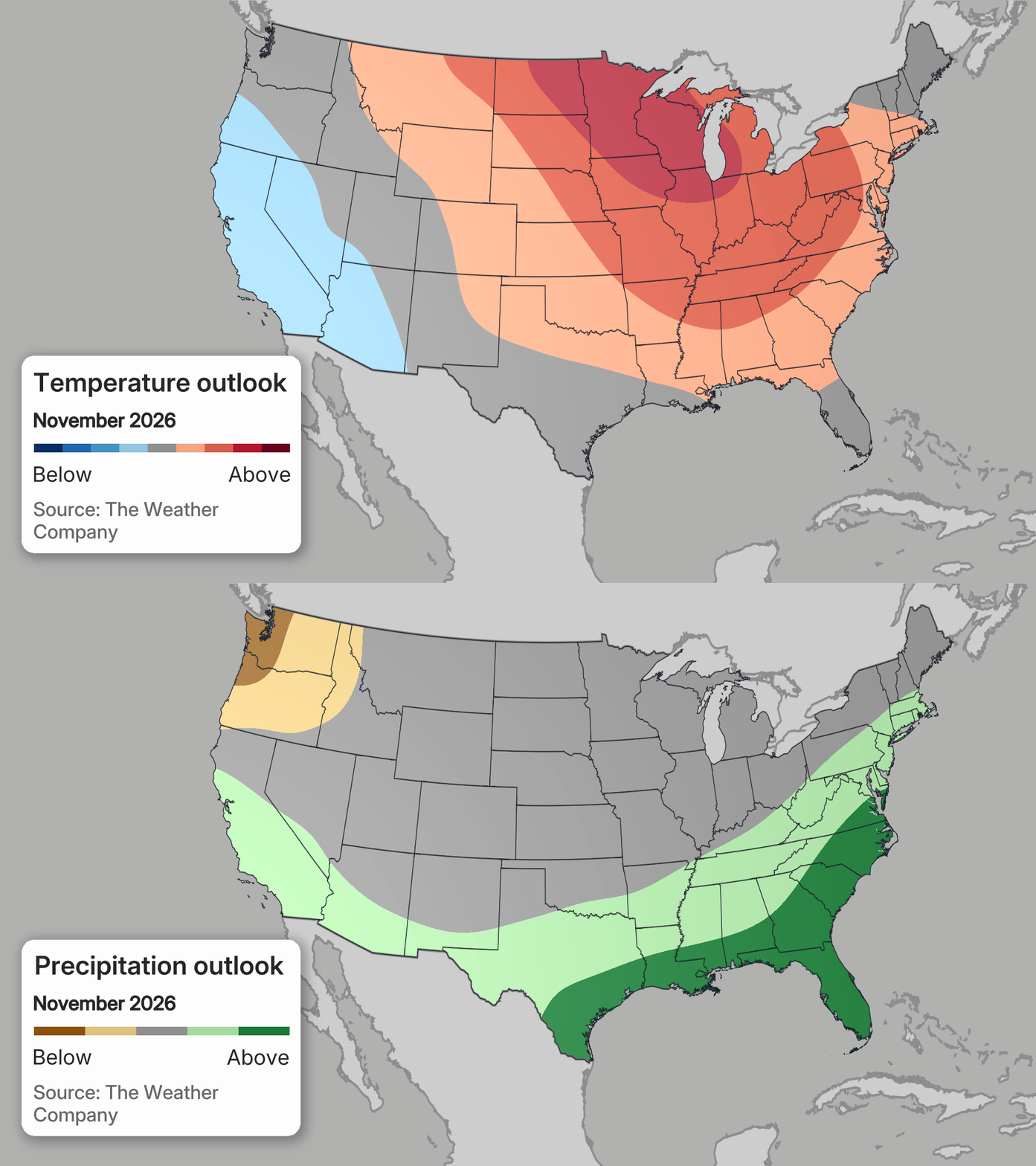
November is expected to stay warmer than usual for much of the U.S., especially around the Great Lakes. This means an early-season snowstorm in the North is less likely — which is great news for travelers in the region.
Get More of Our News on Google
Set The Weather Company as a ‘Preferred Source’ to get quicker access to the news you value.

Meanwhile, wetter weather is expected from the West Coast to Texas to the Southeast, meaning rain and thunderstorms could cause holiday travel woes.
Travel disruptions by region
So, what does this mean for your trip?
We’ve highlighted the major hubs below, so check out where you’re coming from and where you’re heading to:
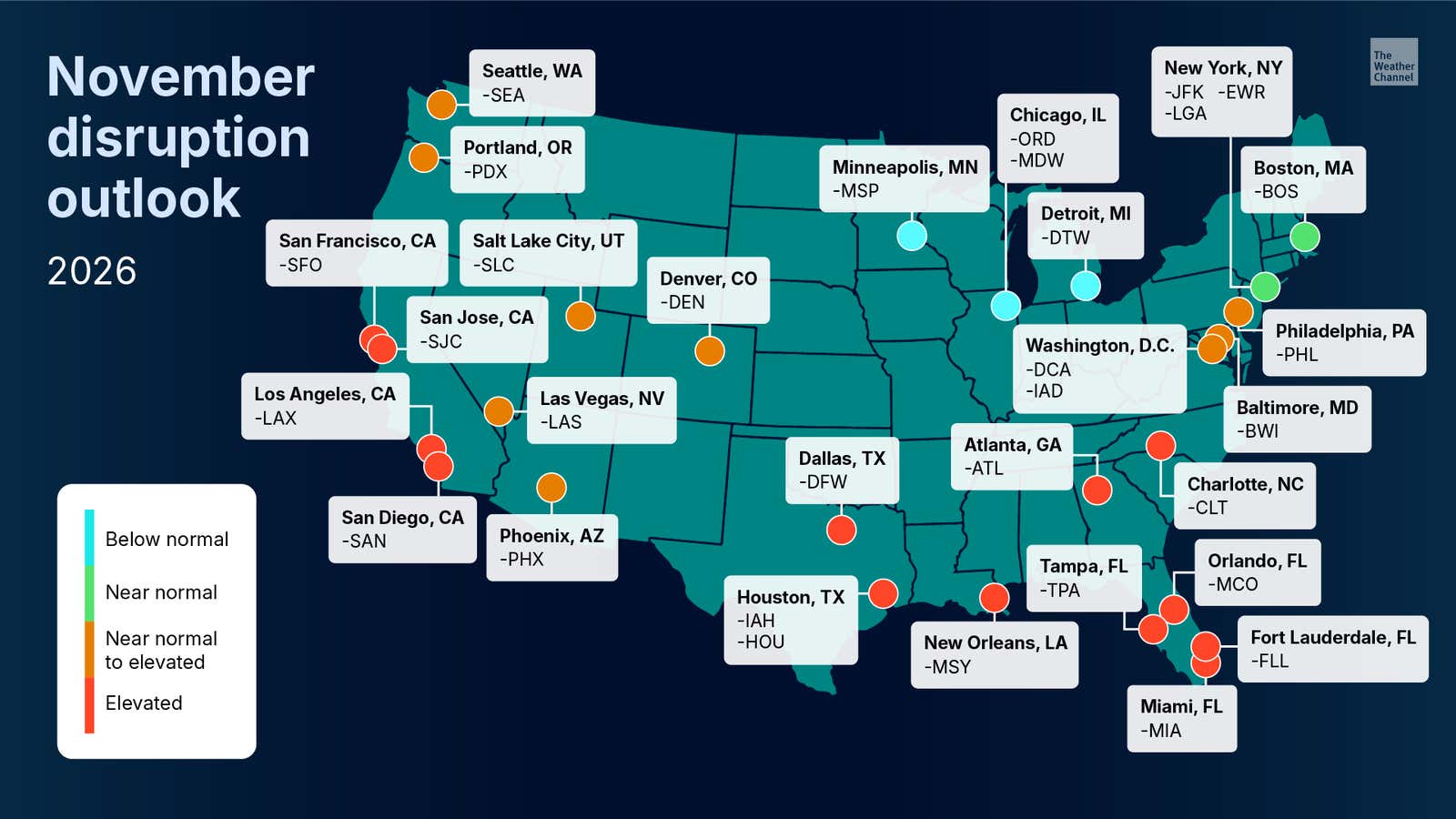
The aviation disruption outlook shows the risk for weather-induced travel delays in different regions across the country. This map only includes major hubs, but all airports in and around each city would have the same rating.
(Maddie Homan)
| Region | Key hubs | Risk vs. normal |
|---|---|---|
| Great Lakes/Upper Midwest | ORD, MDW, DTW, MSP | Below normal |
| Northeast | BOS, JFK, LGA, EWR | Near normal |
| Mid-Atlantic | PHL, BWI, DCA, IAD | Near normal to elevated |
| Southeast | ATL, CLT | Elevated |
| Florida | MCO, MIA, FLL, TPA | Elevated |
| Gulf Coast/Texas | IAH, HOU, MSY, DFW | Elevated |
| California | LAX, SFO, SAN, SJC | Elevated (late month) |
| Pacific Northwest | SEA, PDX | Near normal to elevated |
| Mountain West/Southwest | DEN, PHX, LAS, SLC | Near normal to elevated |
Key takeaways
Whether you’re in the early stages of planning your trip or you’ve had tickets booked for months, these are the three things to keep in mind as we head closer to Thanksgiving:
- The northern snow risk is lower than normal. What typically steals the headlines when it comes to Thanksgiving is less likely to this year. The above average warmth over the Great Lakes and Northeast reduces the odds for an early season snow or ice event at major hubs like Chicago, Detroit or New York.
- The wet, stormy South is the area to watch. The wetter than average pattern across the Southern Tier mean there’s an increased risk for storm-related travel delays. With Atlanta being the busiest connecting airport in the country, this could impact travelers all across the U.S.
- West Coast storminess is expected. Rain and storms will increase as the month goes on, potentially causing holiday travel delays to pile up — especially in places like San Francisco, Portland and Seattle.
With that said, continue to check back with us at weather.com ahead of your trip for the latest forecast details.
Source: weather.com