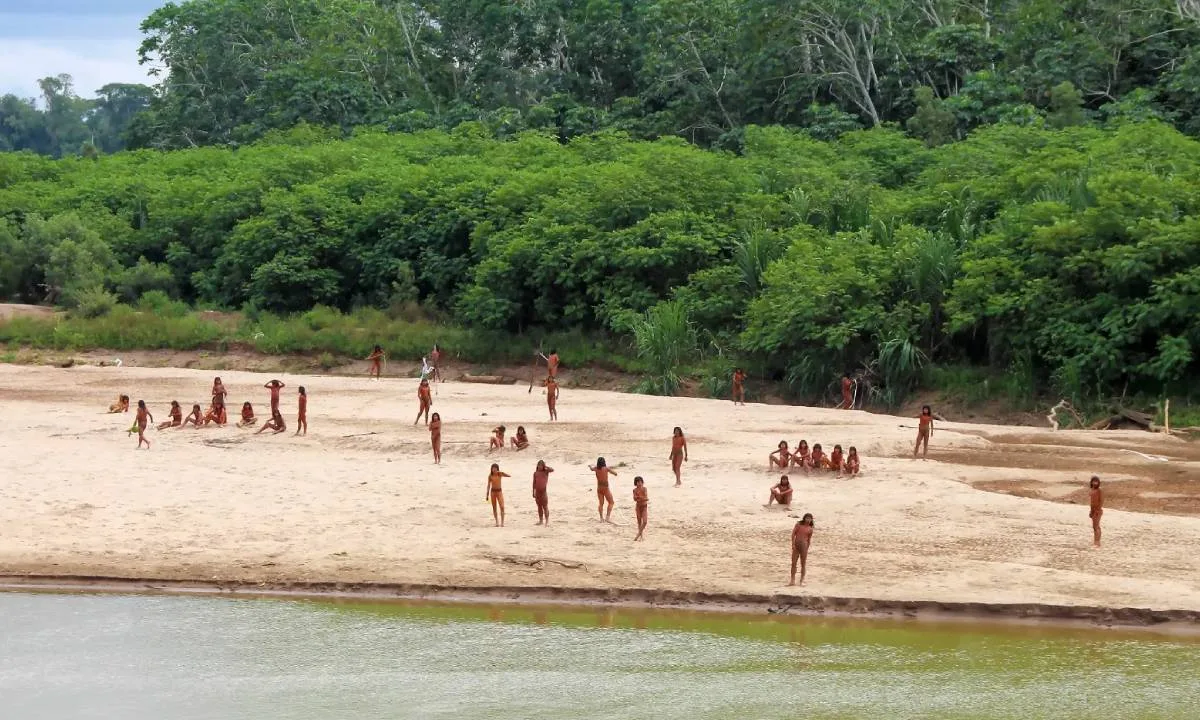

The Survival International organization questioned the decision of a multi-sector commission of the Peruvian State that rejected expanding and strengthening the protection of the Madre de Dios Territorial Reserve. The measure directly affects the Mashco Piro, considered the largest indigenous people in isolation in the world, whose territories continue to be exposed to extractive activities.
The territorial protection of the Mashco Piro, one of the most vulnerable indigenous peoples in isolation in the Peruvian Amazon, faces a new setback. A multisectoral State commission rejected the proposal to expand and categorize the Madre de Dios Territorial Reserve, despite the fact that the Government itself had supported this measure years ago.
According to Survival International, the decision leaves without additional protection large areas of forest that are part of the territory used by this people and that remain exposed to the advance of extractive activities, especially logging.
Survival International denounces a “cruel and devastating” decision by Keiko Fujimori’s government
The controversy has a history that goes back more than twenty years.
In 2002, the Peruvian State created the Madre de Dios Territorial Reserve with the objective of protecting the Mashco Piro, Yora and Amahuaca peoples, all of them in a situation of voluntary isolation.
However, indigenous organizations maintain that the original delimitation left out important areas ancestrally used by these communities. Subsequently, part of these territories were given in concession for forestry activities.
As a result of the claims, in 2016 the State itself accepted the need to expand the reserve and approved a technical study that recommended strengthening its protection through the creation of an indigenous reserve.
However, that process never came to fruition.
The international organization considers that the recent decision represents a serious setback for the protection of people in isolation.
Its director, Caroline Pearce, expressed harsh criticism of the Government.
“It is a cruel and devastating decision that, in practice, translates as if a ‘For Sale’ sign was hung in the territory of the Mashco Piro. The Fujimori Government has made its priorities clear: big business and the exploitation of indigenous territories, even if this may cost indigenous lives. We will fight against this decision together with the indigenous organizations in Peru that defend their relatives in isolation.”
For indigenous organizations, the expansion of the reserve was a key tool to restrict the entry of outsiders into the territories occupied by isolated peoples and reduce the risks associated with external contact.
More than a territorial conflict
Specialists point out that the concern is not limited to the loss of protected surface.
Indigenous peoples in isolation depend directly on the ecosystems where they live to obtain food, water, medicinal plants and other essential resources for their survival.
When activities like logging enter these spaces, they not only transform the forest. They also limit the mobility of communities and increase the likelihood of encounters with outsiders.
These contacts represent an especially serious threat because isolated peoples lack immunological defenses against diseases common to the rest of the population.
Furthermore, the expansion of economic activities can generate direct conflicts over the use of territory.
The tension in the area is not new.
According to Survival International, sightings of mashco piro have increased in areas near forestry operations in recent years.
The organization recalls that in 2024 there were clashes that caused the death of at least two logging workers. So far there is no confirmed information about possible victims among indigenous people in isolation.
The case also had repercussions on the environmental certification of a forestry company that operated in the area.
Following complaints promoted by organizations such as FENAMAD, AIDESEP and Survival International, the Forest Stewardship Council suspended the sustainability certification of Maderera Canales Tahuamanu in 2024. A year later, the recognition was definitively withdrawn.
A pattern that worries indigenous organizations
The Madre de Dios controversy joins other recent cases related to the protection of indigenous peoples in isolation.
According to indigenous organizations, the same multisector commission rejected in October 2026 a proposal linked to the creation of a reserve for isolated peoples in Atacuari, Loreto.
A year earlier he also rejected the creation of the Yavarí-Mirím Indigenous Reserve, considered one of the most important in the country for the protection of isolated peoples.
These antecedents fuel the concern of indigenous leaders.
The Shipibo leader and winner of the 2007 Goldman Environmental Prize, Julio Cusurichirecently questioned these decisions and maintained that the cases of Madre de Dios, Atacuari and Yavarí-Mirím show an orientation contrary to the recognition of indigenous territories.
“For us it is a government slogan not to recognize these territories, surely thinking about extracting the resources that exist in them,” he stated.
Cusurichi also warned about the risk that these decisions facilitate processes that could lead to ethnocide of isolated peoples.
The case reaches the Inter-American Court
The dispute over the territory of the Mashco Piro has already transcended the national level.
In September, the Native Federation of the Madre de Dios River and Tributaries (FENAMAD) and the organization EarthRights filed a lawsuit against the Peruvian State before the Inter-American Court of Human Rights.
The judicial action seeks to determine whether the State failed to comply with its obligation to protect the territorial rights of this people and guarantee the necessary conditions for them to continue living in isolation.
FENAMAD also rejected the recent decision of the multisector commission and warned about its possible consequences.
“This decision could weaken the protection of indigenous peoples in isolation, especially the Mashco Piro people, whose survival depends on the effective defense of their ancestral territories,” the organization said.
The federation concluded with a warning that summarizes the concern of indigenous organizations: “The life and survival of indigenous peoples in isolation must be above any economic interest.”
READ ALSO: ScanFish: the technology that seeks to improve the reproduction of Amazonian fish and reduce losses in aquaculture
Source: stakeholders.com.pe