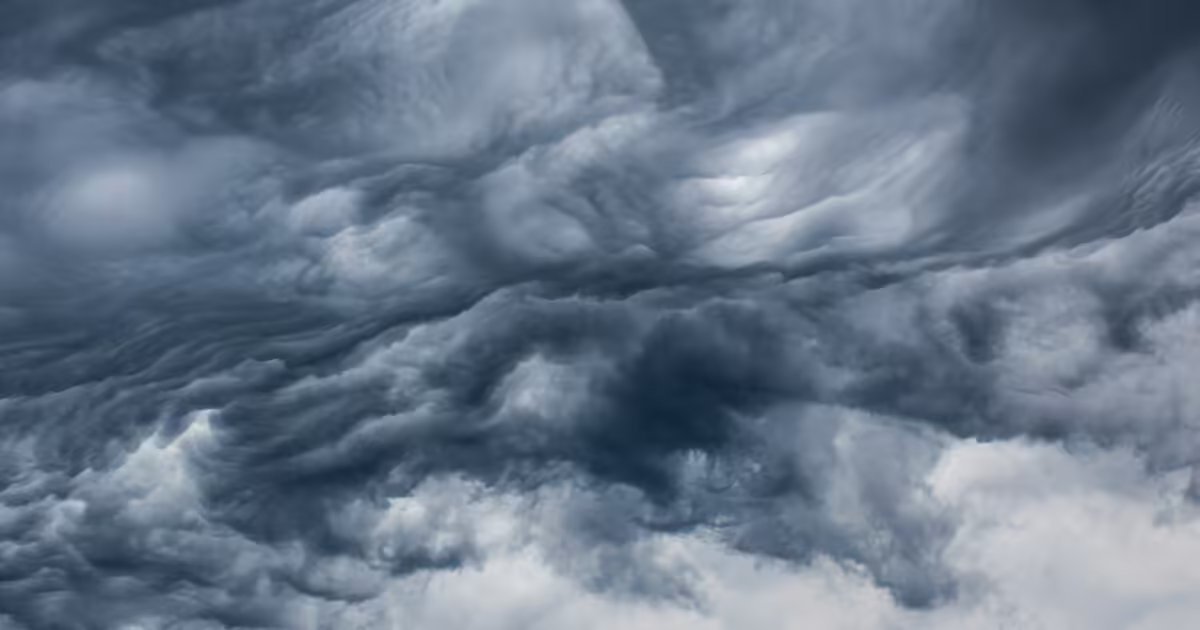

This week on Science Behind the Forecast, we’ll learn about clouds that look like a stormy sea. LPM’s Bill Burton talks about those clouds with meteorologist Tawana Andrew.
This transcript was edited for clarity and length.
Tawana Andrew: The cloud saga continues today.
Bill Burton: Yes, I’m excited about this one because this is a new cloud. Well, it’s been around, I guess, a long time, but it’s been officially recognized. What do we need to know about this new cloud?
FACING: This particular cloud formation was officially classified back in March of 2017, but more recently, they changed the name a little bit. So the last time we talked about this, we were talking about it as Undulatus asparatus.
BB: That’s a name you don’t forget. I love that name.
FACING: I know! It’s such a good name, but you know, as scientists, we’ve got to tamp down the fun just a little bit. Now, it’s just known as an asperitas cloud.
BB: An asperitas cloud. That’s kind of fun in its own way, but not like before.
FACING: Not as fun as before. Not as poetic, I guess. But the word asperitus comes from the Latin root aspero, which means to make rough or uneven, and of course with the undulatus, it means wavy. So undulatus apparatus translates, basically, to an agitated wave.
BB: You just made a word geek like me very happy.
FACING: I’m glad to do that. That actually perfectly explains how it looks, because asperitas clouds look like ocean waves in the sky. They don’t produce any precipitation, but they can be linked to nearby storms. They actually form pretty low in the atmosphere, respectively. The bases of these clouds can form anywhere between 4,000 and 10,000 feet up. That’s pretty low, which means that they’re mainly composed of water droplets, since they form below the altitude where freezing occurs.
While there’s still a lot of research ongoing as to how they form, there’s a couple of hypotheses out there trying to figure out what’s going on. One main one is that their rippling appearance is connected to the aftermath of thunderstorms, but they have been seen in some calmer weather. Researchers do believe that the asperitas clouds form when mammatus clouds, which basically look like udders, that’s the best way to explain it —
BB: That certainly lets you know exactly what it looks like.
FACING: They look like a bunch of udders hanging in the sky when those mammatus clouds drop into parts of the atmosphere where there’s more wind shear. Wind shear is a change in wind direction or speed with height. That leads to it having the bottom of the mammatus clouds being cut off. You can see more viscerally the wave-like motion and appearance in the atmosphere. That’s one potential theory.
BB: What’s another?
FACING: Another ties their formation to gravity waves moving through a cloud, which we talked about with lenticular clouds. Potentially that same type of up and down motion that we see in the atmosphere, just goes through a cloud, and that could also contribute to the asperitas’ rough wave-like appearance. There’s still a lot of research going on in terms of why this cloud happens and what we see with it. But it’s still a pretty cool name, whether it’s asperitas or undulatus asperatus, it’s a cool cloud.
Source: www.lpm.org