
Rosatom Chief Executive Alexei Likhachev identified Egypt, Togo, Namibia and Tanzania as the countries involved in the discussions.
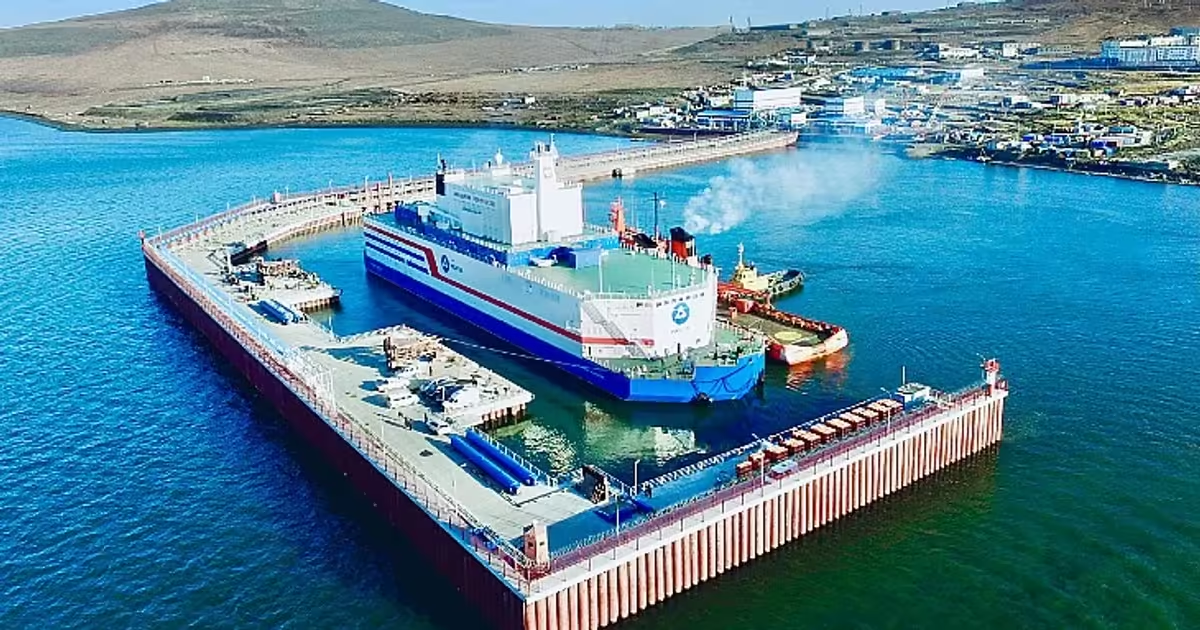
The proposed plants would carry small nuclear reactors on vessels that can be towed to coastal locations and connected to national grids. Rosatom is offering African customers units capable of generating 100 megawatts of electricity.
The technology is designed to provide countries with nuclear power without requiring them to construct a conventional reactor complex on land.
Floating plants still require coastal infrastructure, connections to the electricity grid and approval from national nuclear and maritime regulators.
No contracts have been awarded. Rosatom also did not disclose the expected cost, electricity tariff, potential locations or timetable for any of the proposed African projects.
The discussions were announced on Wednesday during the third Russia-Africa Summit in Moscow, according to Reuters.
Rosatom said 38 African countries have coastlines that could potentially accommodate its floating power units.
“As a first step, a floating nuclear power unit can serve as a good entry point,” Rosatom executive Vladimir Aptekarev said.
The company is marketing the plants under a power purchase agreement. Under that arrangement, Rosatom would own or operate the generating unit while the African customer purchases the electricity it produces.
Servicing and nuclear refuelling would be conducted in Russia. Rosatom said the units could operate for as long as 60 years.
This structure could reduce the amount of nuclear infrastructure and technical expertise required within the purchasing country. However, it could also create a long-term dependence on Rosatom for fuel, maintenance and specialised technical services.
Rosatom targets Africa with technology operating only in Russia
Only one floating nuclear power station is currently operating anywhere in the world.
Russia’s Akademik Lomonosov began commercial operations in the remote Chukotka region in 2020. Its two reactors have a combined electricity-generating capacity of approximately 70 megawatts.
The units Rosatom is offering internationally would use two RITM-200M reactors with a combined capacity of about 100 megawatts. They have been adapted to operate in warmer climates rather than Russia’s Arctic conditions.
By comparison, Rosatom’s conventional El Dabaa nuclear project in Egypt will have a total capacity of 4,800 megawatts. It comprises four land-based reactors, each capable of generating 1,200 megawatts.
El Dabaa is expected to cost approximately $28.75 billion. Russia is financing 85% of the project through a state loan, while Egypt is responsible for the remaining 15%.
Egypt therefore has a more developed nuclear regulatory and technical framework than the other African countries identified by Rosatom.
Togo took an initial step towards nuclear cooperation on Wednesday by signing a memorandum of understanding with the Russian company. The agreement provides for working groups to examine nuclear electricity projects, staff training and other peaceful applications of nuclear technology.
A memorandum does not constitute an agreement to purchase or construct a floating power plant.
Namibia is one of the world’s major uranium producers but does not generate nuclear electricity. Tanzania also has no commercial nuclear power station.
Any project in either country would require extensive regulatory preparation, trained personnel, emergency-response systems and agreements covering nuclear safety, waste and liability.
Rosatom has already secured what it describes as the first export agreement involving electricity supplied by floating nuclear units. The company reached an arrangement in Indonesia involving two plants with a combined capacity of 200 megawatts.
Rosatom’s African discussions form part of Russia’s broader effort to expand its commercial and political influence across the continent.
The company has signed nuclear cooperation agreements with at least 15 African countries. Its proposals range from large conventional power stations to research reactors, nuclear medicine facilities and smaller modular plants.
Floating nuclear units could provide reliable electricity for coastal cities, industrial facilities, mines and desalination plants. Their commercial attractiveness will nevertheless depend on the eventual electricity price, financing terms and the willingness of African governments to enter decades-long agreements with a Russian state corporation.
Source: africa.businessinsider.com