
Fleet managers may never oversee robotic workforces at their organizations. Some likely will. Start understanding the technology now and where you might fit in.
Whenever I meet a new fleet manager, I ask them about their management roles beyond vehicles. These other roles seem to be expanding.
At Holman Emerge 2026 last week, I spoke with a fleet manager tasked with driving efficiencies in his company’s cafeteria and food service operations. That was new to me, even though I’d long heard about fleet managers handling financing, infrastructure, events, and travel for their companies.
It’s clear that a fleet manager’s job is portable to other things that depreciate, need maintenance, have lifecycle costs to control, and must be distributed internally and externally.
What might be next? How about robots?
Robots were a central discussion point at Holman Emerge this year. (For those unfamiliar, Holman Emerge brings together innovators, entrepreneurs, startups, and investors from across the automotive sector to discuss the emerging trends that are poised to shape the future of the industry.)
I covered the introduction of Holman Robotics, the company’s new business unit, at Holman Drive 2025. So discussions from last year through last week have me thinking about robotics as another potential application for fleet managers’ expertise.
Beyond Cars and Trucks
Managing robots? The idea isn’t quite as far-fetched as it might sound. The conversations are happening now and growing.
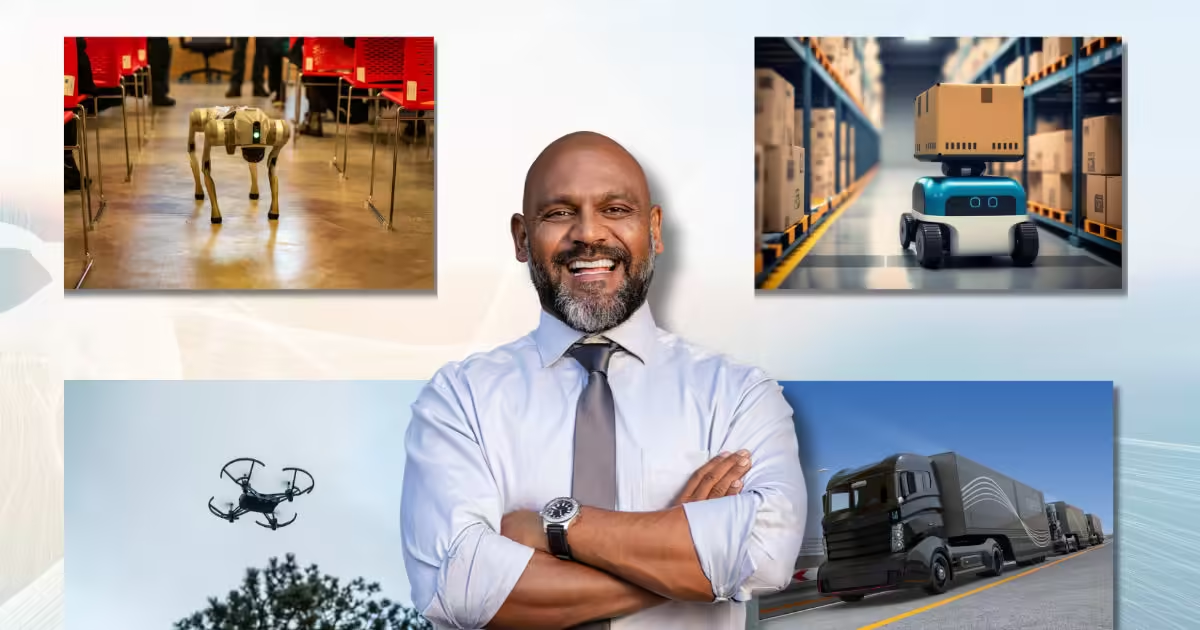
Robots already move materials around warehouses, clean facilities, and inspect infrastructure. Other applications being developed include maintaining bridges, cleaning ship hulls, and performing repetitive or hazardous tasks.
At Holman Emerge, I sat with a founder who walked me through the costs for infrastructure maintenance. Take a city bridge, for example: If maintenance lapses, the cost to simply repaint it could be in the hundreds of millions of dollars. Design a robot and put it to work regularly cleaning and inspecting that bridge, and you can dramatically reduce those costs.
Now, think about repetitive movements that could and should be handled by a robot, particularly from an ergonomics and safety standpoint. The efficiencies really start to become clear. Billions of dollars are being sunk into this market.
This brings us to some familiar questions: Who acquires these assets? Who maintains them? Who tracks their utilization and operating costs? Who decides when it’s time to replace them?
Fleet managers have been answering those questions for decades!
Taking it a Step Further to Managing Work
The discussion shifts from managing machines to coordinating their activities, especially when dozens or even hundreds of robots perform different tasks across multiple facilities.
Imagine drones inspecting industrial equipment, ground robots investigating problems, and autonomous vehicles and machines transporting materials. Software needs to coordinate assignments and keep operations moving as individual machines recharge or undergo maintenance.
Fleet managers already use technology to optimize vehicle assignments, utilization, maintenance, and downtime. Those same principles eventually extend to coordinating robotic workforces. And the same fleet vendors are poised to develop those programs.
Managing multiple autonomous machines, potentially from different manufacturers, introduces challenges around connectivity, reliability, and interoperability. And the robots will need to talk to each other and coordinate their jobs — with little human intervention.
Wow. The technology is still in its infancy, but it is evolving rapidly, and the underlying management principles are familiar.
Another Tool in the Toolkit
In reality, managing a warehouse full of robots may be better suited to operations, facilities, or specialized robotics teams.
But here’s the potential opportunity for the fleet industry: Robotics is a new discipline in commercial operations, and many companies haven’t figured out how to manage these machines at scale.
That creates an opening for fleet managers who are curious enough to learn about the technology and willing to step outside their traditional responsibilities. And even if managing robots never becomes part of their job description, understanding the technology has value.
A key theme in fleet management discussions today is how fleet managers don’t operate in isolation. They work closely with procurement, finance, operations, facilities, IT, and other departments to make decisions that affect the broader business. As robotics moves into more of those functions, it’s another conversation they’ll need to join.
Source: www.automotive-fleet.com