
A hands-on, redesigned curriculum helps UT Health Sciences pharmacy students link classroom learning to clinical practice and patient care from day one.
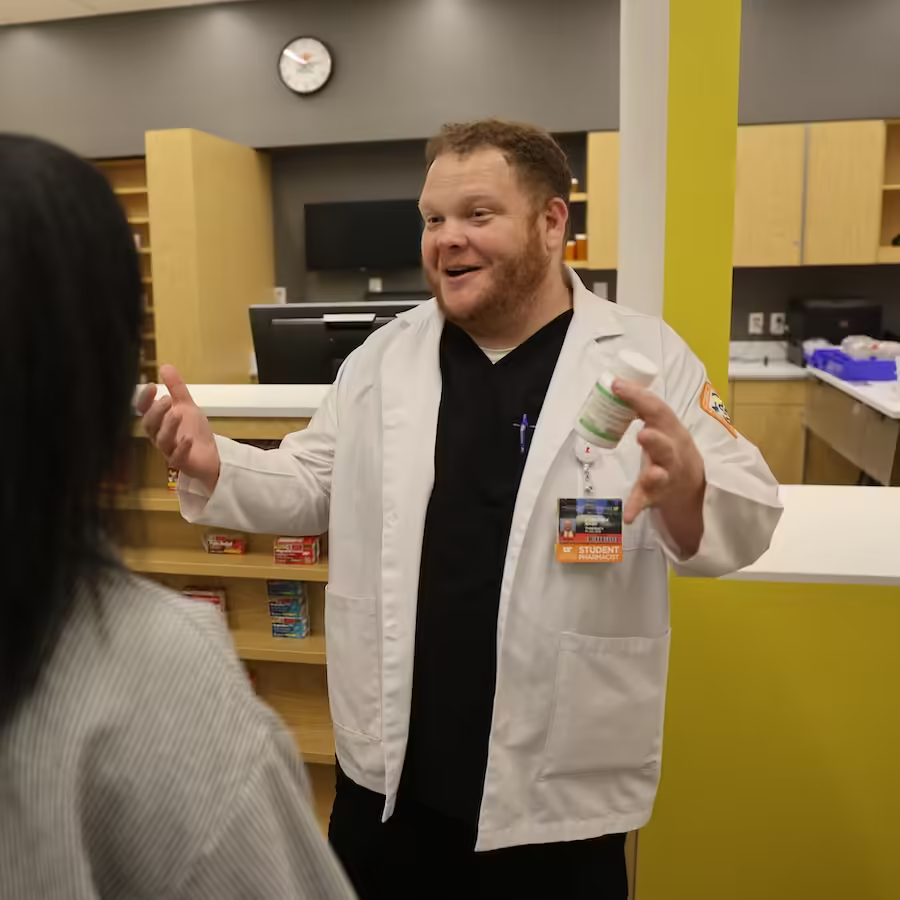
“You don’t necessarily think about how intimidating it can be for someone to give themselves an injection until you’re sitting across from someone who’s genuinely nervous about doing it,” said pharmacy student Jonathan Nash.
Just weeks into his first semester at the University of Tennessee Health Sciences, Nash was helping a patient learn to use insulin injections and a continuous glucose monitor during an Introductory Pharmacy Practice Experience (IPPE) at a Walgreens pharmacy in Cordova, Tennessee.
The encounter showed him that understanding a therapy in the classroom is one thing. Helping a patient feel confident enough to use it is another.
Across town, fellow first-year pharmacy student Frances Fonville was learning many of the same lessons at Kroger Pharmacy in Bartlett. She quickly became involved in the day-to-day work, taking on new responsibilities and learning how patient care decisions are made, much sooner than she expected.
“I never expected to be this involved at a practice site,” Fonville said. “It felt like going from zero to 60 overnight, but it has made it so much easier to understand key community pharmacy concepts, especially for someone who started at square one.”

Developing Connections Earlier
These experiences illustrate the impact of a comprehensive redesign of the PharmD curriculum at UT Health Sciences called RISE — Real-world. Innovative. Student-centered. Education. Launched this fall, RISE aims to bridge classroom instruction and pharmacy practice from the outset, helping students apply what they learn earlier and more effectively, build understanding progressively over time and see how concepts apply in real-world settings.
“When too many things come in at once, it’s hard to retain them long term,” said Dawn Havrda, PharmD, associate dean for academic affairs and assessment. “We’re bringing similar learning experiences together and scaffolding them so students can see the whole picture earlier and build on it over time.”
“The healthcare needs of our communities are evolving, and pharmacy education must evolve with them,” said College of Pharmacy Dean Reginald Frye, PharmD, PhD. “RISE gives our students the clinical reasoning, confidence and collaborative skills to improve patient outcomes across Tennessee and beyond.”
Connecting Learning and Practice
Before starting pharmacy school, Fonville imagined spending the next few years only listening to lectures and taking notes.
“If you had told me I’d be listening to my classmates explain complex pharmaceutical topics as often as my professors, I wouldn’t have believed you,” she said.
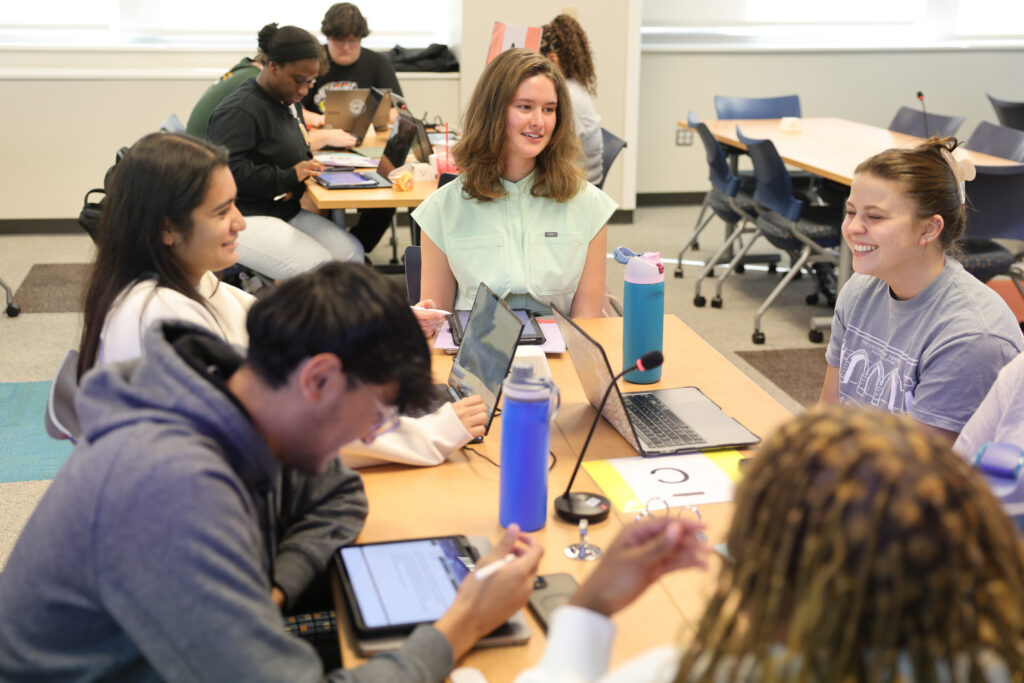
In the RISE curriculum, much of the foundational learning happens before students enter the classroom. Through readings, recorded content and other independent learning activities, students build a baseline understanding of concepts on their own. Classroom time then focuses on applying those concepts through patient cases, discussion and collaborative problem-solving.
Faculty serve less as lecturers and more as guides, helping students work through complex scenarios, examine assumptions and connect scientific concepts to real-world pharmacy decisions.
Building on its long-standing emphasis on collaboration and shared problem-solving, the curriculum further strengthens UT Health Sciences’ commitment to preparing students to practice as part of healthcare teams, where effective communication and interprofessional collaboration are essential to patient care.
This approach illustrates a central RISE philosophy: helping students move beyond memorization and begin thinking like pharmacists.
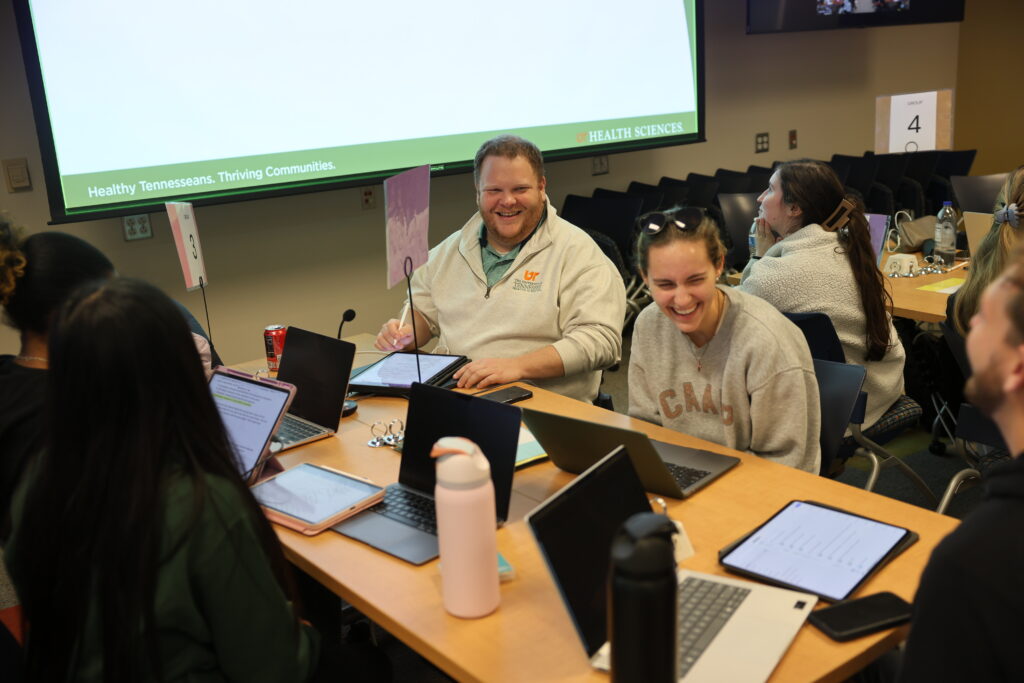
“One thing that makes our program different is how interactive it is,” Fonville said. “I get to talk in class a lot, and we have quizzes almost every class. They keep you accountable and force you to engage with the material consistently. When those daunting exams finally roll around, you’ve already done a lot of the work.”
Becoming Part of the Team
RISE also takes a longitudinal approach to experiential education.
Rather than completing short rotations that begin later in the curriculum, students begin working in pharmacy settings during their first semester and return to the same site each week.
“Being in the same site every week helps students become part of the team,” Dr. Havrda said. “They start to know the patients, they know the preceptors and they really start to understand how the pharmacy functions, versus just being a visitor for two weeks.”
Nash has already seen these classroom concepts in practice. After learning about enzymes that metabolize drugs in class, he encountered a patient taking fluoxetine and metoprolol, giving him a firsthand look at how those concepts influence medication decisions.
“I think the biggest difference from my previous pharmacy experience has been getting to participate in the thought processes and the decision-making behind patient care,” Nash said. “Rather than focusing primarily on the operational side of pharmacy, I’m getting to see and understand more of the why behind what we do, and it’s given me a greater appreciation for the profession I’m entering.”
“We teach them not just to pass exams, but to understand how to use knowledge in the healthcare system.”
Dawn Havrda, PharmD
Nash’s preceptor regularly challenges him to think through medication-related questions and identify possible issues on his own.
“Sometimes I know the answer, and sometimes I have to work through it, but that’s where so much of the learning happens,” he said.
“What I appreciate most is that none of this has felt forced. I’ve gradually become part of the normal workflow rather than feeling like someone who’s just there to observe.”
Learning for Future Patients, Not Grades
RISE uses a competency-based grading system rather than a traditional points-based scale, so students can concentrate on mastering the skills they’ll need in real pharmacy practice.
“The competency-based model still holds students to high standards of mastery, ensuring graduates are prepared for practice,” Dr. Havrda said. “What matters most in practice is that you are a good pharmacist. We teach them not just to pass exams, but to understand how to use knowledge in the healthcare system.”
“You realize we’re not just memorizing enzymes, mechanisms and drug interactions to pass an exam,” Nash said. “There’s a very real reason behind what we’re learning, and getting to make those connections in real time has been incredibly rewarding.”
Through patient encounters, classroom discussions and early practice-site experiences, UT Health Sciences pharmacy students are learning that pharmacy is about more than mastering scientific concepts. It requires critical thinking, sound judgment, collaboration and the ability to connect with patients. Through RISE, they begin developing those skills from their first semester.
Source: news.uthsc.edu