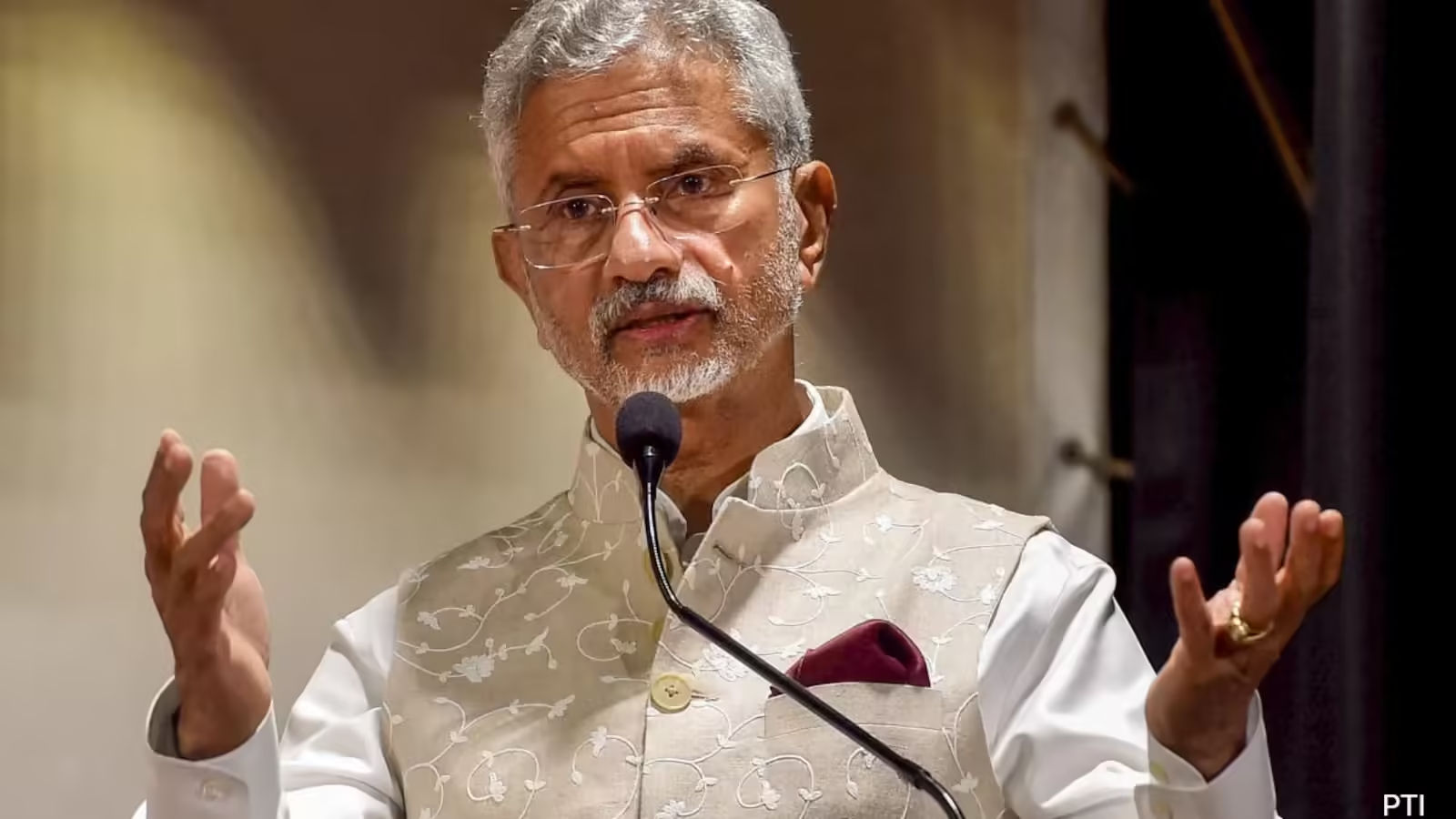

India and the US have sorted out the bulk of the issues relating to the proposed trade deal, including tariff lines, and the deal could be sealed “soon” as talks continue to resolve the last stretch of concerns, External Affairs Minister S Jaishankar said on Saturday.
His remarks come a month before Prime Minister Narendra Modi’s likely visit to the US for the G20 Summit, on the sidelines of which he and President Donald Trump may meet to review the broader trajectory of bilateral ties and progress on the trade pact.
In an interactive session at the HT Leadership Summit, the external affairs minister said the negotiations are approaching the “finishing line”, adding that many of the remaining issues are “not so much at our end” and that more changes have occurred on the American side.
“Well, it’s certainly our hope, and in many ways anticipation that we are at the last stretch. That’s not a secret,” he said responding to a question on the negotiations for the trade pact.
There has been speculation that India and the US may announce the trade deal following talks between Modi and Trump on the sidelines of the G20 Summit, to be held in Miami on December 14 and 15.
Jaishankar said his understanding has been that the bulk of the issues were sorted out. “There is the last stretch of issues and in many cases these concerns are not so much at our end, because the changes have been more at the American end than our end.”
“The hope is that we should close it out soon. It’s always the case that in that last period, everybody’s impatient,” he noted.
Last month, US Secretary of State Marco Rubio said in Mumbai that both sides are very close to firm up the trade deal.
India and the US have been engaged in talks since early 2025 on the proposed trade pact to address tariff friction, eliminate non-tariff barriers, and boost bilateral market access. India is seeking better tariffs than its competitors for its goods in the US market.
“For us the key is that we want a trade deal which is beneficial, it is balanced and which would give us a comparative advantage over groups of comparable economies,” Jaishankar said.
“That is really what we are looking for and that is really our expectation of where we would be when the trade deal is done.” he said.
The external affairs minister also called for looking at the proposed trade pact from a “larger perspective” of both countries.
“In our case, many of our early (trade) deals were done with Asian economies and many of those Asian economies were actually competitive economies. The gains which people expected from those FTAs (free trade agreements) did not exactly materialise,” he said.
“Today, think if you look at the FTAs which have been done in the last few years, I think they’ve been much more thought through. They’ve been much more strategically and economically assessed,” he said.
Jaishankar said the US is India’s biggest market and having the trade deal with it would benefit the country.
“When you look at this big context and say there is the US, our biggest market in a way, the world’s largest economy, obviously having a trade deal with such an economy would benefit us.”
“For the US, President Trump is obviously looking to do a whole set of bilateral deals to improve markets for himself. Now, the challenge is to find a landing point,” he said.
“I think this is not something which could have been done quickly and magically with sort of bold thinking and rapid movement, because these are very serious issues, people’s jobs and people’s lives are at stake.”
The external affairs minister also suggested that issues relating to tariffs were sorted out.
“If you are serious, you go tariff line by tariff line. That takes time. Now we’ve done it the painstaking way. Not everybody has had the patience or frankly the understanding to bear with it.
“But I think having put in that effort, we have now reached almost the finishing line. I think bear with it and hopefully we’ll get it,” he said.
If the trade deal is finalised, then it could trigger an upswing in the overall trajectory of bilateral ties. The India-US relations witnessed a major downturn after Washington imposed punitive tariffs on India last year and President Trump made assertions regarding his role in de-escalating the India-Pakistan military clashes of May 2025 that drew sharp reaction from Indian officials.
Washington’s new immigration policy and its decision to increase H1B visa fee also contributed to the slide in India-US ties.
The ties came under fresh strain after the US decided to restrict a key green-card processing programme for major global and Indian IT firms, including Tata Consultancy Services and Wipro.
(This story has not been edited by NDTV staff and is auto-generated from a syndicated feed.)
Source: www.ndtv.com