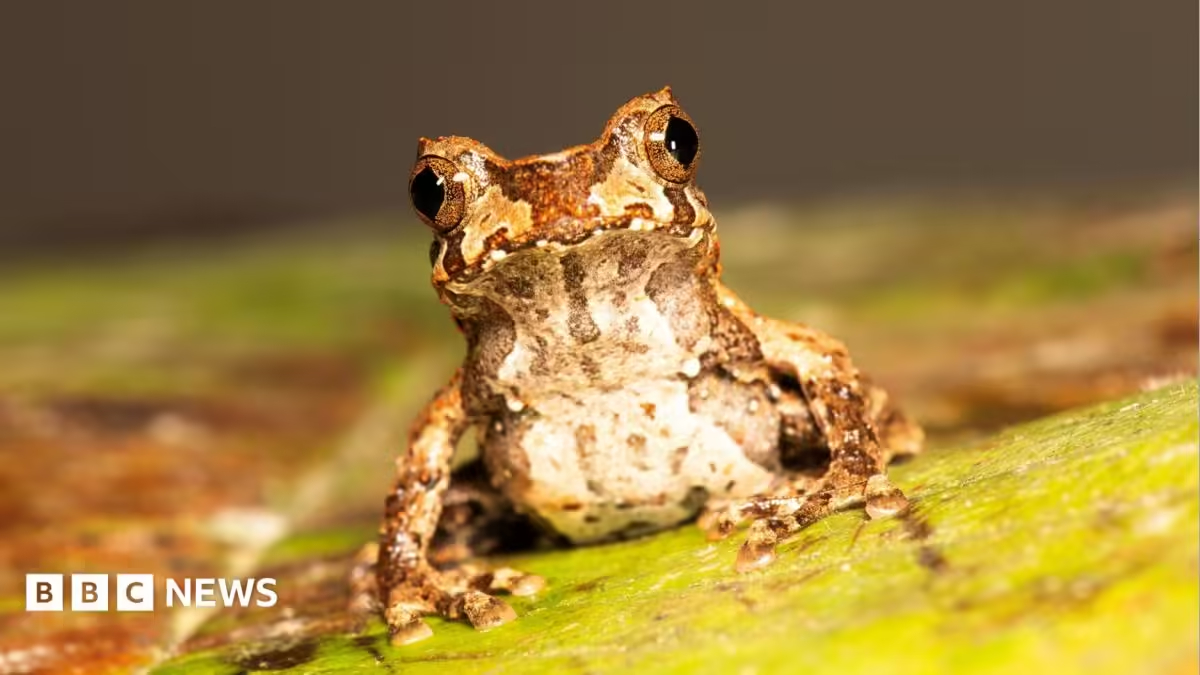

“Some of the new species are extremely secretive and found in remote forests only during a short breeding season,” says Biju.
Researchers say further studies will have to done to better understand their biology and conservation needs.
DNA analysis showed the horned frogs rapidly diversified into multiple species in the eastern Himalayas as the mountain range rose and the Asian monsoon took shape over millions of years, helping drive the evolution of the region’s plants and wildlife.
The researchers said in a statement that local tribes gave them essential field support and knowledge that helped make the discoveries possible. Some of the species were named after these communities.
The Tanii horned frog (Jingophrys taniitatii), for example, is named after the Tanii tribe.
The new species have been named Jingophrys taniitatii (Tanii horned frog), Jingophrys tanogogo (snail-eating horned frog), Jingophrys siangensis (Siang horned frog), Jingophrys hrdy (Hrdy’s horned frog) and Jingophrys wularsoni (Wu-Larson’s horned frog).
Source: www.bbc.co.uk