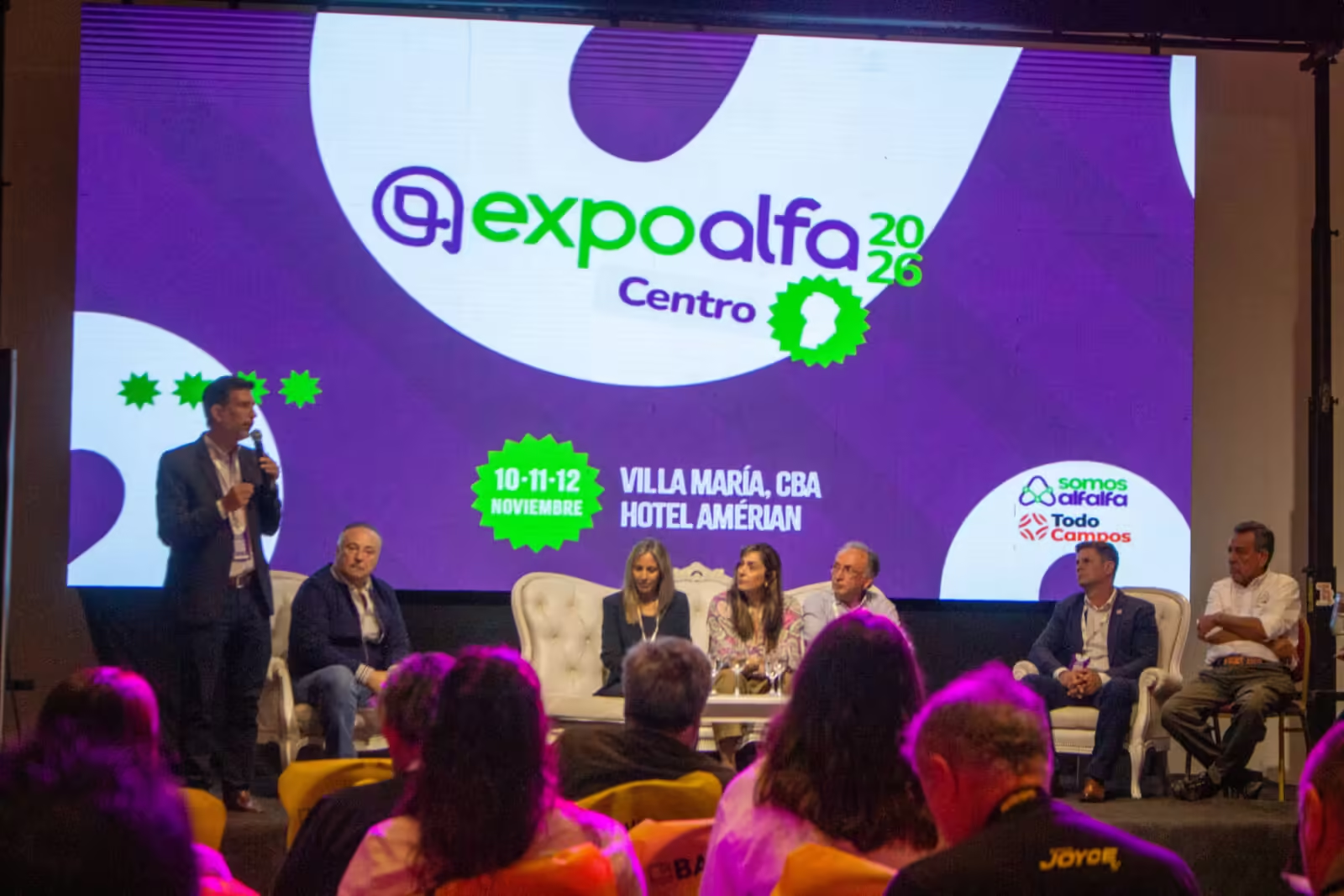

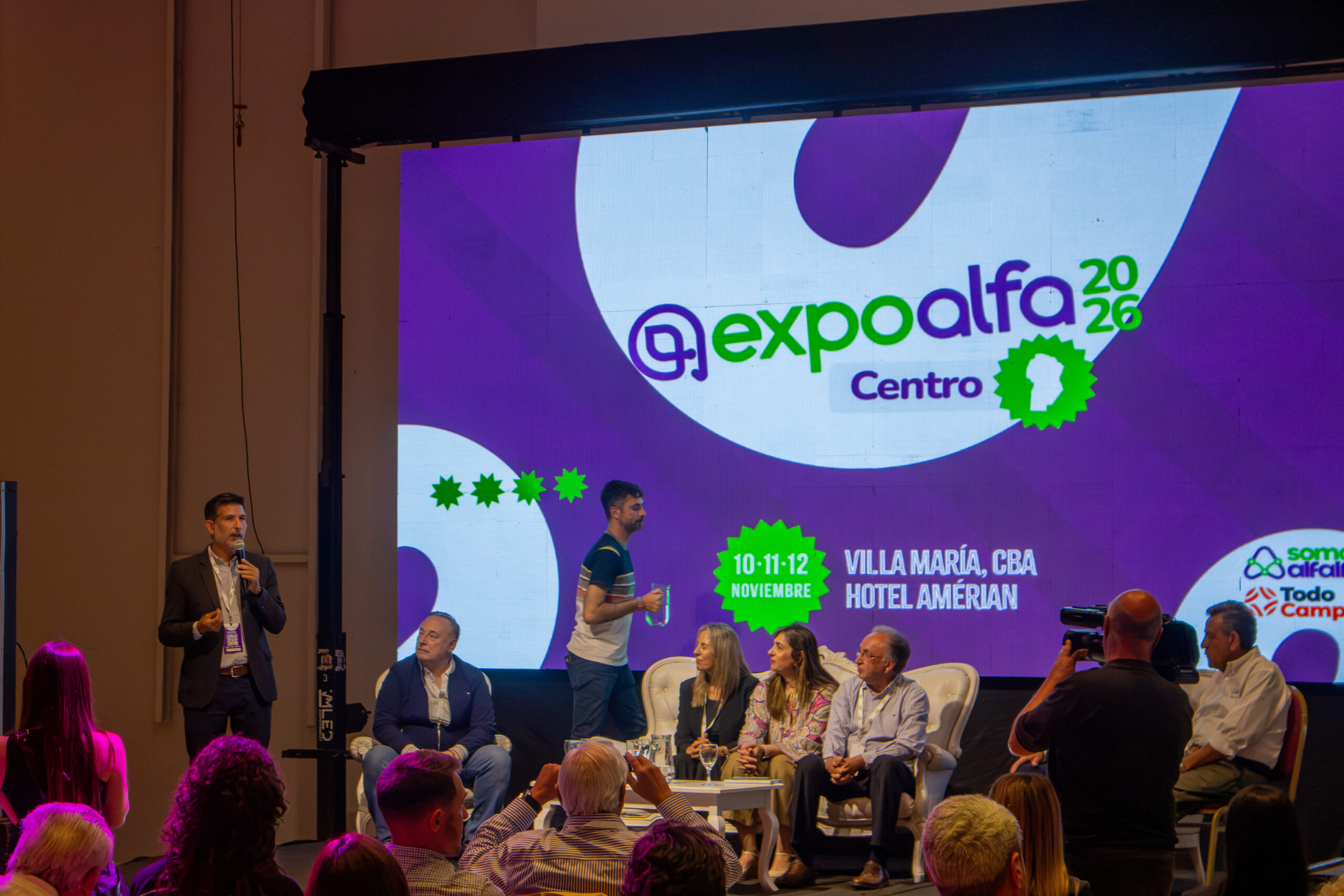
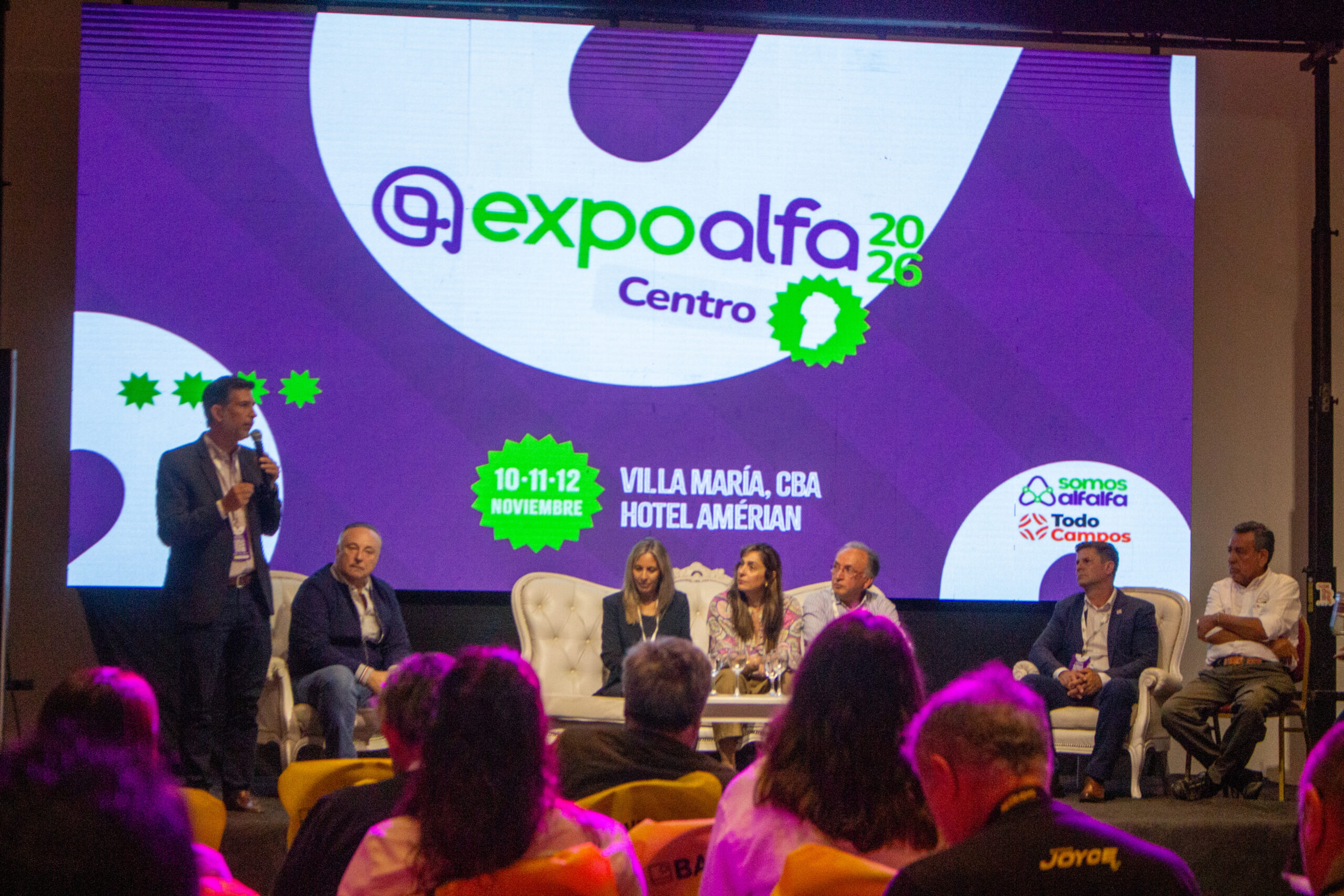
After three intense days held from November 10 to 12, ExpoAlfa Centro 2026 closed its doors. Three days where various topics were addressed, always with the focus on how to make better alfalfa to produce quality and provide answers to a market that demands more and more hay.
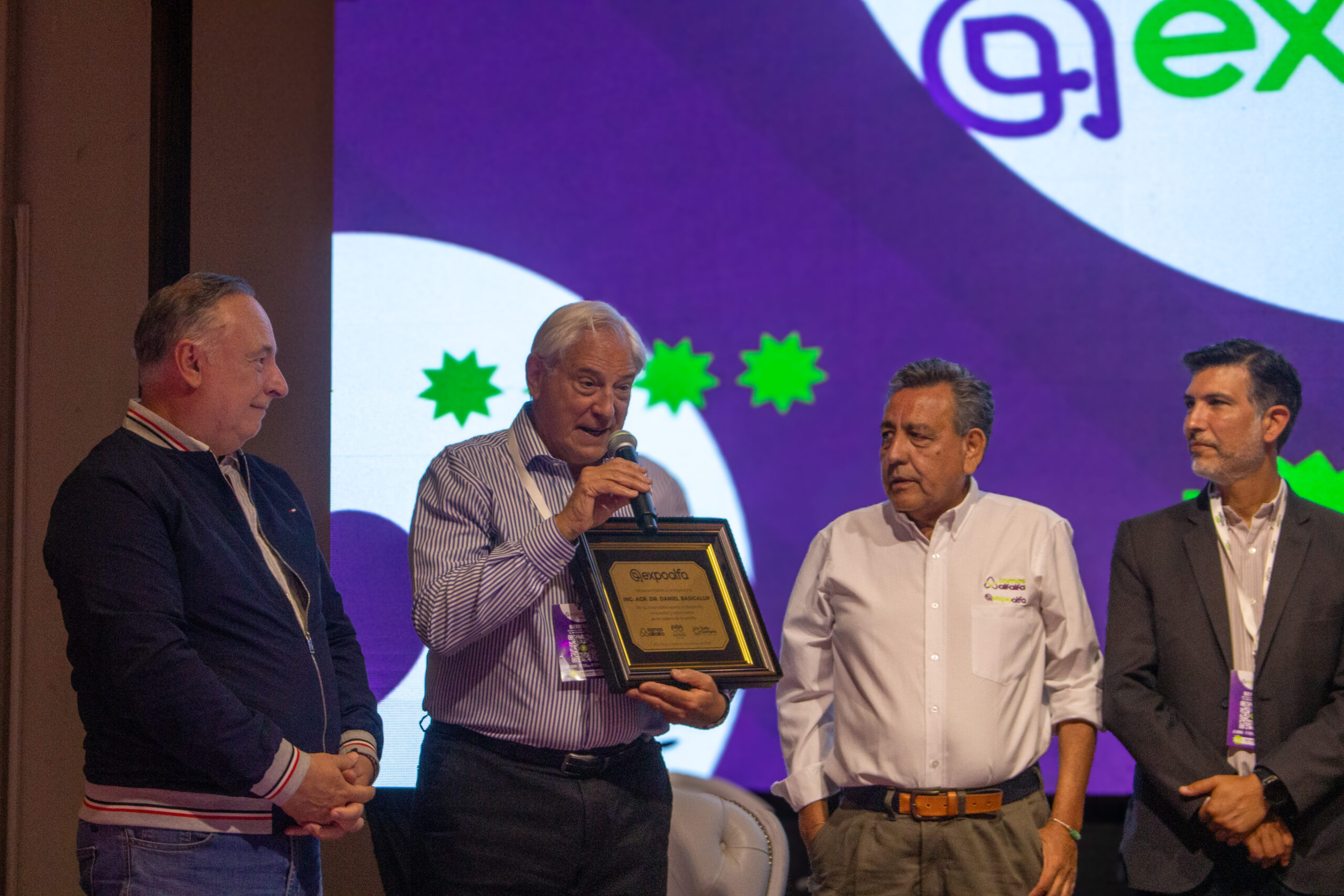
To this end, the National Alfalfa Days were planned with everything necessary to think about comprehensive production and the market. Genetics was a highlight of the event led by Daniel Basigalup, while it was followed by a panel of seedbeds with representatives from Las Praderas, Palo Verde, Los Prados and Barenbrug.
Intelligent grazing: Balance between animal response and plant health, was the topic addressed by engineer Juan Lus, giving rise to two talks that would address dairy and meat farming with engineers Miguel Taverna and Aníbal Pordomingo.
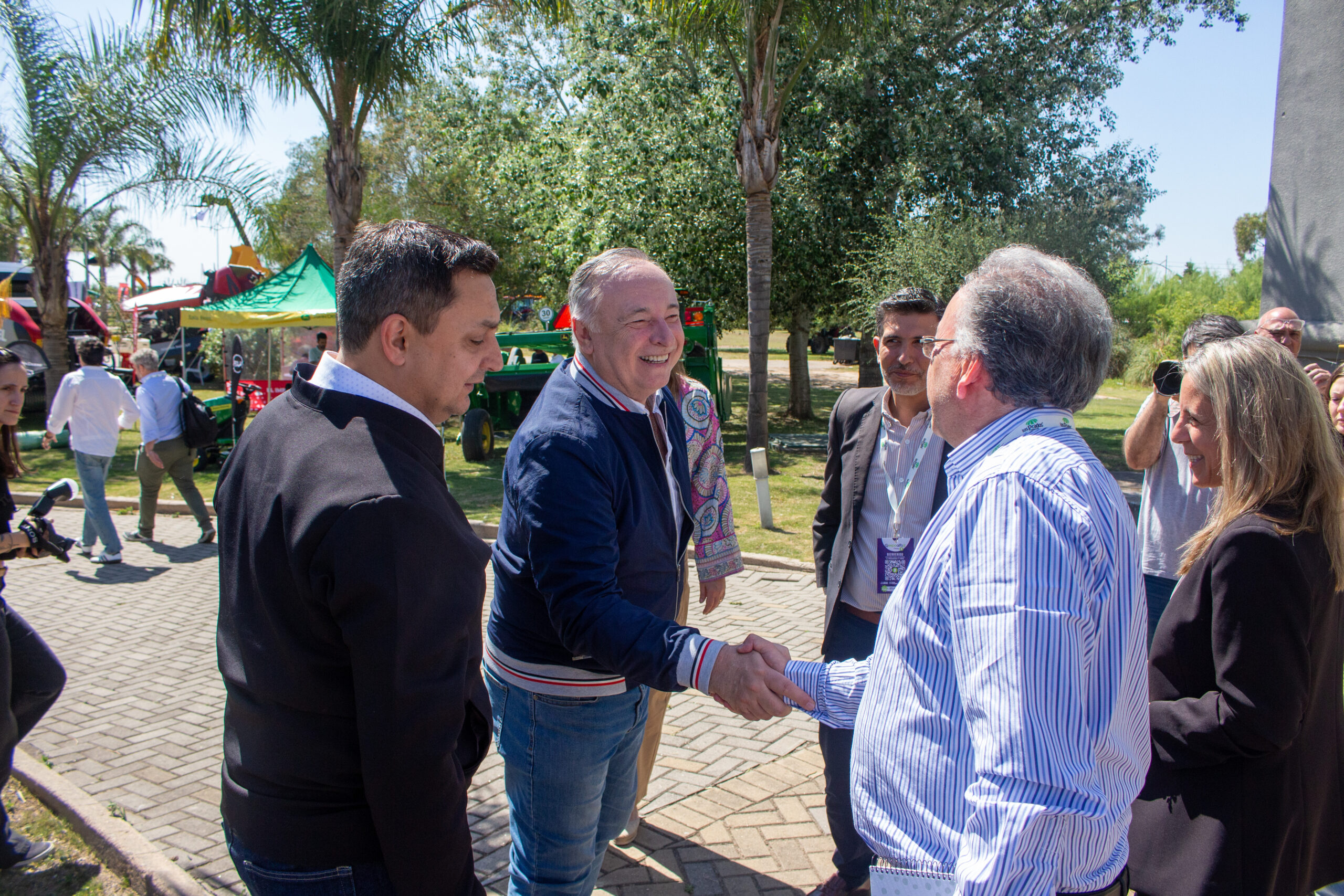
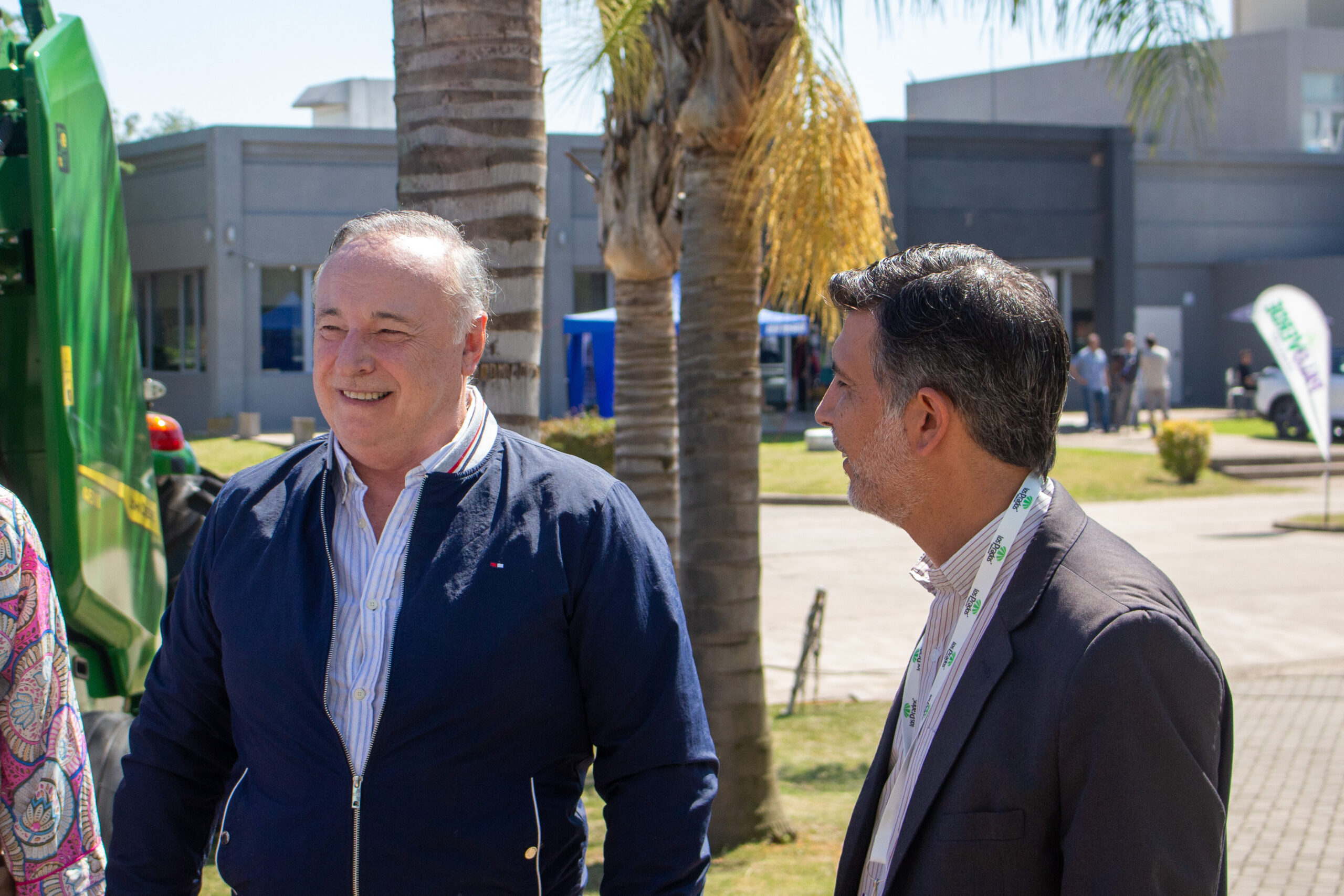
Within the framework of the official opening, which was attended by local authorities such as the Mayor of Villa María Eduardo Accastello, the Secretary of Government, Marcos Bovo and the provincial legislator Verónica Navarro Alegre, there was also the representation of INTA Villa María, with Sergio Dequino, the director of INTA Manfredi, Ariel Odorizzi and Mariana Montenegro, representing the National University of Villa María.
On the part of the provincial government, the representation was given through Marcos Blanda, Secretary of Agriculture and Natural Resources of the Ministry of BioAgroindustry of Córdoba, together with María Alejandra Pogliano, Secretariat of Coordination and Productive Development of the Ministry, who presented details of law No. 11,062 on Promotion of Territorial Development and Equality of the Province of Córdoba, which allows gross income to be deducted to be invested in productive developments related to the alfalfa.
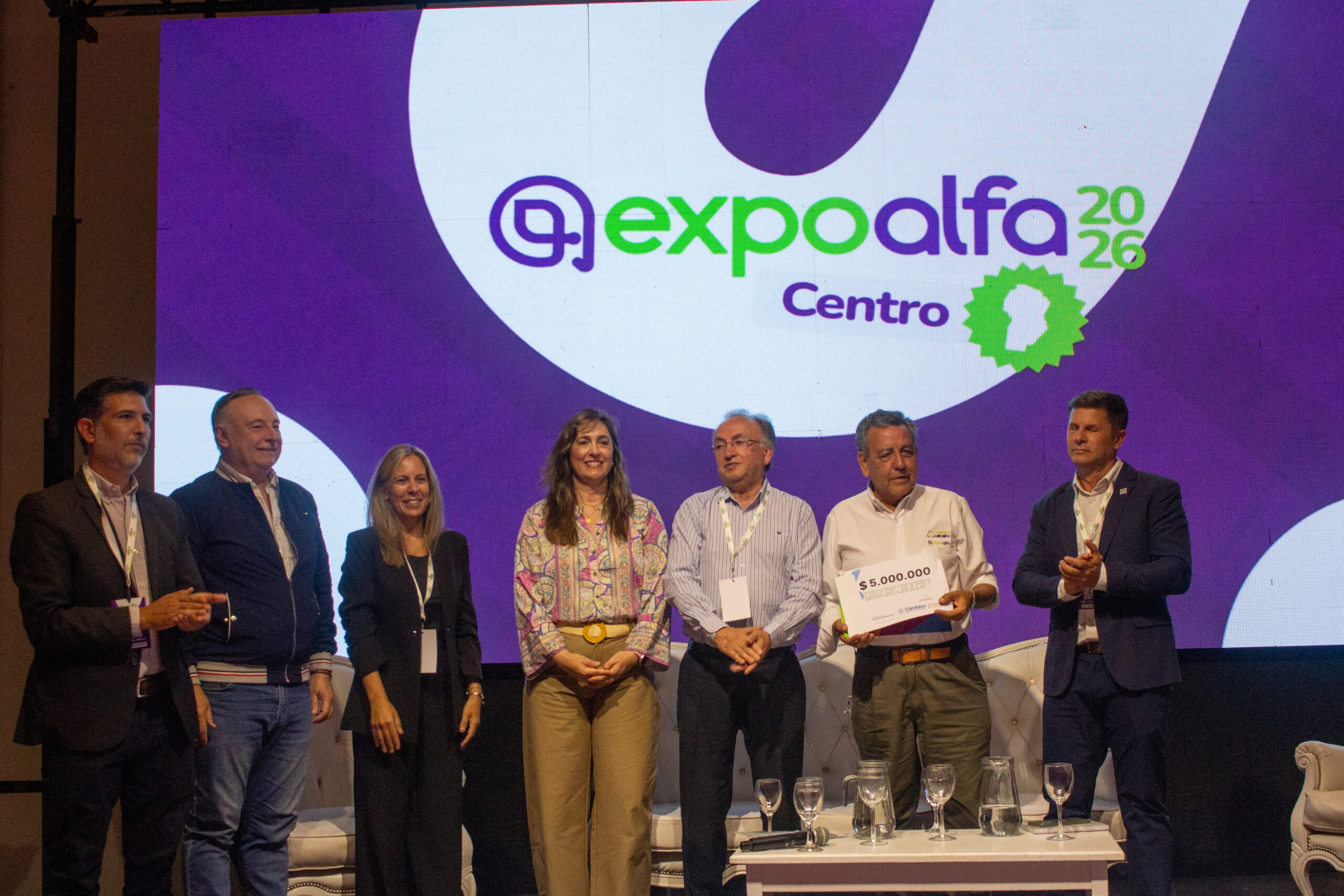
Antonio Lozano, General Director of TodoCampos and head of the organization, together with Daniel Basigalup, presented the progress of World Alfalfa Day, a proposal that has been worked on since the beginning of the year to establish May 23 as World Alfalfa Day.
It is anticipated that a meeting will be held on November 18 to continue working on this idea, and to begin working on the formation of a committee. This proposal already has the support of institutions such as the Argentine Alfalfa Chamber, the Association of Dehydrated Alfalfa Manufacturers of Spain, the Italian Dehydrated Forage Association, the Canadian Forage Association, the Alfalfa Cluster, the World Alfalfa Congress.
Also accompanying are the Argentine Agroindustrial Council, the INTA, the Argentine Chamber of Commerce and Services for the United Arab Emirates, the Argentine Chamber of Forage Contractors, the Córdoba Grain Exchange, the IDEVI, the Salesian Agrotechnical Institute of Colonia Vignaud, the ADENEU SME Center, the UNVM with the Institute of Basic and Applied Sciences, the Faculty of Agrarian Sciences of the National University of Rosario.
Furthermore, in the last few hours the accession of the National Grassland Industry Innovation Alliance of China (NGIIA-China) was confirmed. In terms of media, they support the Dos por el pastor Podcast, Campo Noticias, Casado con el campo and the TodoAgro Group. Support from NAFA and CAFA is pending.
The irons had their place at the hands of Federico Sánchez, product specialist at John Deere Argentina who addressed precision technology in forage machinery: The key to maximizing the quality and yield of alfalfa.
While Miguel Forni, UNL forage machinery professor, gave continuity by delving into the topics related to the machines and every detail of the process.
Another point of the day was focused on industrialization, logistics and the creation of integrative projects so that small and medium-sized producers reach export scale.
With a table titled “The Business and the Table of Producers and Industrialists”, An attempt was made to discuss the challenges, opportunities and strategic decisions that will define the direction of the sector in the coming years.
Argentine alfalfa has shown enormous potential, but consolidating its growth requires a comprehensive vision, greater integration between the field and the industry, and concrete responses to an increasingly demanding global market.
Carlos Bas, Commercial Manager of Mega Alfalfa Argentina, Giovanni Daniotti, from Megafardos del Norte and president of the Alfalfa Cluster, Ezequiel Rojo, head of Agricultural Operations at CADAF and Dario Falvo, partner at AMI (Argen Mixers Industry), presented their views, shared experiences and made it clear that the most important thing before thinking about producing alfalfa is to know who we are going to sell it to.
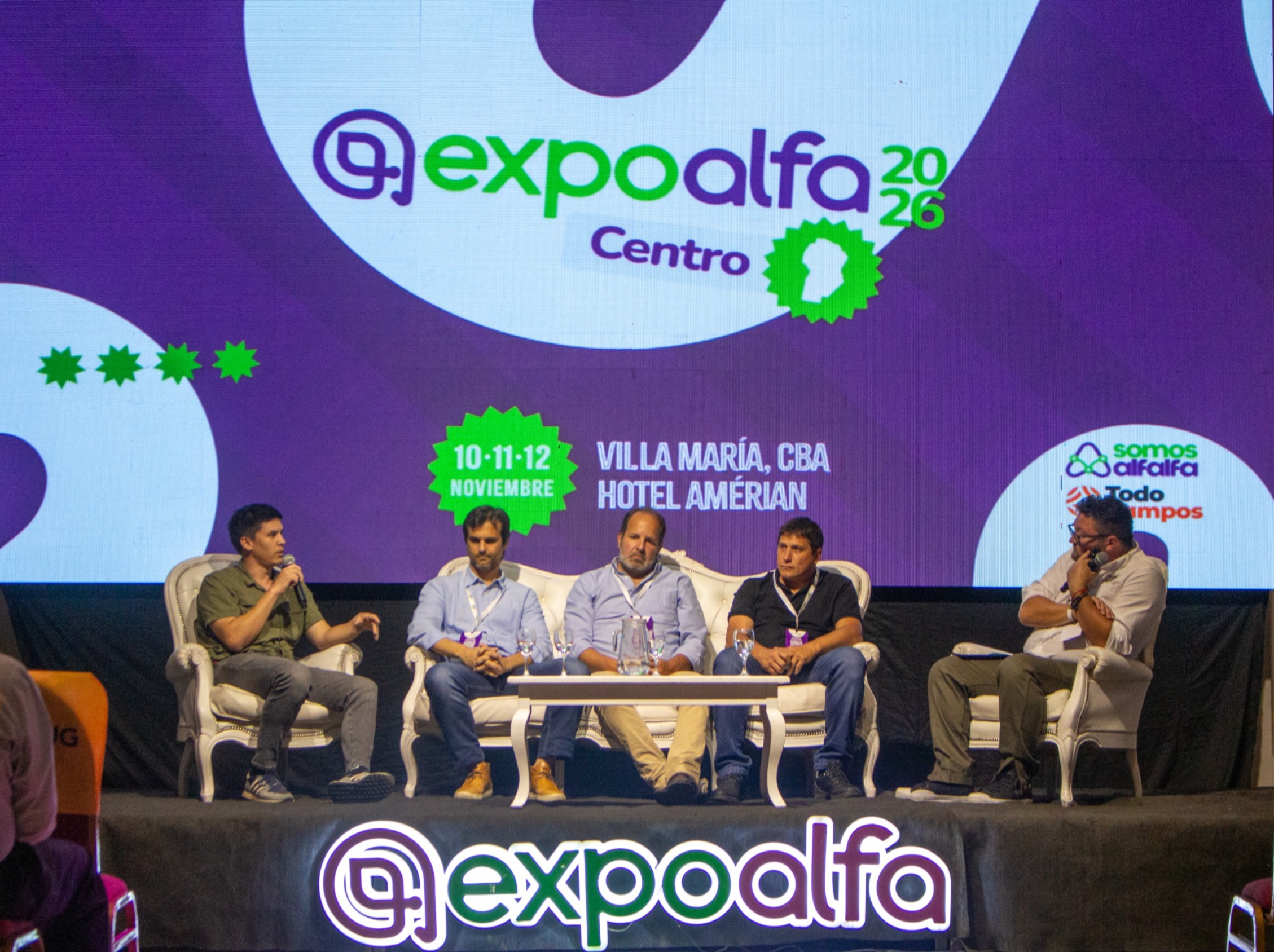
José Brigante, Foreign Trade consultant. President of the Argentine Alfalfa Chamber and Gabriel Olocco, producer and industrialist, addressed the alfalfa business. From production to marketing and how to industrialize quality hay? The importance of drying to achieve homogeneity.
To then give rise to a panel of industrialists who addressed a key topic today, drying and compacting: keys to exporting quality alfalfa.
On the occasion José Martinez, from LasterAgri; Román Daghero, from Zonda Dry, explained the processes and offers to be able to dry alfalfa in various ways and industrialize it, achieving greater efficiency.
In turn, Jorge Pratto, from Nehuen, explained the production process they offer where the dry and compact line is used to achieve compacted bales of 25 kilos with the aim of making the transfer more efficient.
While Pedro Colla, commercial director for Latin America at Imabe explained the alternatives they offer to compact mega bales of approximately 450 and 800 kilos.
These solutions are some of the offers that the market has today to provide solutions to an operational need to lower costs, achieve greater efficiency and be able to channel an export demand that grows month by month.
Engineer Guillermo Piñeiro, from Biogrow, also explained the possibilities offered by the company for this type of season with complex climates and commented on details of FardoPlus, a powder preservative for forage that allows haying with up to 25% humidity, ensuring the quality and nutrition of the hay.
Within the framework of the hay contest, veterinary doctor Leandro Mohamad – General Manager Rock River Latam, explained the details of the importance of measuring to achieve quality hay.
We are convinced that “what is not measured cannot be corrected” that is why we proposed this alternative so that producers can be part of an initiative that allows them to know “where they stand.”
“The data obtained from the samples was important,” the laboratory highlighted and the organization assured that “this bet will be an initiative that we want to maintain over time, we are convinced that what is not measured cannot be corrected.”
As for the results, in pellets the winner was the company Albian from Santiago Daghero.
While in Hay, the results showed the following number:
1 – Megafardos del Norte, by Julio Danniotti.
2 – Fernando Vinovo
3 – Alfafar by Germán Olocco.
Also, economist Carlos Seggiaro spoke about margins, finances and the change of business “chip.” He analyzed the macroeconomic reconfiguration, the drop in margins and the opportunities to industrialize and export alfalfa from Argentina.
The event managed to articulate technical training, commercial linkage and practical demonstration in the field, drawing a clear roadmap to prioritize the crop and enhance its insertion in international markets.
The closure was with a dynamic of forage machinery on a 40-hectare property in front of the Industrial Park in a field owned by Argen Mixer Industry. There the irons went out to the lot to demonstrate in real time their speed, cutting precision and efficiency in making hay.
The meeting served as a platform to promote associative schemes and initiatives aimed at incorporating machinery in industrial and logistics parks, seeking to add value at source.
The combination of the static sample, the dissertations of specialists and the dynamics of “irons in action” generated a favorable environment to provide concrete decision tools for the next production cycles.
With this closure, ExpoAlfa Centro left a clear message: alfalfa stopped being a secondary crop to consolidate itself as a strategic engine of development, technology and foreign exchange for the region and the country.
Source: somosalfalfa.com.ar