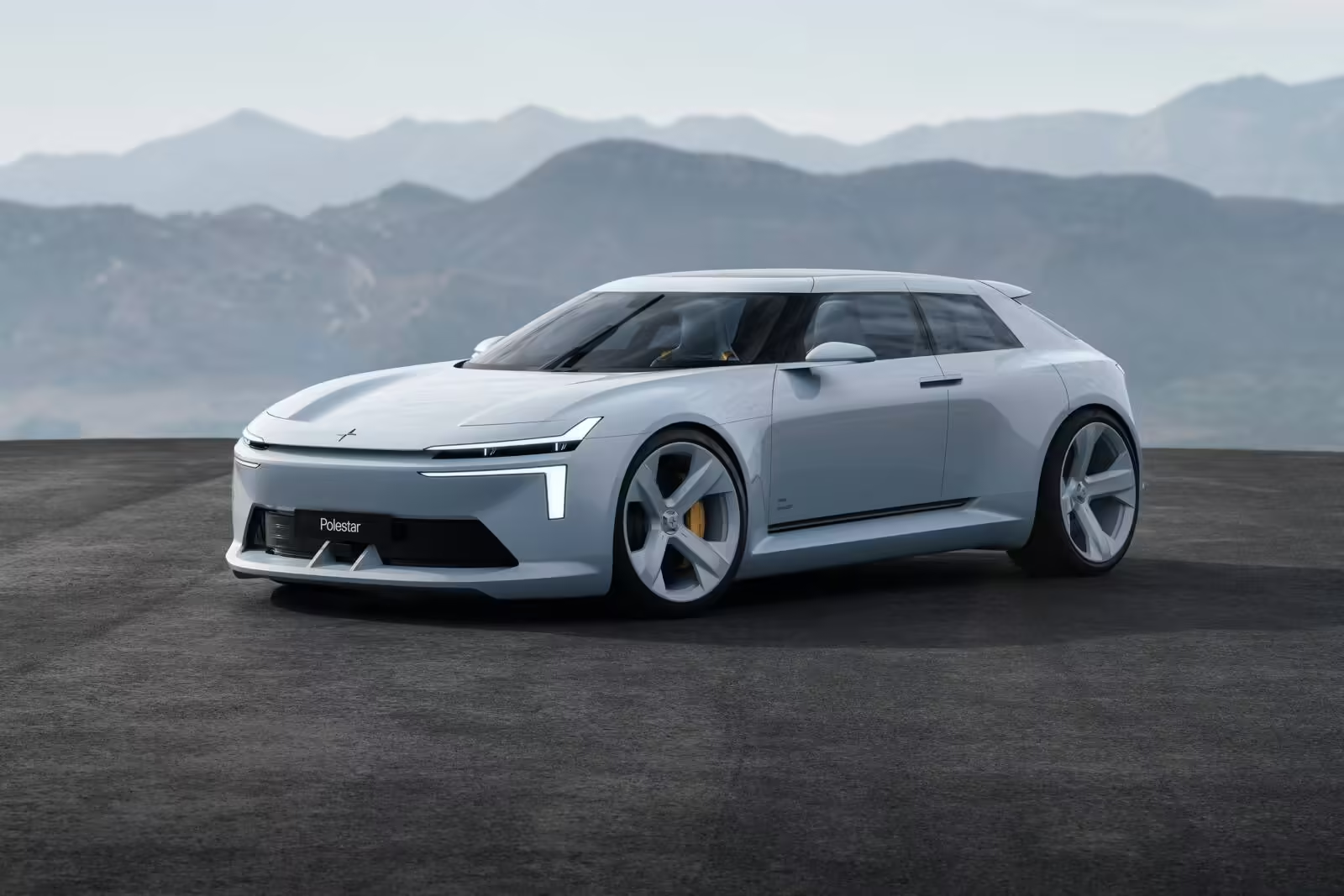

Polestar is using the Formula 2030 concept to reset its design language before two production launches it needs to land
Polestar has revealed the Formula 2030, a low four-door sports car concept that previews design features for the Polestar 2 successor due in 2027 and the Polestar 7. The first showcar overseen by Philipp Römers, Head of Design, it gives physical form to the Swedish brand’s Formula 2030 strategy.
At 4,680 mm long and 1,350 mm tall, it sits below even the Polestar 5 grand tourer. Dual Blade headlights in a front aero wing preview the new Polestar 2’s face, and Single Blade rear lights replace the lightbar.
Inside, a curved 20-inch driver display mounts to the steering column, and eight physical controls below a 12.2-inch centre screen can be set up as rocker switches or rotary dials. Polestar frames the panel as rebalancing physical and digital controls, giving tactile switchgear a larger role.
Performance, Normal and Autonomous modes move the seat and steering wheel together or apart, and a hidden LiDAR unit rises for autonomous driving. Exposed structural parts use low-emission galvanised steel, while the seatbacks use a flax-based composite.
In a statement, Philipp Römers said: “Design should always reflect the values and mission of a brand and that is exactly what we did with Polestar Formula 2030 concept. It is a physical embodiment of how we apply Polestar’s core values of design, performance and sustainability to the next production cars. A bold evolution of our already well-established design DNA to strengthen the brand’s positioning with performance at its heart.”
Source: Polestar
Source: www.automotiveworld.com