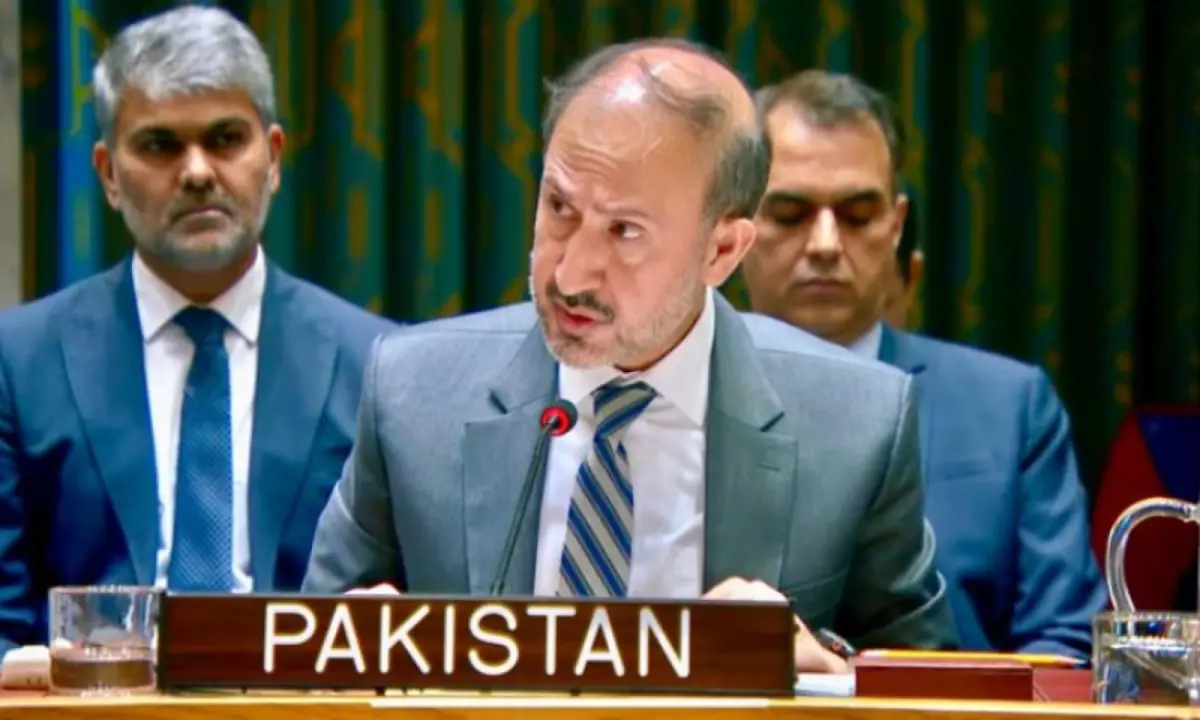

UNITED NATIONS: Pakistan has called for keeping decisions on the use of nuclear weapons under human control and warned that artificial intelligence (AI) systems must never be used to target nuclear command, control and communications systems.
The warning was delivered by Pakistan’s Permanent Representative to the United Nations, Ambassador Syed Haider Shah, during a high-level open debate of the UN Security Council on Wednesday on conflict resolution in an era of rapid technological change.
The ambassador’s remarks carry particular significance for South Asia, where both Pakistan and India possess nuclear weapons, making the security of nuclear command, control and communications systems an important regional concern.
“This is most critical in the nuclear domain, where decisions on the use of nuclear weapons must remain under human control, and AI systems must never be used to target nuclear command, control and communications systems,” Ambassador Shah said.
He cautioned that the rapid development and convergence of emerging technologies were adding unprecedented speed, scale and complexity to international security challenges and could intensify the ongoing arms race.
Ambassador Shah said technology itself was neutral, with its impact depending on the intentions and motivations of those using it. The foremost priority, he stressed, should be to retain human judgement and control at all stages of technological design, development and integration.
He called for appropriate safeguards, regulations and governance frameworks to ensure that technological advances served peace rather than becoming instruments of geopolitical dominance and war.
In the military domain, he advocated restraint and confidence-building measures to reduce the risks of miscalculation and compressed decision-making, particularly in the nuclear domain.
The Pakistani envoy also warned against allowing advanced technologies to become the monopoly of a few powerful countries, arguing that all member states, including developing countries, should participate in their democratic, inclusive and equitable development.
He said measures introduced in the name of technological safety should not become instruments for denying other countries access to technology and infrastructure. All member states, particularly developing countries, retained their inalienable right to the peaceful use of technology, he added.
Shah also highlighted the growing dangers of misinformation, disinformation, fake news and cyberattacks, including attacks on critical infrastructure by state and non-state actors.
“The UN Charter and international law apply in all situations, irrespective of underlying technologies,” he said, calling for collective efforts to clarify the application of international law and take concrete action against emerging threats.
He advocated practical confidence-building measures, including crisis communication, deconfliction and mutual restraint, to reduce mistrust, prevent accidental escalation and manage risks associated with military and foundational technologies.
The ambassador said the fragmented and dispersed nature of emerging technologies required layered governance frameworks, accountability measures and, where appropriate, legally binding instruments.
“Delaying regulation to secure advantage and domination will not work,” he cautioned, adding that discriminatory agendas and forums with selective representation would not help address the challenges.
Pakistan believes discussions on the development and deployment of emerging technologies, particularly their implications for arms control, should take place in inclusive and representative multilateral forums under UN auspices.
While supporting the Security Council’s engagement with emerging technologies, Shah said its discussions should focus on their operational implications, including the implementation of Council mandates in peacekeeping, peacebuilding and conflict resolution.
He also highlighted the potential of artificial intelligence and unmanned aerial vehicles to improve civilian protection and the safety and security of UN peacekeepers.
The country’s envoy added that the use of new technologies, particularly UAVs and AI, by terrorist groups and other non-state actors could also be addressed in the renewal of Security Council mandates.
Source: www.dawn.com