
Teenage athletes from all over the world have descended on Senegal this month to compete in Africa’s first ever Olympic events, the 2026 Youth Olympic Games.
And in Dakar, Senegal’s sports-crazy capital on Africa’s westernmost tip, the locals are ready.
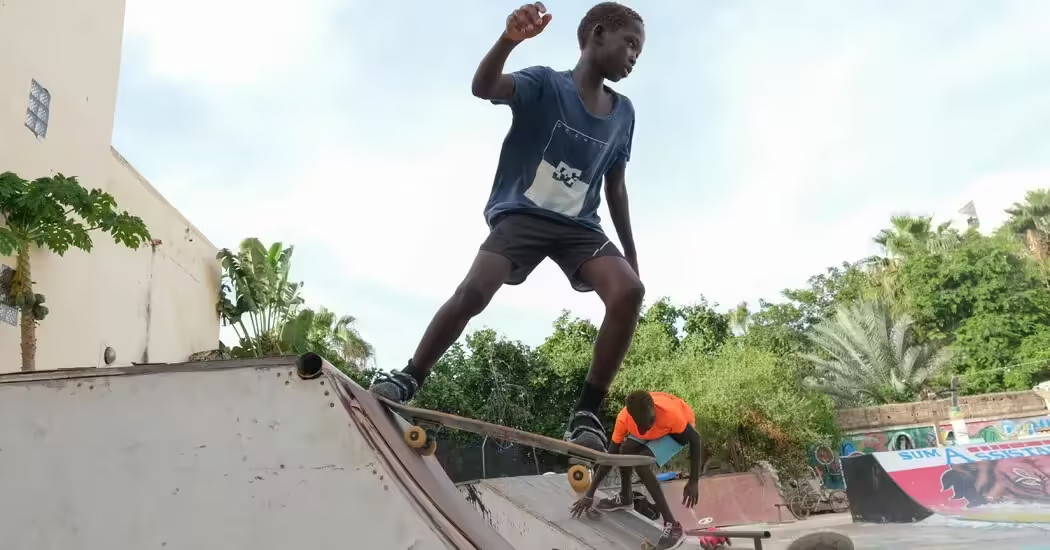
Fitness and athletic prowess have long been all-important here in Dakar. On any given day, ordinary young people put some of the world’s most toned muscles to work, wrestling, skateboarding, surfing and bike riding.
Weight lifters lift homemade barbells formed by pouring concrete into buckets and sticking a piece of metal into it to dry.
And every evening, crowds gather up and down the city’s main coastal road — the Corniche — to run, lunge, jump and use the many outdoor gyms that have opened in the city in the past decade.
“We’re going to beat everyone,” said Zale Baol, a sturdy, solemn-faced traditional wrestler on Koussoum Beach. “Gambia, Ivory Coast, Germany, the United States — everyone. We’re a country of wrestlers.”
He said the key to becoming a successful wrestler was very simple: enough training, and the right nutrition. In the morning, wrestlers should eat Dakar’s favorite breakfast street food, black-eyed pea sandwiches, he said. For lunch, thieboudienne — Senegal’s national dish of rice, fish and vegetables. And for dinner, couscous.
On a recent morning in Pikine, a satellite city on Dakar’s eastern edge, young hopefuls for the beach wrestling team sat on the steps of the national wrestling arena, a Chinese-built outdoor venue decorated with bas-reliefs of wrestlers. They were bracing for the day’s endurance training.
Dakar and the other two cities hosting Olympic events this year have undergone makeovers in recent weeks ahead of the Games. At the newly renovated Iba Mar Diop Stadium, men shoveled gravel until the last minute.
Many Senegalese were delighted by the new works, saying it was good for a struggling economy, and particularly good for the city’s huge cohort of young people.
“Africa has begun to develop,” said Moussa Thiam, an amateur boxer, on a recent evening.
For some of Dakar’s young athletes, though, the Games remained out of reach.
Mr. Mbengue and Ms. Fall each had a different explanation for why the twins were unable to go, and each blamed the other.
But “we are not discouraged,” Mamadou said playfully. “No one in Senegal is better at skateboarding than us.”
Ahead of the Games, few young Dakarois knew how to get tickets to the events, or even what sports would be played.
But away from the venues, Dakar kept up its own routines.
Runners jogged up and down the 198 steps to the city’s giant African Renaissance Monument, depicting a bronze family gleaming in the morning sun.
Others stretched on the sidewalk overlooking the turquoise waters of the Atlantic Ocean and one of Dakar’s most famous buildings, the windswept Divinity Mosque.
“Every country should pray to host the Olympics,” said Zale Baol, the traditional wrestler.
Saikou Jammeh contributed reporting.
Source: www.nytimes.com