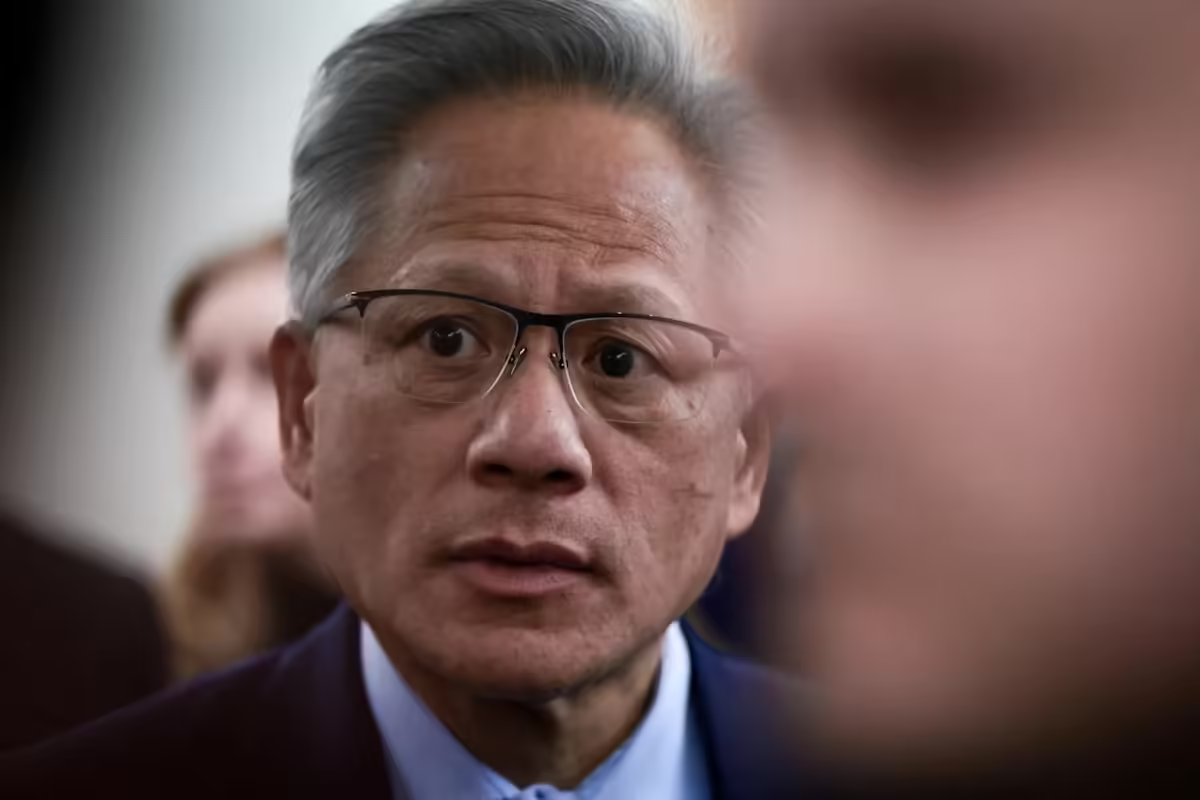

Nvidia (NVDA) CEO Jensen Huang is stepping down as CEO following reports that he had an affair with a fellow executive at the AI giant and after he admitted to having a separate affair with a woman whom US intelligence officials believe is a Chinese spy.
CFO Colette Kress will succeed Huang as interim CEO until the company names a permanent CEO. The chip giant is looking both internally and externally for candidates.
Nvidia also named Harvey C. Jones as its first-ever board chair. Jones previously served as CEO and executive chair of Synopsys.
Nvidia stock plunged more than 12% in early trading.
“Colette has helped lead NVIDIA through a period of extraordinary growth and has a deep understanding of our business, customers, operations and financial position,” Jones said in a statement.
“She is supported by an experienced leadership team that has been instrumental in executing NVIDIA’s strategy and advancing its technology roadmap. The Board has full confidence in Colette and the leadership team, and we expect the company’s operations, customer commitments and product roadmap to continue without interruption.”
Kress, in a statement, said she is committed to building on the work Huang has done to turn Nvidia into the company it has become.
“We will continue advancing the work that has made Nvidia a leader in accelerated computing and AI, and execute on the opportunities ahead. Our focus remains on serving our customers, partners, developers and shareholders,” she said.
According to the New York Times, Huang engaged in a relationship with Nvidia executive Kimberly Powell, who heads the company’s healthcare efforts.
On Sunday, Huang issued a statement admitting to the initial affair, apologizing to his family and Nvidia employees.
According to reports, the woman Huang was seeing, Alice Huang, was a top executive at Singapore-based technology firm MegaSpeed and was allegedly acting as a spy on behalf of the Chinese government.
Nvidia’s board has said it has launched an independent investigation into the matter, but added it has no reason to believe Nvidia trade secrets or national security were compromised.
Huang co-founded Nvidia in 1993 alongside Chris Malachowsky and Curtis Priem, with a vision to bring 3D graphics to the gaming industry.
The company primarily focused on the space for years before releasing its CUDA technology in 2006, allowing users to take advantage of Nvidia’s graphics chips for general-purpose computing.
The company took that a step further in 2013 with the release of its first AI server, the DGX-1. Both CUDA and the DGX-1 gave Nvidia an early lead in the AI hardware race when OpenAI launched its ChatGPT in late 2022.

Source: finance.yahoo.com