
I watched Hailey’s chest without pause, searching for the slightest movement, a tiny intake of breath, any sign of life.
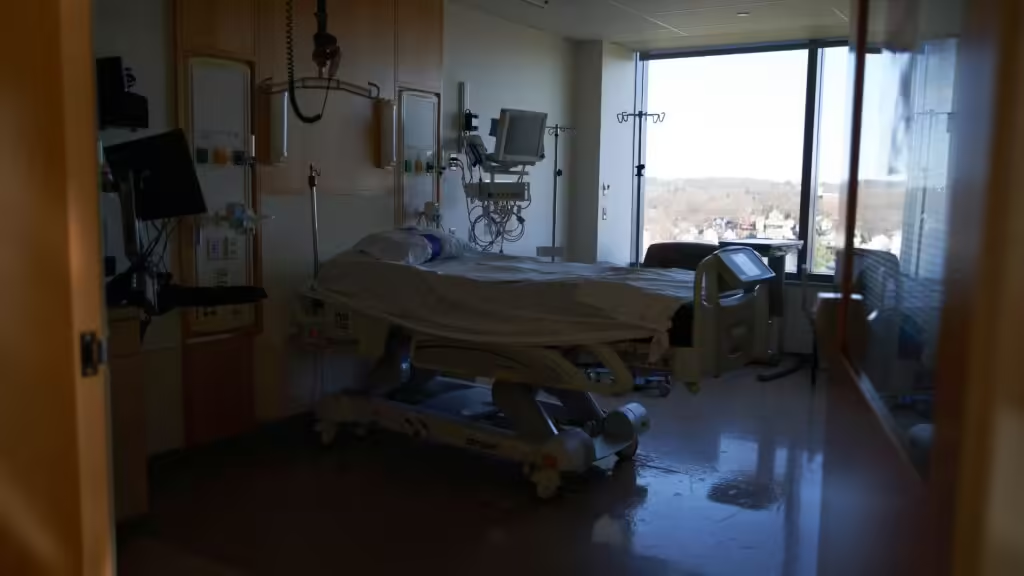
Hailey (not her real name) was 22 years old, a college student who had suffered a catastrophic brain injury in a traffic accident. She lay before me in our neuroscience intensive care unit, her heart beating steadily, her skin warm, a ventilator breathing for her. I was performing an apnea test, the final step in determining whether she had died by neurological criteria. It’s part of my job as a neurointensivist at Oregon Health & Science University. The longest 10 minutes of my life are those I spend watching for any small chest movement as we remove a patient from a breathing machine. I can’t let my eyes wander. I can’t blink. Hailey never took a breath; she was brain dead.
Her parents sat vigil for two days, waiting for her sister to arrive from overseas so she could say goodbye. When they finally accepted that their daughter had died, the organ donation team took over.
Six months later, our ICU received a letter describing the four lives Hailey had saved. Her kidneys went to two grandparents, each now playing with their grandchildren. Her liver saved a young woman dying of hepatitis who was now snorkeling in a tropical ocean. And her heart was beating inside a young man with a fatal congenital heart condition who was now hiking along the coast.
I’ve never forgotten Hailey or the lives she saved, and I believe deeply in organ donation. But starting Nov. 18, new rules from the Organ Procurement and Transplantation Network will change how the organ donation process works, allowing organ procurement organizations to approach families about donation before they’ve decided whether to withdraw life-sustaining treatment.
The goal is to get more viable organs to the more than 100,000 people in the U.S. waiting for life-saving transplants. But I worry this approach blurs the line between the physicians fighting to save a patient’s life and the teams responsible for organ procurement.
That isn’t fair to families, who expect that our sole concern is their loved one’s well-being. Proposing potential organ donation early opens the door to distrust in their ICU care. We should keep that door shut.
Why it’s so hard to determine death
In 2025, the Department of Health and Human Services reported 73 cases in which organ donation had been authorized, but not completed, where donors showed “neurological signs incompatible with organ donation.” The New York Times reported that some patients may not have been dead at the time organ procurement was initiated, often in rural or small hospitals.
These findings raised troubling questions about whether the motivation for higher transplant numbers had taken precedence over careful assessment of the neurological condition of potential donors.
The Uniform Determination of Death Act, accepted by most states, establishes two definitions of death: irreversible cessation of circulatory and respiratory function, or irreversible loss of function of the entire brain, known as brain death.
To patients’ families, brain death is often harder to grasp than circulatory death. Their loved one appears alive: breathing on a mechanical ventilator, heart still beating steadily on the monitor, skin warm and pink. Yet without mechanical support, if their brain no longer functions, their body will no longer function.
Donation after circulatory death (DCD) involves patients with grave prognoses for whom a decision has been made to withdraw life-sustaining treatment. Many have catastrophic brain injuries, although they do not meet the criteria for brain death. Determining whether a patient is an appropriate candidate for DCD requires a physician’s judgment about the patient’s prognosis, a process that is difficult to standardize.
In contrast, medical standards for determining brain death are uniform and widely practiced in the United States. A diagnosis requires three criteria, as we did for Hailey, rigorously assessed: coma with a known cause, loss of brainstem reflexes, and loss of the ability to breathe spontaneously, tested by a strict protocol known as the apnea test.
No one who has been correctly diagnosed with brain death under these criteria has ever recovered. Not one person.
I’m careful to teach our medical students never to say that we “withdraw care” because even when we stop life-sustaining treatment, we continue to care for our patients. Care for the dying is as critical as care for the living.
These decisions require our full attention and the trust of patients’ families, so it’s imperative that a separate organ donation team work alongside us, remaining independent of the physicians treating the patient.
A safer path to more organ donations
Physicians should be working to increase organ donation while enhancing patient safety.
First, we need to better educate people about what it means to be an organ donor. When someone checks “organ donation” on their driver’s license, they should understand how we define death and what that check mark really means.
Second, we can expand access to neurological expertise in underserved areas, particularly small and rural hospitals that don’t have immediate access to neurologists or neurointensivists. A video consultation with a neurologist or intensive care physician at an academic or comprehensive health care institution can aid in assessing the level of consciousness of patients being considered for DCD, before they’re taken to the operating room for organ recovery.
Another way to increase organ donation is to focus on patients who have been declared brain dead. After brain death, families and health care teams have more time to obtain organs in an orderly fashion, facilitating the best outcome for both donors and recipients.
The ICU clinicians taking care of a patient nearing death are often deep in discussions of the differences (and similarities) between DCD and brain death as they apply to their loved one. The discussions are often confusing and cause conflicted emotions in families facing tragedy.
The new organ procurement organization policy allows donation teams to break into this discussion, often long before family and friends have fully grasped the gravity of the patient’s injury. This interruption can subtly blur the distinction between our caring for the patient and obtaining organs for someone else.
Our first priority must always be the patient before us, and ensuring that the family members making decisions on their behalf understand and trust the care we’re providing.
In the ICU we walk the path of brain death and cardiac death carefully, always remembering that organ donation offers a small piece of biological immortality. Our patients are not yet forever gone.
Tarvez Tucker, M.D., is professor of neurology and neurocritical care at Oregon Health & Science University. Her forthcoming book, “The Brain at Twilight: The Neuroscience of Our Last Words and Moments,” will be published in December 2026 by Columbia University Press.
Source: www.statnews.com