
In the 1960s, it was the heartbreaking story of a lost Dalmatian who ended up captured and used in a laboratory for experimentation that ultimately led to the passage of the Animal Welfare Act in the U.S. Flash forward, and in just the last few years and even the last few months, we’ve seen remarkable progress toward phasing out animal testing and research all over the world. But in India recently, there was a faltering step backward that could open up the use of street dogs and cats in testing and research laboratories, as well as protected wild species. Here, Dr. Surat Parvatam, our senior program director for research and toxicology in India, describes this regression and what we’re doing about it.
A new draft law that directs the use of animals in laboratories in India has come out, and already there is an uproar about it. The draft rules—called the Prevention of Cruelty to Animals (Control and Supervision of Experiment, Breeding and Trading of Laboratory Animals) Rules—aim to lay down guidelines for the replacement and reduction of the use of animals in experiments along with breeding, accommodation, care and use of animals in experiments.
However, several glaring loopholes in these draft rules could compromise the ethical treatment of animals used in research and impact the scientific credibility of data that emerges from such animal experimentation.
Several interest-holders across the scientific community, as well as animal welfare advocates, conservationists, environmentalists, and public health activists have raised concerns regarding the clauses which have now been introduced as a part of these draft rules.
Here’s where the rules go wrong.
Putting protected animals at risk
In many countries, it is now illegal to perform experiments on apes. There are also several laws globally prohibiting capture of wild primates.
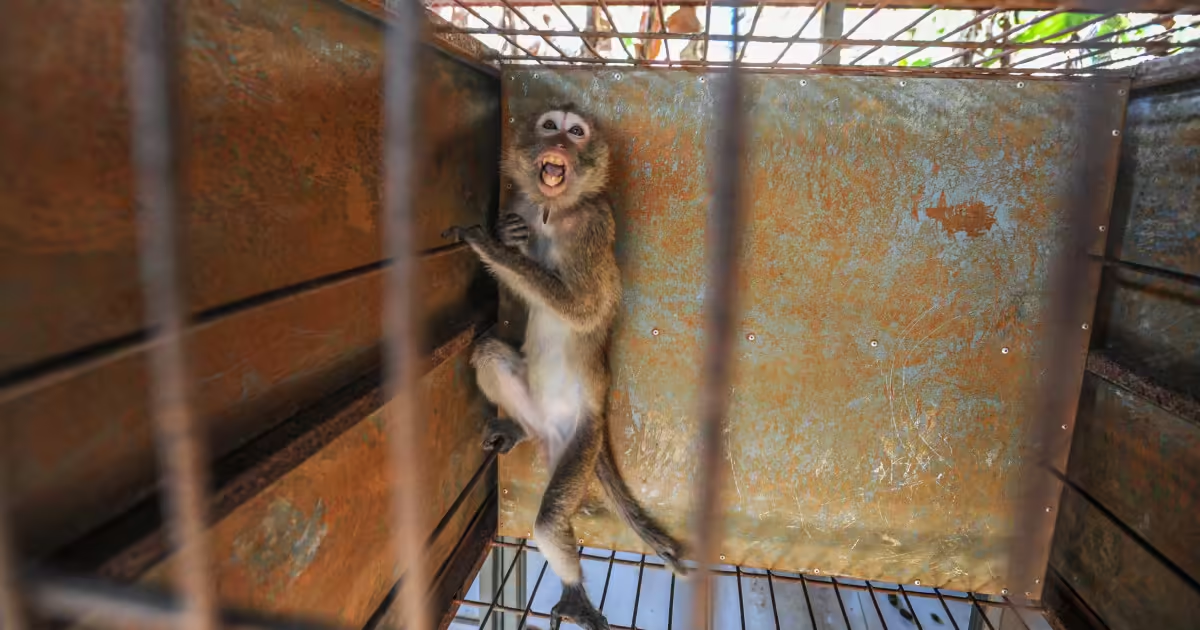
But India’s draft rules include the possibility for a laboratory to make a case for using more kinds of animals in experimentation. This even means the possibility of using wild animals, including animals protected under the Wildlife Protection Act (1972) such as primates.
The rules would also allow the use of stray and feral animals (including dogs and cats) for experimentation.
In addition, some farm animals may even be procured from non-registered breeders and even open markets for use in laboratories. Apart from the significant impact such a measure can have on the scientific credibility of performing experiments on animals (because the animal’s genetic background and medical history is unknown) this also raises the possibility of zoonotic disease risk—a dangerous move that seems nothing less than absurd in the post-COVID era.
The inclusion of these clauses has serious implications on ethical breeding and use of animals.
Who watches the laboratories?
In India, the Committee for Control and Supervision of Experiments on Animals was established under the Prevention of Cruelty to Animals Act of 1960; the statutory body’s core mandate is to ensure that animals are not subjected to unnecessary pain or suffering before, during or after experiments on them.
But one of the critical changes in these draft rules has been shifting the central regulatory oversight from the CCSEA to individual institutional ethics committees. Some experiments on dogs, non-human primates, pigs and other larger species could be cleared by institutional committees rather than this oversight committee. Because five out of the total nine members of these institutional committees belong to the establishment applying for approval, there is a clear conflict of interest in approving experimentation.
A step backward for phasing out animals in laboratories
Another clear oversight is the stark absence of alternatives to animal experiments in the draft rules. Its predecessor clearly mandated that the “replacement alternatives not involving experiments on animals should be given due and full consideration” and that sound justification had to be provided for not using these alternatives to using animals. While the current draft rules aim to cover the guidelines for reduction of animals in laboratories as well as replacement, there is no clear strategy towards this.
Source: www.humaneworld.org