
Delivering the ambition of the Kunming-Montreal Global Biodiversity Framework requires political commitments, and much more. Countries need access to scientific expertise, reliable biodiversity information, appropriate technologies and the institutional capacities to translate these into effective conservation action.
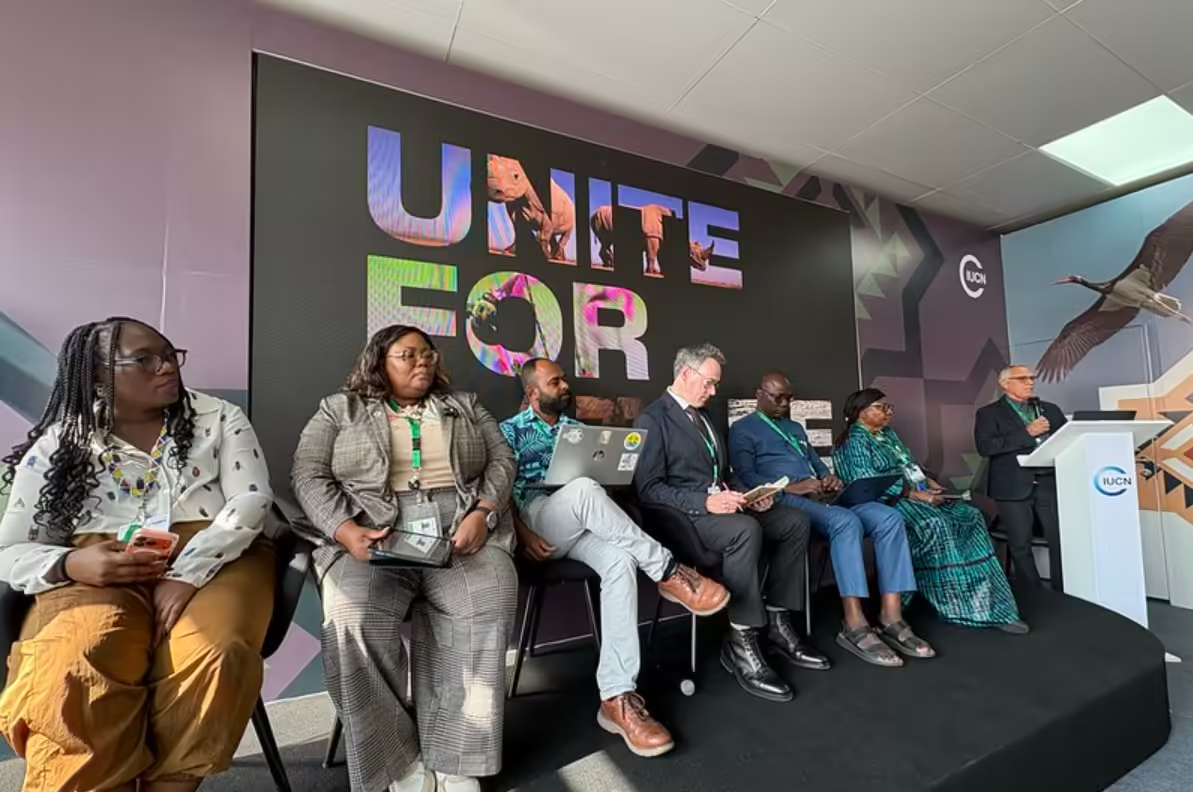
At CBD COP17, an IUCN-convened side event brought together representatives of CBD Parties, Technical and Scientific Cooperation Centres (TSCCs), Indigenous Peoples and local communities (IPLCs), and technical partners to explore how regional scientific and technical cooperation can support this agenda.
Discussions highlighted a common challenge: considerable knowledge, expertise and technical capacities already exist at national and regional levels, but they are not always connected, accessible or adequately resourced to respond to countries’ needs. The priority is therefore to build on existing capacities, strengthen the institutions that hold them and ensure that cooperation delivers practical support on the ground.
Build on existing institutions and regional cooperation
Over more than a decade, the BIOPAMA progamme has supported regional institutions, biodiversity information systems and partnerships across Africa, the Caribbean and the Pacific. Its legacy extends beyond individual projects and technical products: it includes institutional capacities, regional networks, information platforms and relationships that continue to support biodiversity conservation and management. In Africa, these lessons are particularly relevant to the EU’s NaturAfrica initiative, which supports biodiversity conservation and sustainable development across key African landscapes, including transboundary areas.
These investments are now providing foundations for the development of TSCCs. In the Pacific, for example, SPREP, the Secretariat of the Pacific Regional Environment Programme, highlighted how BIOPAMA-supported initiatives, including the Pacific Islands Protected Areas Portal (PIPAP), have strengthened regional knowledge-sharing and technical cooperation. Support to the Cook Islands in identifying the Pacific’s first Other Effective Area-based Conservation Measure (OECM) illustrated the value of sustained technical assistance and regional partnerships.
In the Caribbean, the Caribbean Community (CARICOM) Secretariat, is using partnerships with the OECS Commission, existing regional institutions and information systems, inter alia to strengthen biodiversity data collection, monitoring, reporting and cooperation. The OECS Commission is host of the Caribbean Protected Areas Gateway, an integral part of the Caribbean’s Biodiversity Centre of Excellence. The IUCN-led, EU-funded COLOURS programme is building on these achievements through continued support to regional centres of excellence and partners in the Caribbean and Pacific.
The value of the institutions supported through these collaborations depends on whether the capacities, partnerships and systems developed can be maintained, adapted and mobilised to address new priorities. Future financing should therefore prioritise institutional continuity, technical expertise, maintenance of information systems and long-term partnerships.
At the same time, regional cooperation must build on existing institutions and coordination mechanisms. In the Pacific, SPREP highlighted the importance of working through established platforms such as the Pacific Islands Roundtable for Nature Conservation (PIRT), rather than creating additional processes that place further demands on already stretched national teams.
There is also significant potential for collaboration between TSCCs themselves. Exchanges on biodiversity monitoring, OECMs, technical needs assessments and information systems could enable regions to share approaches and expertise.
Finance the capacity to deliver, in addition to the mandate to coordinate
The discussions also exposed a significant gap between the expectations placed on TSCCs and the resources available to fulfil their responsibilities. SPREP welcomed its selection as the Pacific TSCC but highlighted that the designation had not been accompanied by dedicated financing. Similarly, CARICOM identified sustainable financing and the maintenance of regional capacities as major challenges.
These experiences underline that scientific and technical cooperation requires more than a formal mandate. Identifying country needs, connecting requests with expertise, maintaining information systems, coordinating partners and following up on technical assistance all require dedicated staff and operational resources.
Donors should consider predictable, multi-year financing for these functions, alongside grant-based support and accessible funding arrangements that reflect the limited administrative capacities of many small island developing states. Resources must also support practical, country-driven technical assistance, peer-to-peer learning and sustained follow-up.
Make biodiversity information accessible
Another priority emerging from the discussion was the need to improve how biodiversity information is collected, managed, shared and used.
Senegal illustrated the scale of the challenge. Despite progress in expanding marine protected area coverage, the country faces significant gaps in biodiversity monitoring, data harmonisation, technical skills and coordination among institutions producing biodiversity information. Its priority is to develop participatory national biodiversity information systems that bring together data from government agencies, universities, communities and other actors, while ensuring that information is shared back with those who contributed to it.
The experience of South African National Biodiversity Institute (SANBI)’s TSCC in Southern Africa also demonstrated the value of starting with specific country implementation needs. By translating KM-GBF targets into concrete scientific and technical activities, SANBI identified demand for targeted technical assistance, peer learning and joint knowledge development – approaches countries valued more than generic training.
Across regions, the discussion highlighted that the problem is not always a lack of data. Researchers, NGOs and communities already generate substantial information, but it is often fragmented or inaccessible. Regional centres can play an important role in connecting these contributions with national and regional priorities, building on BIOPAMA’s experience of linking local information with regional and global systems.
Investment should therefore focus on interoperable information systems, appropriate technologies, national data management capacities and clear governance arrangements addressing data ownership, access and sharing.
Put Indigenous Peoples and local communities at the centre
Scientific and technical expertise is not confined to formal institutions. Indigenous Peoples and local communities hold essential knowledge and practical experience in biodiversity conservation, monitoring and resource management. Their contributions must be recognised within scientific and technical cooperation, with appropriate safeguards for knowledge ownership, access and use.

IIFB, the International Indigenous Forum on Biodiversity, emphasised the importance of stronger engagement between IPLC organisations and TSCCs, particularly at regional level. This requires more than consultation: communities should be recognised as knowledge holders, technical partners and contributors to decision-making, with their participation appropriately supported.
Action for sustained cooperation
The discussions at the CBD COP17 pointed to a practical agenda: strengthen regional institutions, finance the coordination and technical capacities required to deliver, improve access to biodiversity information, recognise community knowledge and connect existing expertise with country priorities.
For governments, this means integrating scientific and technical cooperation into national biodiversity planning and ensuring that support responds to implementation needs. For regional institutions, it means acting as effective connectors, mobilising expertise and avoiding duplication. For IUCN and its partners, it means making technical knowledge and networks more accessible and supporting practical cooperation across regions. For donors, the opportunity is to build on investments already made, particularly through BIOPAMA, and provide the sustained support needed to translate established capacities into tangible contributions to KM-GBF implementation.
As IUCN reflected in closing the discussion, the challenge is not necessarily a lack of capacity. Considerable knowledge, expertise and experience already exist at local, national and regional levels. The question is how to recognise and mobilise these capacities, bring the right actors together and ensure that cooperation responds to what is needed.
Article drafted by IUCN based on the outcomes of the CBD COP 17 side event: “Connecting regions, accelerating action: strengthening the TSCC network for KM-GBF implementation”
Source: iucn.org