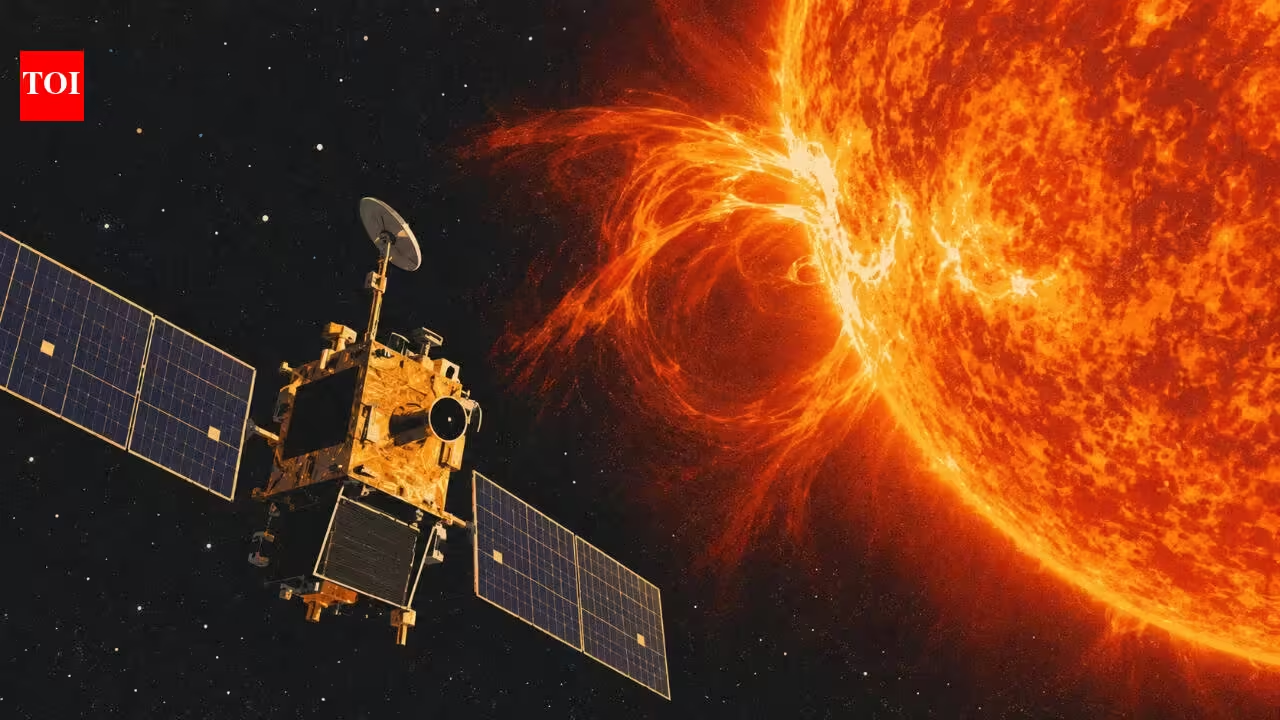

The Sun may be millions of kilometres away, but powerful eruptions on its surface can have consequences for life on Earth. From satellite-based navigation and communication to electricity networks, several technologies people depend on can be affected when these eruptions send enormous amounts of charged particles towards our planet.India’s Aditya-L1 solar mission has helped scientists uncover a previously hidden aspect of how these eruptions behave. The discovery could help researchers better understand how solar storms travel through space and, eventually, improve predictions of when they might reach Earth.Scientists from the Indian Institute of Astrophysics (IIA), Bengaluru, found that a solar eruption observed in August 2024 did not expand uniformly like a symmetrical bubble. Instead, it expanded unevenly, developing an asymmetric shape.The finding, published in The Astrophysical Journal Letters, challenges a commonly used assumption about how these eruptions expand close to the Sun. Researchers arrived at the conclusion by combining observations from Aditya-L1’s Visible Emission Line Coronagraph (VELC), images from Nasa‘s Solar Dynamics Observatory and three-dimensional modelling.But why does the shape of an eruption matter? And how could understanding its movement help scientists predict solar storms that can disrupt satellites, navigation systems and power infrastructure?
What are solar eruptions and why do they matter?
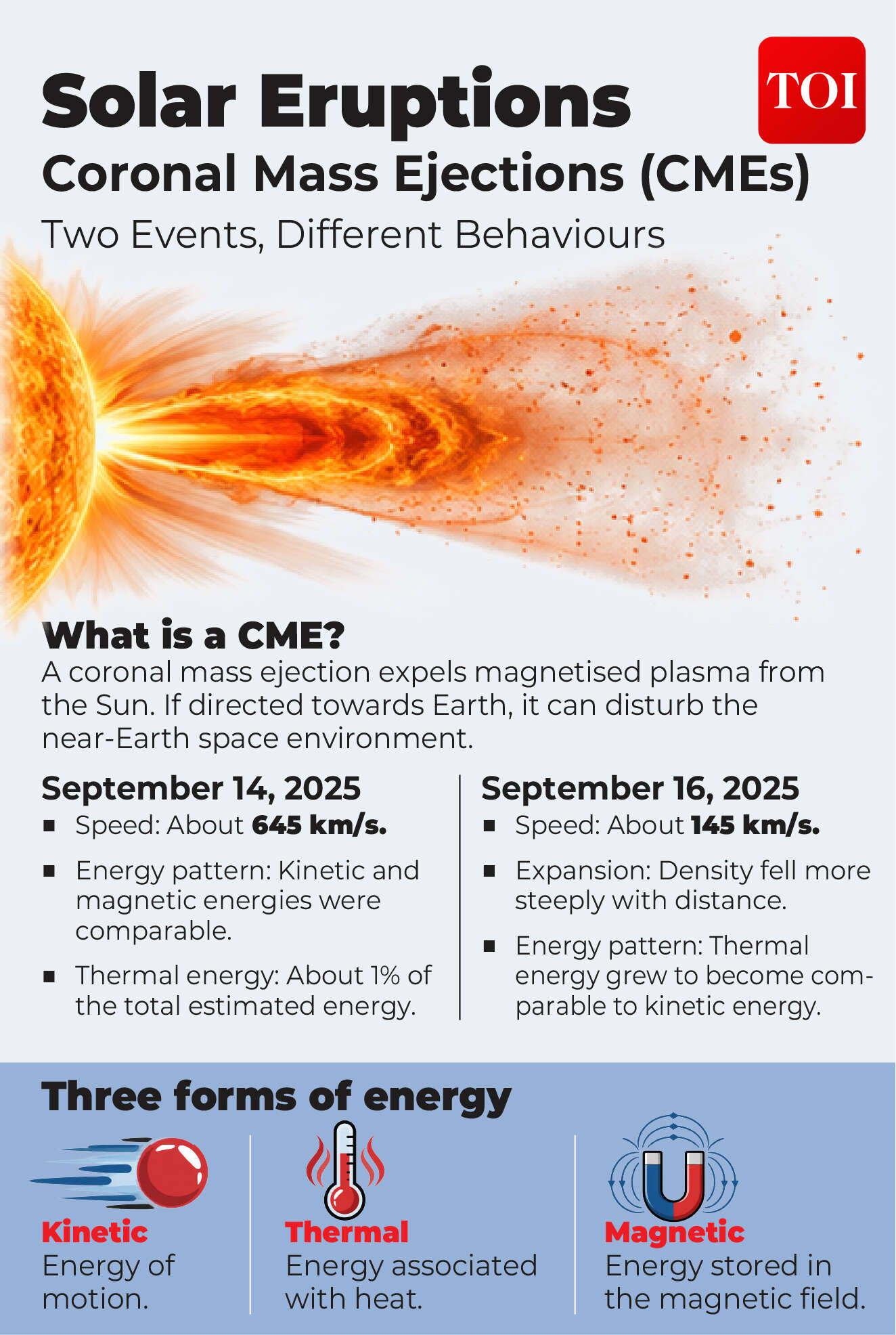
The Sun is not a completely stable ball of hot gas. Its magnetic field is constantly changing, creating conditions that can trigger powerful eruptions from its outer atmosphere.One such phenomenon is a coronal mass ejection (CME). It involves the release of enormous quantities of hot, magnetised plasma from the Sun’s outermost atmospheric layer, known as the corona. These eruptions can travel through interplanetary space at high speeds, carrying magnetic fields and charged particles with them.When a CME is directed towards Earth, it can interact with the planet’s magnetic field and trigger a geomagnetic storm. The strength of the disturbance depends on several factors, including the speed and magnetic properties of the incoming eruption.
What are coronal mass ejections?
Such storms are not merely astronomical events. They can affect technologies that modern societies increasingly depend on, particularly those operating in space or relying on satellite-based systems.Satellites can experience disruptions to their operations and, in severe cases, damage to onboard electronics. Solar activity can also affect radio communications and interfere with the accuracy of satellite-based navigation systems such as GPS. Strong geomagnetic disturbances can induce electrical currents in power transmission networks, potentially putting transformers and other grid equipment under stress.The effects can extend to aviation, particularly high-frequency radio communications and operations on polar routes, where exposure to space-weather disturbances can be greater.Chethan Kumar, a space expert and journalist who has extensively covered the extraterrestrial field, said solar storms can affect several systems simultaneously, including electricity supplies, radio signals and satellite-based applications.“Solar storms are also known to interfere with positioning services, so your GPS can get affected. When GPS gets affected, your air travel becomes less reliable, and it’s a cascading effect,” he said.This makes the ability to monitor and forecast solar activity important for satellite operators, communication networks, aviation authorities and power-grid managers.However, predicting the behaviour of a CME after it leaves the Sun remains a complex scientific challenge. Scientists need to establish not only where an eruption is heading but also how fast it is moving and how its structure changes as it travels through space.
Why are solar storms difficult to predict?
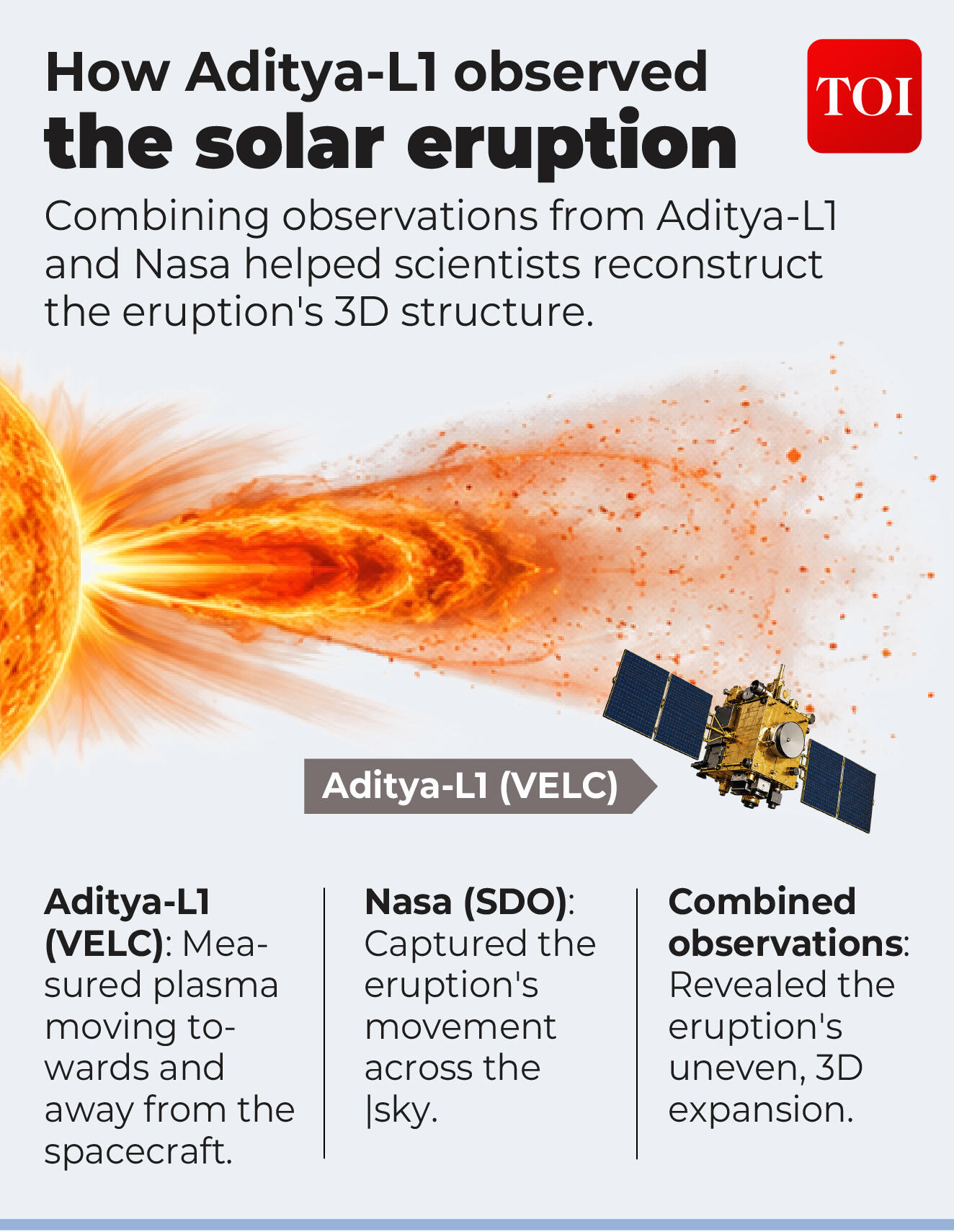
One of the biggest challenges in studying CMEs is understanding their movement in three dimensions, particularly during the initial stages of an eruption.Scientists use instruments called coronagraphs to observe CMEs. These instruments block the bright solar disc, allowing researchers to study the much fainter corona and track eruptions as they move away from the Sun.
How Aditya-L1 observed the solar eruption
However, conventional coronagraph images primarily capture movement across the observer’s field of view. In other words, they show how an eruption travels across the sky but cannot directly establish how fast the plasma is moving towards or away from the observer.This missing information is important because a CME is a three-dimensional structure, not a flat object moving across an image.Two eruptions that appear similar in conventional images could have different three-dimensional shapes and expansion patterns. Their interactions with the surrounding solar wind could therefore differ, potentially affecting how their speeds change during propagation.Scientists have traditionally relied on observations from multiple spacecraft positioned at different locations to reconstruct the three-dimensional evolution of CMEs. While this provides valuable information, studying eruptions close to the Sun remains particularly challenging because they evolve rapidly during these early stages.This is where Aditya-L1’s VELC instrument offers an additional observational capability.
How Aditya-L1 uncovered the hidden dimension
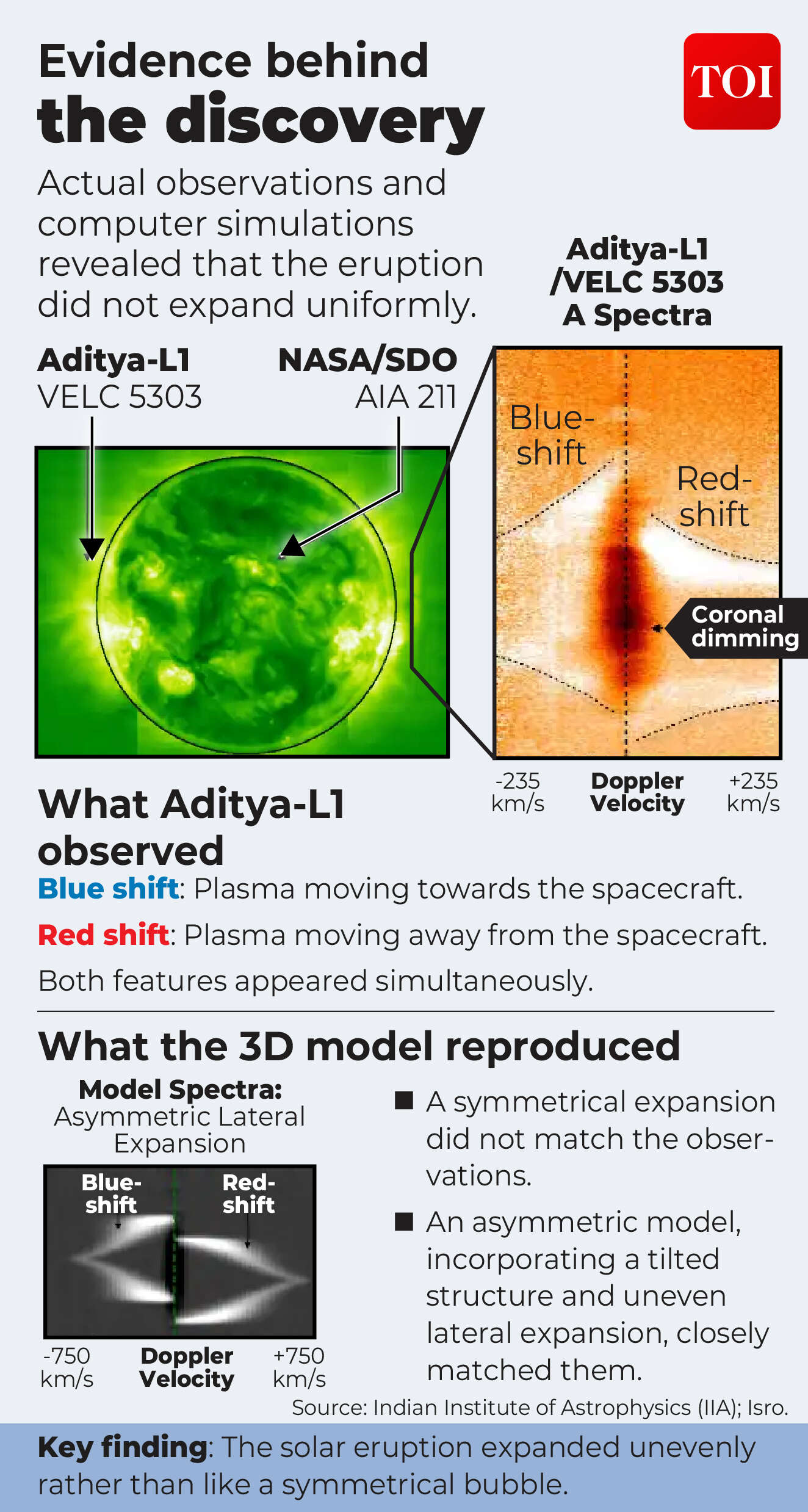
VELC is one of the primary scientific instruments onboard Aditya-L1. It was developed by the Indian Institute of Astrophysics in Bengaluru, with substantial support from Isro.Unlike instruments that only capture images, VELC also records spectra, allowing scientists to study changes in the wavelength of light emitted by the solar corona.The technique is known as Doppler spectroscopy. It is based on the principle that the wavelength of light changes depending on the movement of the source relative to the observer.For instance, when plasma moves towards an observer, the light it emits shifts towards shorter wavelengths, known as a blue shift. When it moves away, the wavelength shifts towards the longer, red end of the spectrum.
Two observations combined.
This allows scientists to measure movement along the line of sight, the direction between the observed object and the observer, which conventional images cannot directly reveal.During the CME observed on August 5, 2024, VELC detected an unusual pattern in the spectrum. Researchers observed two distinct branches of emission appearing simultaneously on opposite sides of the regular coronal emission line.One branch was shifted towards shorter wavelengths, indicating plasma moving towards the observer, while the other shifted towards longer wavelengths, indicating plasma moving away.The observations suggested that different parts of the expanding CME were moving in opposite directions along the line of sight.Meanwhile, images captured by Nasa’s Solar Dynamics Observatory showed how the eruption was propagating across the sky.The researchers combined the two sets of observations to understand the eruption’s three-dimensional behaviour.To interpret the unusual spectral pattern, the IIA team developed a three-dimensional geometric and kinematic model of the expanding shell-like CME structure. They varied the model’s parameters to determine which configuration could reproduce the observations recorded by VELC.The results showed that a symmetrical expansion could not adequately explain the observed spectral features. However, when the researchers introduced a tilted structure and asymmetric lateral expansion, the simulated spectra closely matched the actual observations.The combination of spectroscopic measurements, solar images and three-dimensional modelling provided evidence that the CME had expanded non-uniformly in the low corona, the region of the Sun’s outer atmosphere closest to its visible surface.
Why does the shape of a solar eruption matter?
The discovery is important because the shape and expansion of a CME can influence how it travels through the heliosphere, the vast region of space dominated by the Sun’s solar wind and magnetic field.As a CME moves away from the Sun, it interacts with the surrounding solar wind. These interactions can affect its speed, with the solar wind exerting a drag force on the expanding structure.An eruption’s shape and expansion pattern could influence the extent of this interaction. A CME expanding differently in different directions may therefore experience different levels of drag compared with one expanding uniformly.This can make it more difficult to estimate how its speed will change during its journey towards Earth.For scientists monitoring space weather, even small differences in the estimated speed and trajectory of a CME can matter when calculating its potential arrival time.Understanding the eruption’s three-dimensional structure close to the Sun could therefore help improve models used to track its subsequent movement through space.The latest study does not establish that all CMEs expand asymmetrically. It examines one particular eruption observed on August 5, 2024. However, it provides evidence that assuming a symmetrical, bubble-like expansion may not always accurately represent how these structures evolve.Further observations will be needed to establish how frequently such asymmetric expansion occurs and how significantly it affects CME propagation.
Can satellites protect themselves from solar storms?
Satellite operators make preparations to deal with space-weather events, but these measures have limitations, particularly during very large solar storms.Kumar said satellites are equipped with thermal protection and operators use space-weather predictions to plan for potential disturbances. When forecasts indicate a threat, operators may attempt to change a satellite’s orbit or direction.“But if there’s a massive event, no matter what you do, your planning doesn’t work,” he said.He added that orbit manoeuvres, including moving satellites to a higher orbit or changing their direction, can be expensive and may not always work.Referring to the impact of solar storms on Starlink satellites, Kumar said there are instances when replacing disrupted satellites can be a more practical option for operators able to launch new ones frequently.He said the effects of solar storms should not be presented as an inevitable catastrophe for space infrastructure.Kumar added that solar storms have existed for as long as the Sun and that satellites have been operating for around 70 years. Such events can pose a threat, but that does not mean every satellite will be affected or destroyed when a large CME occurs.
Could Aditya-L1 help improve solar-storm forecasts?
The broader significance of the research lies in its potential contribution to space-weather forecasting.Scientists need to understand the direction, speed and expansion of a CME to estimate whether it could reach Earth and when it might arrive. Better observations of its early evolution could help refine the models used to make these predictions.
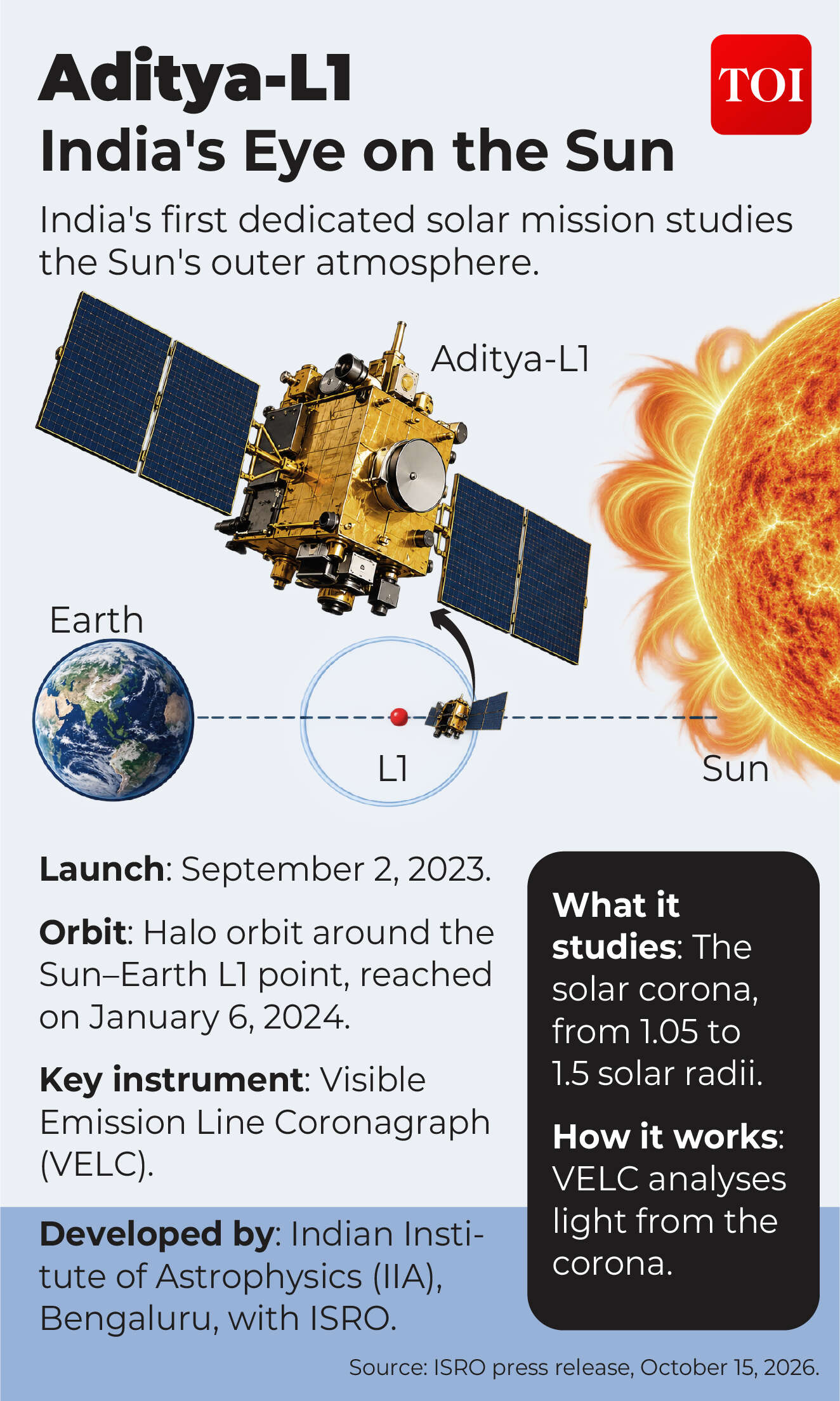
About Aditya-L1
If researchers can reliably reconstruct the three-dimensional geometry of CMEs using VELC’s spectroscopic measurements, it could provide an additional way to study eruptions without depending entirely on observations from multiple spacecraft positioned at different vantage points.This information could eventually be useful for agencies monitoring space weather and organisations responsible for operating satellites, communication networks and power infrastructure.For India, which increasingly relies on satellite-based services for navigation, telecommunications, weather monitoring and disaster management, improving the understanding of solar activity has wider technological significance.However, the research is an early step towards that goal rather than a ready-to-use solar-storm warning system. The study has demonstrated how VELC can help constrain the three-dimensional geometry of an eruption by combining spectroscopy with imaging observations. It has not yet been established that the instrument can independently predict the precise arrival time or potential impact of an Earth-directed CME.Isro said further studies would help establish how reliably VELC spectroscopy can determine the propagation direction, velocity and expansion of CMEs.By providing a new way to examine how solar eruptions evolve close to the Sun, Aditya-L1 could help scientists build a more complete picture of these powerful events. The eventual goal is to understand their behaviour well enough to improve predictions of their journey through space, and prepare better for the disturbances they could cause when they reach Earth.
Source: timesofindia.indiatimes.com