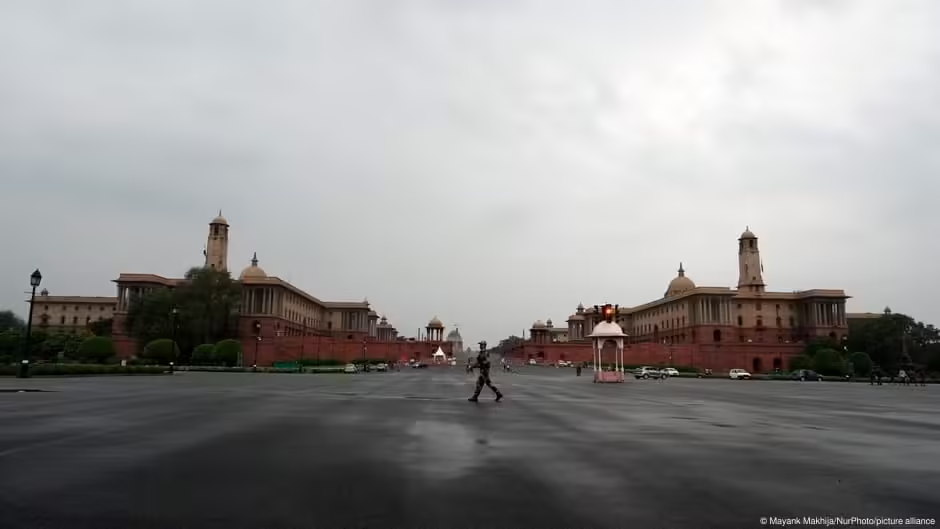

Prime Minister Narendra Modi’s government has approved the development of a massive museum in the heart of India’s capital, New Delhi, estimated to cost around $340 million (around €306 million).
The ‘Yuge Yugeen Bharat Museum’ — which was first announced by Modi in 2023 — is being billed as the museum “with the largest display area in the world.”
The Sanskrit name of the museum translates to ‘India through the ages’. The project has been envisaged as the country’s landmark museum, the government said, and will showcase elements of Indian history and civilization, which spans thousands of years.
Modi hails ‘timeless richness’ of Indian civilization
The century-old North and South Blocks in New Delhi’s Raisina Hills — the seat of the Indian government — will be reused for the museum.
The colonial-era twin blocks once housed government offices, including Modi’s own, before they were vacated over the last year as part of the Modi government’s redesigning of India’s hub of political power.
The Hindu nationalist government has long sought to emphasize India’s pre-colonial cultural identity.
“Buildings that have been centres of governance will now become a place where millions can discover, experience and celebrate the timeless richness of our civilisation,” Modi wrote on X on Wednesday night.
Calling the museum a “magnificent celebration” of India’s “civilizational journey”, Modi said the museum’s galleries will bring to life aspects including ancient knowledge systems, mathematics, astronomy to architecture, art, languages and spirituality, through “immersive experiences.”
Inaugural gallery to open in 2027
According to a press release from the Indian cabinetthe museum will encompass an area of nearly 178,509 square meters with the ability to welcome some 10 million visitors a year.
The finalization of the project isn’t planned until 2030/31, but the first gallery on the theme of “adornment” will open its doors to the public next year, with more galleries gradually opening after that.
The content and collection analysis for the museum is currently underway, with the government having identified some 1.8 million objects for possible display from national and state museums, alongside archaeological and private collections.
Source: www.dw.com