
November 11, 2026
Delhi air pollution: Central body says air quality data gap due to methodology ‘differences’ not ‘underreporting’
India’s Central Pollution Control Board (CPCB) has issued a clarification on data gap concerns in New Delhi after pollution monitoring in the capital came under scrutiny on Diwali night with official data showing a much lower Air Quality Index (AQI) than private platforms and reports saying that several of the city’s monitoring stations went blank.
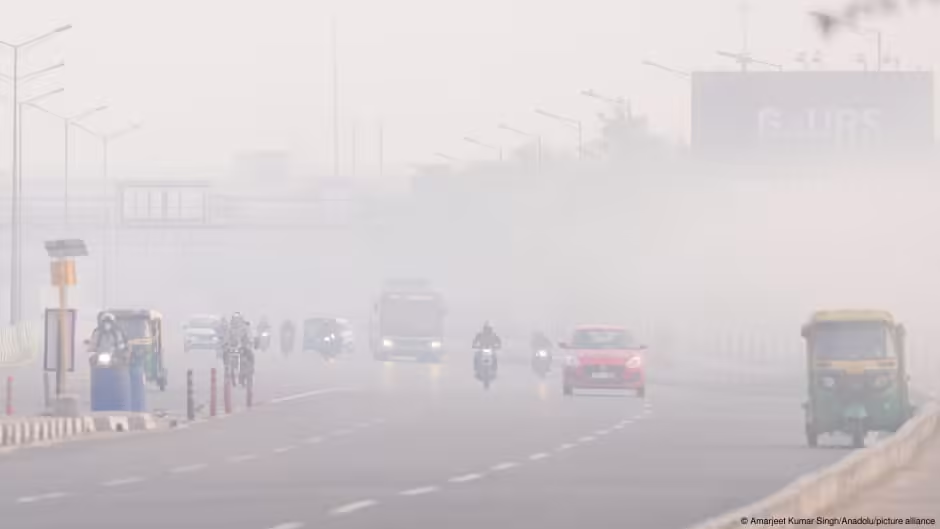
Celebrations during the Hindu festival of Diwali on Sunday blanketed New Delhi and other surrounding areas in a dense and toxic smog as revelers defied a firecracker ban, adding to the region’s seasonal pollution woes.
As smoke and particulate matter from the fireworks kept being released into Delhi’s airan alarmingly wide difference was seen in air pollution figures between official government data and the numbers on private websites and applications.
The CPCB’s app showed the AQI at 400 on Diwali night while numbers on private platforms breached the 2,000 mark.
The difference in AQI values was “attributable to differences in measurement of pollutant concentration and in methodology, and not to underreporting,” the CPCB said in a statement on X, published Tuesday night.
The anti-pollution watchdog further added that analyzers under its National Air Quality Index (NAQI) reporting methodology, introduced in 2015, were calibrated to measure particulate matter levels of only up to 1,000 micrograms per cubic metre.
Air quality monitors blackout
Indian media outlets this week reported that several of the capital’s 59 to 60 air pollution monitoring stations went dark on the festival of lights and stopped giving data, when pollution was at its peak in the night.
The Delhi Pollution Control Committee (DPCC), one of the agencies that operate the capital’s monitoring stations, later released the missing data which showed one area of the city witnessing an hourly PM 2.5 concentration of 3,744 micrograms per cubic metre late on Diwali night.
The level was 60 times the national average but CPCB said the readings were not used to calculate the AQI as “the designed system of automated data validation treats hourly readings beyond the calibrated range as outside range.”
“During extreme episodes, which are occasional like Diwali firecracker bursting, this may appear as a data gap at the particular station concerned, and those hours do not contribute to the 24-hour average of relevant pollutant for concerned station,” the body said.
The CPCB went on to say that it is reviewing its existing methodology, considering the advancements in monitoring technology and international practice.
“Internal deliberations and consultations with respect to processing of data beyond system design range are underway,” it said.
Source: www.dw.com