
Has Tom Brady ever won a game against a bitter rival by diving onto a loose ball and securing a turnover in the dying seconds? Has Joe Montana? Or Patrick Mahomes?
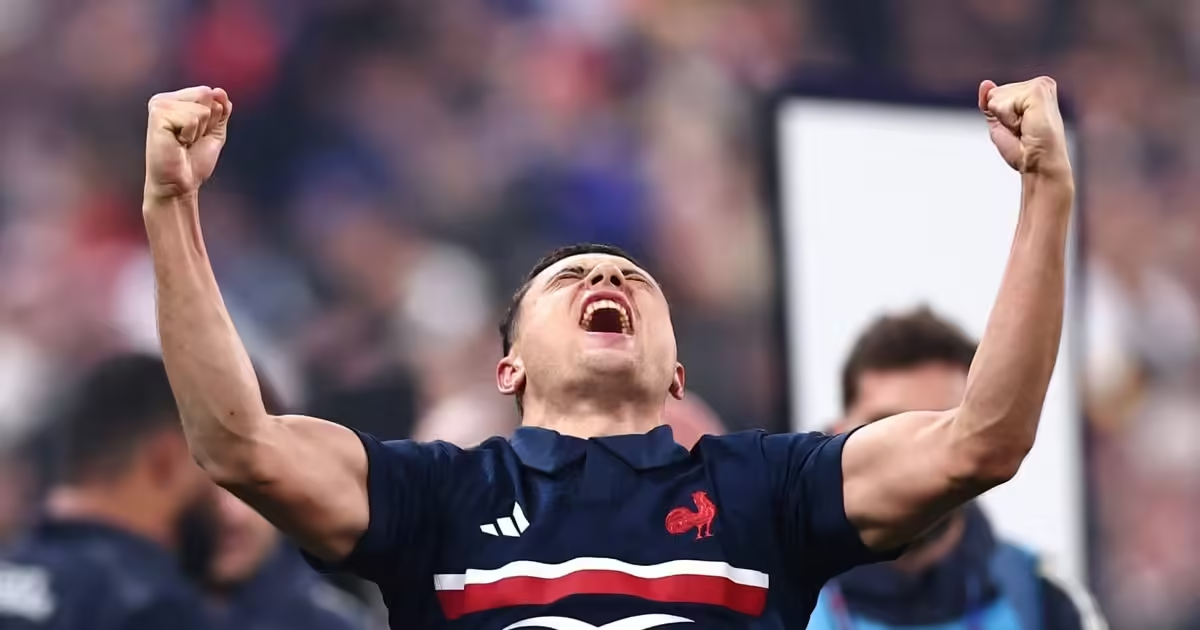
That is what Antoine Dupont, French rugby’s ‘quarterback’, contender for the title of greatest player of all-time and the sportsman voted more popular than football superstar Kylian Mbappe in his own country, did inside the cauldron of the Stade de France on Friday night.
After a mighty tackle from Louis Bielle-Biarrey dislodged the ball from South Africa’s Jesse Kriel, Dupont, all 5ft 9in (174cm) of him, pounced. There was nothing glamorous about it. No dazzling footwork or outrageous pass. Just a player throwing himself into the fray and securing possession when his country needed him most.
Antoine Dupont dives for the loose ball to help secure possession (David Rogers/Getty Images)
It was an act that captured the heart and character behind France’s extraordinary 21-19 victory against the double world champions. The Springboks had shattered Dupont’s World Cup dream in 2023 by edging their quarter-final by a single point. They returned last year to inflict another painful defeat in France’s capital. Before kick-off this time, there were scores to settle and old wounds to heal.
“We compensated mistakes with an unbelievable energy and that is why we won,” Dupont said. “We were proud to represent the French team with a remarkable mindset.”
That pride would carry France through a bruising second half in which South Africa threatened to overwhelm them with their dominant scrum and rolling maul.
Think of the latter as rugby’s version of the ‘tush push’, the short-yardage NFL play made famous by the Philadelphia Eagles, in which quarterback Jalen Hurts is propelled forward by team-mates shoving him from behind.
South Africa’s version — as shown below, which led to Malcolm Marx scoring — involves a rolling mass of forwards weighing as much as an American buffalo, with the ball protected somewhere at the back. It is crude and uncompromising. You know what is coming, but good luck stopping it.


And France scarcely could. They conceded repeated scrum penalties, a clear sign of their inability to withstand the Springboks’ sledgehammer, yet somehow became the first northern hemisphere side in more than two years to beat South Africa.
Perhaps more remarkable was that they managed it with a makeshift back line, concocted amid an injury crisis that had forced France head coach Fabien Galthie into a gamble.
Dupont wore the No 10 shirt but frequently occupied his familiar position at the base of the ruck. Maxime Lucu wore No 9 but operated as first receiver, distributing the ball as a conventional fly-half would. Galthie later revealed the arrangement had been pieced together with video analysis and approximately 40 minutes of training. “It wasn’t perfect but it allowed the team to win,” Dupont said.
Perfect or not, the opening half was intoxicating. Dupont accelerated France’s attack, whipping the ball away from breakdowns at breakneck speed. Lucu supplied the decisive pass for Aaron Grandidier-Nkanang’s opening try down the right, a lightning catch-and-release that sent the winger into the corner.
Luck was on their side, too, as Dupont later admitted. Theo Attissogbe’s try came from a fortuitous ricochet off team-mate Kalvin Gourgues’ face. A ball knocked forward by hand would ordinarily mean a change of possession. Off the head, though, it was play on, and France pounced to open up a stunning 14-0 lead.
The crowd, already whipped into a frenzy by a pre-match spectacle of drones, fireworks and lights, followed by a thunderous rendition of La Marseillaise, was rapturous. But amid the delirium, there was a certainty the visitors would respond. When Jan-Hendrik Wessels emerged from a rumbling maul to score, it was a reminder the Springboks had no intention of playing a supporting role in France’s grand spectacle.

The dramatic pre-match scenes in Stade de France (Franck Fife/AFP via Getty Images)
Dupont, however, would not let anyone else take centre stage. The great NFL quarterbacks can conjure something extraordinary, even when a play breaks down, improvising under pressure and finding possibilities where others see only trouble. Dupont possesses that same gift. After Peato Mauvaka surged through the guts of the Springbok defence, Dupont took his offload and, on the gallop, sent a perfectly weighted kick towards Bielle-Biarrey, who gathered to score.
Even Rassie Erasmus, South Africa’s coach and rugby’s tactical provocateur, conceded his team had been bewildered.
“We didn’t know he was going to play at nine or 10,” he said, describing Dupont as “just a brilliant player and so difficult to play against. We weren’t just outplayed, we were outsmarted as well”.
South Africa, though, kept hammering the line. Even Jasper Wiese’s red card for a dangerous clear-out could not stop them. Scrum penalties accumulated. When Marx powered over with nine minutes remaining, Manie Libbok had the chance to draw level. His conversion drifted wide.
Yet the decisive moments belonged to France’s defenders. Dupont helped stop the towering Pieter-Steph du Toit on the line as the Springboks laid siege. The great entertainer had become an emergency fireman, throwing himself into the dirty work with the same conviction he brought to his attacking masterpieces.
France survived the second half without adding another point to their first-half tally of 21. Galthie conceded the fragility of his scrum, but insisted: “What is not fragile is the mindset of the French players.”
Erasmus looked drained afterwards, as if the result had shaken his worldview. He questioned whether his side had adapted quickly enough to the referee’s scrum interpretations, suggesting they might have been better served kicking points rather than repeatedly scrumming, but directed the criticism towards himself and his coaches. “It’s s*** sitting here on the losing side,” he said. For a man accustomed to imposing his will on opponents, his self-admonishment was striking.
After Dupont’s final steal, Gala’s Freed From Desire boomed around the ground and the French players danced as if a great weight had been lifted. Hours after the Stade de France had emptied, their supporters were still singing and dancing in Metro carriages and on the streets of Paris.
The result had settled an old score. More importantly, it had banished a growing anxiety a year out from the World Cup.
The Athletic is covering rugby. To read more articles, click here.
Source: www.nytimes.com